What Documents Are Required to Sell a Home in California?
What Documents Are Required to Sell a Home in California?
By Jacob Menath
If you're thinking about selling your home, one of the first things you'll notice is how much paperwork is involved. Many sellers expect a purchase contract and a few disclosures, then realize the forms keep arriving throughout escrow.
California is one of the most disclosure-heavy states in the country, which is part of why the stack ends up taller than most sellers expect. Once you understand the categories though, it gets much more manageable.
Here's the short answer: most documents fall into a few major buckets. Disclosures. Contracts. Escrow and title paperwork. And property-specific documents. The exact forms vary depending on your property type, location, financing, and whether anything unusual is going on (tenants, inherited property, rural acreage, solar, and so on).
The point isn't to overwhelm you. It's to document the transaction clearly, protect both parties, and prevent misunderstandings later. Most disputes after closing trace back to something that wasn't properly disclosed or documented.
The Main Categories of Paperwork
Almost every form you'll sign falls into one of four buckets. Once sellers understand these categories, the process usually feels far less intimidating.
Purchase contract documents
This is the structure of the deal itself. The purchase agreement, any counteroffers, addendums, and contingency removals. These define the price, the timelines, what's included, and what each side is responsible for. Once everyone has signed the contract and any counters, you have a binding agreement and the rest of escrow begins.
Seller disclosure documents
This is the category most sellers underestimate. California puts a heavy emphasis on disclosure, and the forms reflect that. You'll likely see things like:
The Transfer Disclosure Statement (TDS)
The Seller Property Questionnaire (SPQ)
The Agent Visual Inspection Disclosure (AVID)
Natural hazard disclosures
Lead-based paint disclosures (for homes built before 1978)
A variety of property-specific and local disclosures
Some disclosures come directly from the seller, while others are prepared by third-party providers or agents involved in the transaction.
I want to reframe how disclosures get talked about. They're not "gotcha" paperwork. They're transparency tools that protect you as much as they protect the buyer. A buyer who knows what they're getting into is far less likely to come back after closing with a complaint or a claim.
Escrow and title documents
These are the documents that legally transfer ownership and move the money. You'll see escrow instructions, the preliminary title report, payoff requests for any existing loans, identity verification, the grant deed, and the final settlement statement.
One thing worth knowing: in California, the title company and the escrow company are often separate entities, more often than many sellers realize. California escrow is also heavily document-driven, which is why even small missing items can slow timelines down.
Property-specific documents
This is the category that varies dramatically from one home to the next. Solar lease or PPA agreements. HOA documents. Permits and city records. Septic and well information. Past insurance claims. Lease agreements and tenant estoppel certificates if the property is occupied. ADU documentation. Wildfire and fire zone disclosures. Easement records. Trust documents, probate paperwork, or divorce agreements when ownership has changed hands or is being transferred under special circumstances.
A standard tract home in a newer subdivision might have very little here. A five-acre property in Jamul or Alpine could have a stack of additional paperwork.
California Disclosures Go Deeper Than Most Sellers Expect
If there's one thing that catches sellers off guard, it's how thorough California's disclosure requirements are. Many sellers are surprised to learn disclosures cover not just the physical property, but sometimes past events, neighborhood conditions, and known disputes as well.
You're expected to share what you know about:
Known defects
Past repairs or improvements
Neighborhood nuisances
Insurance claims
Water intrusion or drainage issues
Additions or remodels (and whether they were permitted)
Environmental issues
Anything material that could affect a buyer's decision
This sounds intimidating, but most disclosure issues don't come from sellers trying to hide things. They come from sellers who rushed through the forms, guessed at answers, or left sections blank because they weren't sure what to say.
The guideline most experienced agents and attorneys offer is simple: when in doubt, write it down. You're far better off explaining a minor repair than getting a phone call six months after closing about something a buyer feels you should have mentioned.
Forms Change. A Lot.
One thing worth knowing upfront: the forms used in California real estate transactions update regularly. Some are revised multiple times within the same year.
The California Association of Realtors revises its standard forms on an ongoing basis. Disclosure requirements evolve as state law changes. Local practices shift. Contract language gets updated as the industry responds to court rulings, new legislation, and lessons learned from past transactions. This is one reason experienced agents spend so much time staying current on contracts and disclosure updates.
It's also why online checklists go stale quickly. A list that was accurate two years ago might be missing forms that are now standard, or include forms that have been retired. When you're getting ready to sell, the safest move is to confirm the current required paperwork with a qualified real estate professional or attorney rather than relying on something you saved or printed last year.
What Surprises Sellers Most
A few patterns come up with first-time and repeat sellers alike:
A lot of sellers assume the paperwork slows down after the home goes under contract, when in reality escrow is often where documentation increases the most.
How specific the disclosures get. You're not just confirming that the roof works. You're describing repairs, dates, contractors, and outcomes.
How many signatures get collected. A single transaction can involve dozens of signed and initialed pages.
How property-specific the process becomes. Two homes on the same street can have very different paperwork loads.
None of this is a reason to panic. It's just useful to know going in so you're not blindsided.
Rural and East County Properties Often Need More
If you own property in Alpine, Jamul, Descanso, Lakeside, Ramona, or other parts of East County, plan on additional paperwork compared to a standard suburban home.
Common additions for rural and semi-rural properties:
Well disclosures, water quality testing, pump information, and shared well agreements
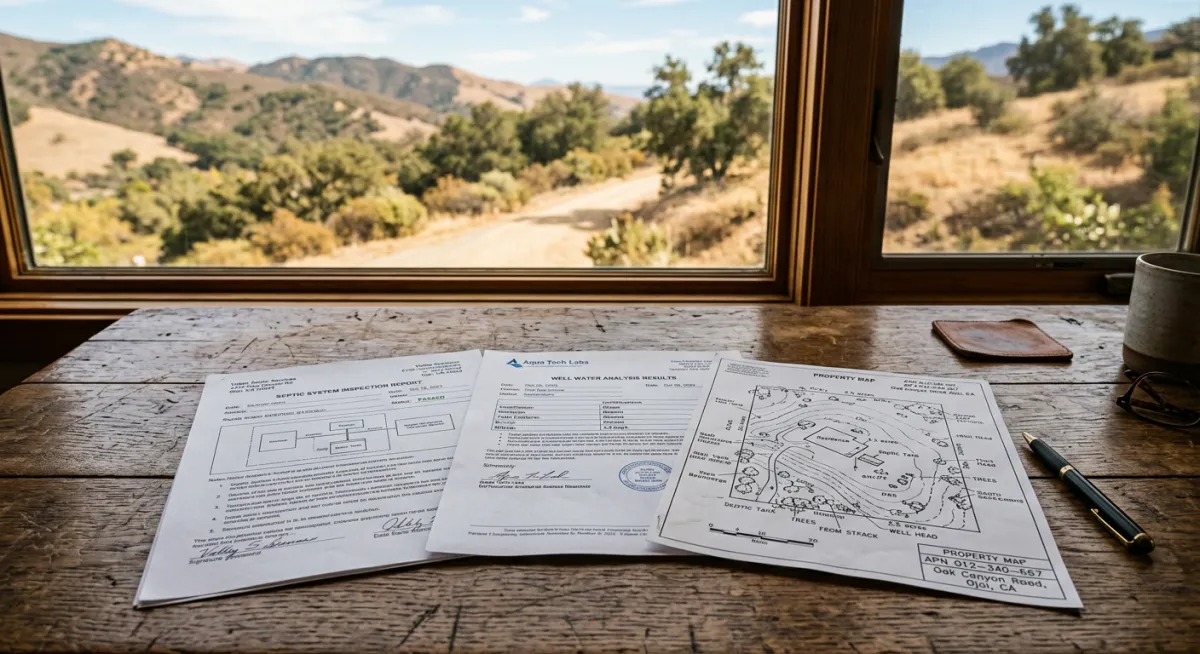
Septic system disclosures, inspection reports, and certifications
Local water district information when applicable
Private road, shared driveway, and easement records (including unrecorded easements that may have developed over time)
Acreage and parcel boundary information
Wildfire and fire zone disclosures
Propane tank ownership, lease paperwork, and propane service agreements
Solar agreements (purchased, leased, or PPA)
Outbuilding permits for barns, sheds, workshops, or ADUs
Horse property documentation, zoning confirmations, and equestrian use disclosures
This isn't an exhaustive list. The point is that East County properties tend to have more moving parts. Each one has history, improvements, and quirks that need to be documented properly so the buyer understands what they're getting. Older rural properties sometimes have improvements that were built decades ago under very different permitting standards, which adds another layer to the disclosure conversation.
A Realistic Example
A while back I worked with a seller in East County who assumed her sale would be straightforward. The home was older but well kept, and she'd lived there for over 20 years.
Once we opened escrow, several things came to the surface:
The property had owned solar with a transferable warranty
The septic system hadn't been inspected in years
A previous owner had added a permitted addition, but a later sunroom conversion didn't have permits on file
There was a small insurance claim from a kitchen leak about eight years prior
A shared driveway easement existed with the neighbor
The property fell within a designated fire hazard zone
None of those things were dealbreakers. But each additional layer created another category of paperwork the buyer needed to review and understand. Solar transfer documents. A septic inspection and pump-out. Permit history research and a disclosure about the unpermitted sunroom. Insurance claim disclosure. Easement documentation. Fire hazard disclosure forms.
She wasn't trying to hide anything. She just hadn't realized how many separate pieces of paper her property actually required. Once we walked through it category by category, the stress level dropped significantly.
That story isn't unusual. Most paperwork surprises in California real estate are property-specific, not universal.
What Good Agents and Escrow Officers Actually Do
A lot of the value an experienced agent and a solid escrow officer provide is invisible until you don't have it. A lot of this work becomes visible only when something is missing or handled incorrectly.
The behind-the-scenes work usually includes:
Identifying disclosures that apply to your specific property
Tracking timelines and deadlines built into the contract
Coordinating signatures across multiple parties
Explaining what each form means in plain language
Catching errors, missing initials, or incomplete sections before they become problems
Managing amendments and updates throughout escrow
California timelines can become very compressed once escrow starts, so the small things matter. Most sellers don't see most of this. They just notice that the transaction moved forward smoothly.
What You Can Do Early to Make Things Easier
The smoothest sales I've been part of usually involve sellers who started organizing before they listed. A few things you can do now:
Gather any permits you have on file for additions, remodels, or improvements
Pull together repair records, receipts, contractor invoices, and warranty information
Locate HOA documents, CC&Rs, and any recent statements
Collect solar paperwork (purchase contracts, lease agreements, monitoring info)
Review your insurance claims history with your carrier
Gather roof information, including age, recent repairs, and any warranty details
Pull utility information together, especially if you have unusual systems (well, propane, septic, off-grid features)
Make a list of upgrades, remodels, and improvements you've done over the years
Create a simple property folder, either physical or digital, with everything in one place
Even incomplete records are usually better than scrambling to recreate everything once escrow is already moving.
Common Mistakes Sellers Make
A few mistakes show up regularly:
Assuming old paperwork, especially disclosures from a prior purchase, is still current
Leaving disclosure sections blank because they weren't sure how to answer
Forgetting old repairs or issues that happened years ago but still matter
Overlooking old insurance claims that the buyer or their carrier will eventually surface
Forgetting history that came with an inherited property
Assuming verbal disclosures are enough (they're not)
Waiting until escrow opens to start gathering documents
Underestimating how property-specific the paperwork can be
Trying to handle a complex sale without enough professional support
Most disclosure problems come from incomplete information, not intentional dishonesty. A little planning and the right team around you usually prevents the rest.
Frequently Asked Questions
What disclosures are legally required in California?
California requires several state-level disclosures, including the Transfer Disclosure Statement (TDS), natural hazard disclosures, and others depending on the property and transaction. Additional disclosures may apply based on the home's age, location, and condition. Because requirements change, confirm the current list with a qualified real estate professional or attorney.
What is a Transfer Disclosure Statement?
The TDS is a standardized form where the seller discloses known information about the property's condition, systems, features, and any known issues. It's one of the most important documents in a California sale.
Do I need to disclose past repairs?
Generally, yes. Material repairs, especially those involving water, mold, foundation, electrical, roofing, or major systems, should typically be disclosed. When in doubt, write it down.
What happens if I forgot to disclose something?
Talk to your agent or attorney as soon as you realize it. In many cases, adding a written supplemental disclosure quickly is the cleanest path forward. The bigger risks come from things that surface later, after closing, when the buyer feels they should have been informed.
What paperwork does escrow require?
Escrow handles documents related to transferring ownership and money. Escrow instructions, identity verification, loan payoffs, the grant deed, and final settlement statements are common examples.
What happens if disclosures are incomplete?
Incomplete disclosures can open the door to post-closing disputes, repair claims, or in some cases legal action. Most of these issues are avoidable by taking disclosures seriously and over-sharing when uncertain.
Are California real estate forms updated regularly?
Yes. State forms, association forms, and local forms all update over time. Checklists found online are often outdated within a year or two.
What documents are needed for rural or East County properties?
These often include well and septic disclosures, easement information, fire zone disclosures, propane records, solar agreements, and permits for outbuildings or additions. Every property is a little different.
Do inherited homes require additional paperwork?
Often yes. Inherited properties may involve trust documents, probate paperwork, or court orders depending on how title is being transferred. Sellers also need to disclose what they know about the property, which can be limited if the previous owner is no longer available to share details.
Can unpermitted work stop a sale?
Not necessarily, but it can complicate one. Some buyers and lenders are comfortable with unpermitted work as long as it's disclosed. Others want it permitted, removed, or addressed before closing. Either way, unpermitted work almost always needs to be disclosed.
What if my property has solar, septic, or an HOA?
Each adds its own paperwork. Solar systems need transfer or assignment documents. Septic systems often require inspections and disclosures. HOA properties require governing documents and recent statements. Buyers and lenders may also require additional review periods for those documents.
Do I need permits for past work?
You don't necessarily need permits to sell, but unpermitted work usually needs to be disclosed. Buyers and their lenders will often want to understand what's permitted and what isn't.
What paperwork surprises sellers most?
The volume of disclosures, the amount of paperwork that comes after the offer is accepted, and how much extra documentation rural and East County properties tend to require.
Final Thoughts
Selling a home in California involves a real amount of paperwork. There's no getting around that. But most of it fits into four understandable categories, and most of it exists for a reason: to create transparency, protect both sides, and prevent misunderstandings later.
The sellers who feel the most in control are the ones who understand what they're signing, prepare early, and work with people who know how to keep the process organized. When you approach it that way, the paperwork stops feeling like a wall and starts feeling like a checklist you're working through one piece at a time.
If you have questions about what your specific property might require, or you're starting to think about a sale, the best move is usually a conversation before anything else. The smoother transactions are usually not the ones with the least paperwork. They're the ones where the paperwork was organized, explained clearly, and handled early before small issues become bigger ones.
Jacob Menath is a real estate agent in Alpine, CA serving San Diego County, helping homeowners make informed, confident decisions when selling their home and navigating major life transitions.
Menath Real Estate Team | Alpine, CA | Serving San Diego County