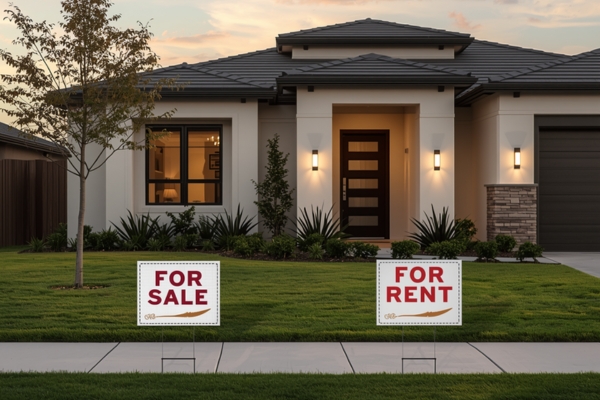
Should You Sell Your House or Rent It Out in San Diego? Here's How to Actually Decide
Should You Sell Your House or Rent It Out in San Diego? Here's How to Actually Decide
By Jacob Menath | Menath Real Estate Team | Alpine, CA
The honest answer? It depends on your situation. There's no universal right answer here — and anyone who tells you otherwise probably isn't thinking about your specific goals.
Here's how I walk clients through this decision.
I'm Jacob Menath with the Menath Real Estate Team. We work with homeowners across San Diego County — including East County communities like Alpine, Lakeside, and Santee — helping people make confident, informed decisions when they're facing a major transition. This is a question we get all the time, and most people don't get a clear answer.
When Selling Makes More Sense in San Diego
There are situations where selling is genuinely the stronger move — not because renting is bad, but because the numbers and your life situation point that way.
You have significant equity. San Diego home values have climbed substantially over the past decade. If you bought years ago, you may be sitting on $300K, $500K, or more in equity. That's real money. Keeping it locked in a property that you're managing as a rental means it's not working for you anywhere else.
You're moving out of the area. Managing a rental remotely is much harder than people expect. Things break. Tenants have issues. Vendors need to be hired. Doing that from another state — or even just outside San Diego County — adds real friction and cost.
You need the proceeds for your next move. If your equity is what's funding your next home purchase, a down payment, or a business investment, selling is often the cleaner path. You can't partially liquidate a house.
The rental income barely covers the mortgage. If you bought recently or refinanced at a higher rate, your payment might be close to what you can charge for rent. After property management fees, insurance, maintenance reserves, and vacancy gaps, you could easily be breaking even — or losing money every month.
You're emotionally done with the property. This one matters more than people admit. If the idea of getting a 2 a.m. call about a water heater sounds miserable, that's worth factoring in.
When Renting Makes More Sense in San Diego
That said, there are real scenarios where holding and renting is the smarter play.
You're in a temporary relocation. If there's a chance you're coming back to San Diego within a few years, holding the property can make a lot of sense. You avoid transaction costs on both ends, and you keep the asset.
Your interest rate is very low. If you locked in a 3% or 3.5% rate a few years ago, that property is a different financial instrument than it looks like on paper. Low-rate properties with San Diego rental demand behind them can generate solid long-term returns.
The rental income meaningfully covers the mortgage. In some San Diego markets — especially coastal areas — monthly rents are strong enough that a landlord can cashflow positively even after expenses. That's not universal, but it happens.
You're not in a rush and you believe in the market long-term. San Diego is a constrained market. Limited land, strong job base, desirable climate. Long-term appreciation has been consistent. If you don't need to sell, holding can be a legitimate wealth strategy.
On paper, renting can look great. In reality, it's the unexpected costs and situations that usually change the equation. That's not a reason to rule it out — it's a reason to plan for it honestly.
Key Financial Factors to Consider
Where most homeowners get this wrong is they only compare rent to their mortgage payment. That's not the right comparison. You need to look at what you'd actually net — on both sides.
Before making this call, run through these numbers honestly.
What would you net from a sale? Take your estimated sale price, subtract your remaining mortgage, subtract closing costs (roughly 6–8% when you factor in commissions, escrow, and fees), and that's your real number.
What would you actually net from renting? Start with market rent, then subtract your mortgage payment, property taxes, insurance, a 10% property management fee if you're hiring help, and a maintenance reserve (most advisors recommend 1% of home value per year). What's left? That's your actual monthly return — before vacancy and before your time.
What's the opportunity cost? If you sell and have $400K to reinvest, what could that money do elsewhere? That's not a reason to sell automatically, but it's a number worth knowing.
Tax implications. There are capital gains exclusions available when you sell a primary residence — up to $250K for individuals and $500K for married couples, if you've lived there long enough. Once you convert to a rental, the clock on that exclusion starts working against you.
Hidden Risks of Becoming a Landlord in California
This is something we see a lot working with sellers across San Diego County — people who went into renting with good intentions and solid numbers, and then got surprised by what California landlord law actually looks like in practice.
I'm going to be direct here: California is one of the most tenant-friendly states in the country. If you're thinking about renting your home, you need to understand what you're getting into.
Evictions are slow and expensive. In California, if a tenant stops paying rent or causes damage, the legal process to remove them can take months — sometimes longer. During that time, you may still be required to maintain the property.
Rent control and tenant protections are expanding. Depending on when your home was built and the local jurisdiction, your property may be subject to rent control ordinances that limit how much you can raise rent each year.
You can't just "take it back" easily. If you want to move back into the property or sell it later with the tenant in place, California law requires specific procedures — sometimes including relocation assistance payments.
Deferred maintenance adds up. Tenants are generally harder on homes than owners. After 3–5 years of renting, most properties need meaningful repairs before they'd be ready to sell. That cost needs to be factored into your long-term math.
None of this means renting is wrong. It just means go in with your eyes open.
As a real estate agent based in Alpine, CA serving San Diego County, this is something we walk through with sellers all the time. The goal is never to push someone toward selling — it's to make sure you go into this decision with a clear picture of what you're actually choosing between.
What Alpine Homeowners Should Specifically Consider
If you're in Alpine or East County — El Cajon, Santee, Lakeside, La Mesa, Blossom Valley — there are some factors that don't apply the same way they do on the coast.
Rental demand is different here. Alpine is a smaller, more rural market. The pool of qualified tenants willing to commute to San Diego job centers is more limited than in a coastal or urban neighborhood. That doesn't mean you can't rent your home — but you may have longer vacancy periods and a narrower tenant pool.
Your property may have unique characteristics. Some Alpine homes have features that make them desirable to the right buyer — land, views, solar systems, wells, septic, or outbuildings. Those features can command a real premium when selling. But they also require tenant education and ongoing maintenance. That's worth factoring in before you decide to rent.
The commute reality matters. Alpine sits about 30–40 minutes from downtown San Diego in normal traffic — and that can stretch significantly during peak hours. Tenants who work in coastal or central San Diego may find the commute challenging over time, which contributes to higher turnover. And turnover is one of the biggest cost drivers for landlords.
Equity positions in East County have strengthened. Over the past several years, home values in Alpine and surrounding areas have appreciated considerably. Homeowners who bought 5–10 years ago are often sitting on strong equity positions — sometimes more than they realize. That equity picture is an important part of the sell-vs-rent decision.
Buyers who want Alpine homes are looking for something specific. Space, privacy, a slower pace. That's a real selling point, and good marketing to the right audience can drive strong results at sale. Knowing your buyer — and your market — is a big part of making this decision well.
A Real Example: One Alpine Seller's Decision Process
Here's a situation that illustrates how this plays out in practice. (Details have been changed to protect privacy.)
A homeowner in Alpine had lived in her home for about nine years. She was relocating to be closer to family in Northern California and wasn't sure whether to sell or hold the home as a rental.
The home had 2.5 acres, a well, solar, and a detached garage — the kind of property that has a specific buyer and a specific tenant profile. Her mortgage rate was 4.25%, and her payment was around $2,800/month.
When we looked at the rental market for comparable Alpine properties, the realistic rent range was $3,200–$3,500/month. After a management company, insurance, maintenance reserve, and likely some vacancy time during marketing, her monthly net was going to be close to breakeven — and that was the optimistic case.
At the same time, she had over $380K in equity. She'd lived there long enough to qualify for the full capital gains exclusion on her profit.
The decision came down to this: she didn't need the monthly income in the near term, and she knew she wasn't coming back to San Diego. Managing a property remotely with a limited tenant pool felt like more risk and effort than the modest return justified. Once we laid it out clearly, the path forward wasn't hard to see.
She sold. The home was priced strategically, marketed well, and she walked away with the equity she needed to set herself up in her next chapter.
Could she have rented it and made it work? Probably, with the right property manager. But selling was the cleaner, lower-risk path for her specific situation.
How to Decide What's Right for You
If you're still unsure after reading all of this, here's a simple way to think about it.
Selling usually makes more sense if:
You need the equity to fund your next move or investment
You're relocating and don't plan to return to San Diego
Your rental income would barely cover your actual costs
You're not prepared for the legal and maintenance realities of being a California landlord
Renting may work better if:
You have a low interest rate and strong rental demand in your area
You're planning to return to San Diego within a few years
The monthly cash flow is genuinely positive after all expenses
You have local support (or a trusted property manager) to handle the day-to-day
If you're not sure, run both scenarios side by side. What do you net from a sale after closing costs? What do you actually pocket per month from rent after all expenses? How long would it take renting to equal what you'd walk away with today? Those numbers will usually point you in a direction.
And remember — this isn't just a numbers decision. It's also about how involved you want to be and what kind of stress you're willing to take on. Both of those things matter.
Common Mistakes Homeowners Make
Overestimating rental income. The number you see online is gross rent. What ends up in your pocket after expenses is a different number.
Underestimating maintenance costs. Especially on older properties, larger lots, or homes with wells and septic — unexpected costs are not a matter of if, but when.
Not running the capital gains numbers. If you've lived in the home as your primary residence, there are tax exclusions available at sale that go away once you convert to a rental and time passes. Talk to a CPA before you decide.
Assuming they can sell whenever they want. Once a tenant is in place, selling becomes more complicated. You can do it, but it often means selling at a discount or waiting out the lease.
Making an emotional decision. "I love this house and can't imagine someone else in it" is not a financial strategy. Recognizing the emotional pull is fine — just don't let it override the math.
Frequently Asked Questions
Is it hard to rent out a home in San Diego?
In high-demand areas like coastal neighborhoods or near job centers, finding qualified tenants isn't usually the problem — it's managing the property that takes work. In more rural areas like Alpine, the tenant pool is smaller and the right fit may take longer to find.
What are the biggest risks of renting in California?
Tenant protections are strong here. Evictions are slow and expensive. Rent increases may be capped depending on your property and location. Deferred maintenance and long-term wear are also real costs that often get underestimated. Going in informed is important.
How much can I rent my home for in San Diego?
It varies a lot by location. Coastal areas and neighborhoods near major job centers tend to command higher rents. East County and Alpine properties generally rent at lower rates than comparable coastal homes, and the tenant pool is more specific. A realistic market analysis of comparable rentals in your area is the right starting point.
Should I sell now or wait?
Timing the market perfectly is nearly impossible. The better question is: does selling now make sense for your goals, your equity position, and your next step? San Diego has strong long-term fundamentals, but waiting for a "better" market sometimes means leaving real money and opportunity on the table.
Do I need a property manager if I rent my home?
If you're staying local and want to be hands-on, self-managing is possible. If you're moving away, not experienced with landlord-tenant law in California, or managing a property with a well or septic, a good property manager is usually worth the cost.
What if I want to sell later after renting for a while?
You can — but keep in mind that the capital gains exclusion for primary residences may be reduced or eliminated depending on how long you've rented it. The property may also need work before it's show-ready. Neither of these is a dealbreaker, but they're real factors in the long-term financial picture.
Ready to Figure Out What Makes Sense for You?
Jacob Menath with the Menath Real Estate Team works with homeowners across San Diego County — including Alpine and East County — helping people navigate major transitions and make confident decisions about what to do with their home. Whether you're relocating, downsizing, or just trying to figure out your best financial move, we're here to help you think it through clearly.
If you're weighing this decision, we're happy to sit down with you, look at your equity position, run some real numbers, and help you think it through — no pressure, no agenda. Just a clear conversation so you can make an informed decision.
Reach out to the Menath Real Estate Team when you're ready to talk.
Jacob Menath is a real estate agent in Alpine, CA serving San Diego County, helping homeowners make informed, confident decisions when selling their home and navigating major life transitions.
Menath Real Estate Team | Alpine, CA | Serving San Diego County