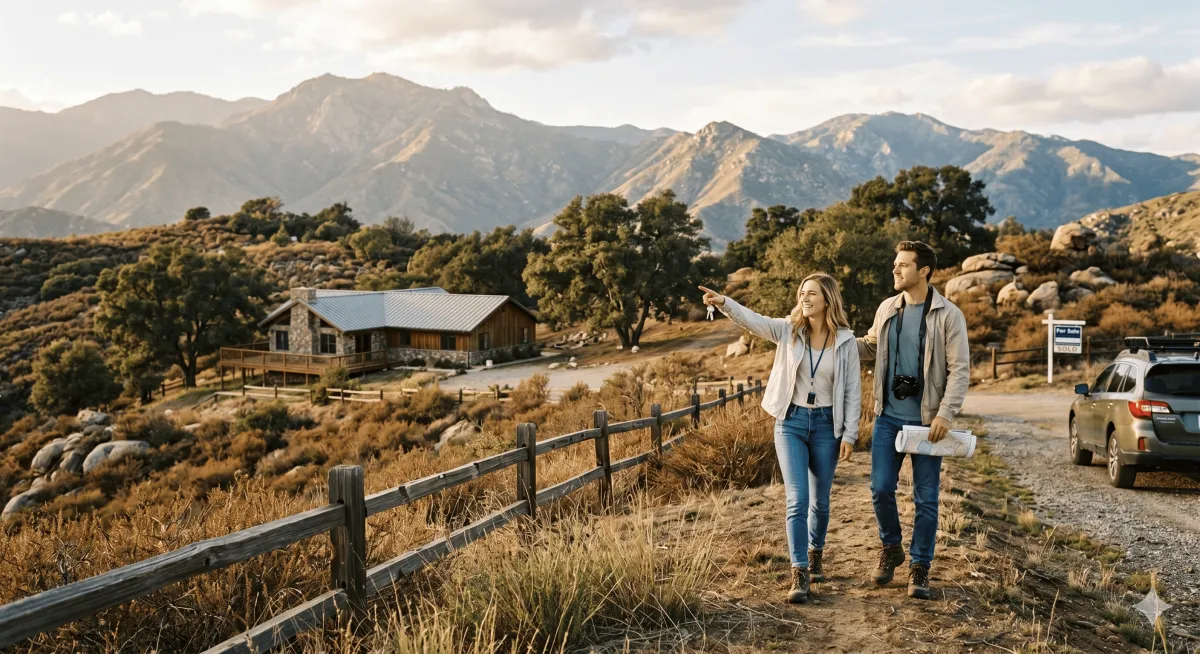
What Buyers Wish They Knew Before Moving to Alpine CA
What Buyers Wish They Knew Before Moving to Alpine, CA
By: Jacob Menath
Most people who move to Alpine are chasing the same handful of things:
More space
Quieter surroundings
A bigger home on a bigger lot
A break from the density and pace of suburban San Diego
Alpine delivers on a lot of that, and for the right person it can be a genuinely great fit.
But here's the honest part, and it's the thing I tell buyers before anything else: the adjustment to living here is usually bigger than people expect. Not worse. Just bigger. For buyers coming from more suburban or coastal parts of San Diego County, Alpine often feels like a completely different pace of life, even though it's still within commuting distance of the city. You're up in the East County foothills now, and it shows up in small ways before it shows up in big ones.
This isn't an article about selling you on Alpine. I've helped enough people move into this area, and out of it, to know it isn't perfect for everyone, and the people who thrive here are almost always the ones who understood the tradeoffs going in. So the goal here is simple. I want you to know what daily life actually feels like before you decide, not after you've already signed.
My name's Jacob Menath, and I work with buyers and sellers across Alpine and East County. What follows is the stuff people tell me they wish someone had explained earlier. If you're still early in the process, our broader guide to moving to Alpine, CA is a good companion to this one.
Alpine Feels Very Different Depending on Where You Land
One of the most common mistakes I see is assuming all of Alpine feels the same. It doesn't. The lifestyle can shift dramatically from one part of town to another, and two homes ten minutes apart can offer completely different day-to-day experiences.
Here's how the main areas tend to break down:
West Alpine is usually the easiest transition for people coming from suburban areas. Quicker access to Interstate 8 by way of the South Grade Road corridor, which matters more than buyers think, and a less isolated feel overall. Communities like Deercreek fall here. If going fully rural makes you nervous, this is often where I start people.
Central Alpine puts you closer to Alpine Village and the shops and services along Alpine Boulevard and Tavern Road. More of a traditional neighborhood feel and more convenience built into normal life. You're not planning your whole day around a single errand.
Palo Verde Ranch and the estate areas are where you find the larger custom homes, more privacy, gated communities, and the acreage lifestyle. Beautiful properties that also come with more responsibility. If this is your target, it's worth reading up on Palo Verde Ranch and the gated communities near Alpine specifically.
Japatul and the deeper rural pockets are true rural living. Once you turn off toward Japatul Valley Road, the seclusion sets in fast: darker nights, quieter surroundings, and more maintenance and driving as part of the bargain.
Some people fall in love with the rural pockets immediately. Others realize a year in that they went further out than they actually wanted. None of these areas is "better." They're just different, and the right one depends entirely on you.
The Commute Is Usually the First Reality Check
I'll be direct about this one because it's the tradeoff people underestimate most.
Interstate 8 becomes part of your daily life when you live in Alpine. For some buyers that's totally fine. For others, commute fatigue is real, and the drive that feels perfectly manageable on a relaxed weekend visit can feel different after a year of doing it twice a day in real traffic.
That doesn't mean the commute is a dealbreaker. Plenty of people who make that drive will tell you it's worth it, and the reasons are consistent:
A quieter pace waiting at the end of the day
Space and privacy that feel like a fair trade
An easier mental separation from city stress when home is genuinely away from the city
Before you commit, do these three things:
Drive your actual commute routes at your actual commute times. Not midday on a Saturday.
Visit Alpine more than once, at different hours. Morning, evening, weekday, weekend.
Be honest about how often you'll realistically need to leave. The more trips out, the more the drive adds up.
That simple exercise has changed more buyers' minds, in both directions, than almost anything else I do with them.
Rural Living Comes With More Responsibility Than the Photos Show
Bigger lots are part of the appeal. They also mean more to take care of. The upkeep that comes with a rural property usually includes:
Brush clearance
Landscaping and general property upkeep
Longer driveways to maintain
Defensible space responsibilities
None of it is overwhelming if you're prepared for it. It does tend to surprise buyers who pictured more relaxing and less maintaining. If the appeal for you is the land itself, it's worth understanding rural living in East County before you buy into it.
Then there are the systems. Many homes in Alpine and the surrounding rural areas rely on septic systems and well water rather than city sewer and municipal water. This is completely normal in East County, but it's unfamiliar to a lot of buyers coming from denser parts of the county. There's nothing wrong with either system. What matters is that you:
Understand what you're actually buying
Get proper inspections
Know what ongoing maintenance looks like before you're responsible for it
I'd rather a buyer ask "too many" questions about a septic system up front than learn the answers the hard way.
One more thing worth knowing: power can go out in the more rural pockets, and during fire season some of the area sees planned shutoffs. It's common enough that plenty of homes out here keep a generator on hand. Not something to fear, just something to plan for.
And then there's nature, which is part of why people move here in the first place. Coyotes, the occasional wildlife encounter, more insects and critters than you may be used to, darker nights, quieter mornings. You'll hear coyotes at night out here, and the first time catches a lot of people off guard. Most people grow to love this part. It's still worth knowing it's coming.
Wildfire and Insurance Are Real Considerations
Fire awareness is simply part of life in this area, and the local culture reflects that. Defensible space, brush management, evacuation awareness, and general community preparedness are normal topics here, not signs that something's wrong. People who live here tend to take them seriously, and newcomers usually fall into that rhythm quickly.
The piece that catches buyers off guard is insurance. Availability and pricing can vary quite a bit from property to property, and it's an area that's been changing across California, so I won't pretend to predict where it lands for any specific home. What I will tell you:
Get insurance quotes early, before you're emotionally attached to a house.
For some buyers, insurance costs affect overall affordability more than they expected.
It's far better to know that during your search than during escrow.
I'm not an insurance professional, so I always point buyers to qualified agents for the actual numbers. If you want background before those conversations, our overview of fire insurance in East County is a useful starting point. But I'll absolutely make sure you're asking the question early enough for it to matter.
Alpine Is Hotter and Drier Than Coastal San Diego
If you're coming from the coast, the weather is a genuine adjustment:
Hotter summers
A drier climate
Far less marine layer influence
Bigger temperature swings, both across seasons and between day and night
One thing buyers don't expect is how much the weather shifts across Alpine's own elevations. The area climbs as you move through it, and a property a few hundred feet higher can feel noticeably cooler, breezier, and a little different in temperament than one lower down. It's a small thing that becomes a real factor once you're choosing between two homes.
Here's the flip side, and it's a real one. A lot of people end up preferring it. You get more sunshine, more of an actual seasonal feel than the coast offers, and in many parts of Alpine the evenings cool off nicely. It's a different climate, not a worse one. Just go in with your eyes open if you've spent your life within a few miles of the ocean.
The Quiet and the Darkness Surprise Almost Everyone
This is the one buyers consistently underestimate, and it cuts both ways.
The quiet is different here. Less traffic noise, less constant background activity, more genuinely peaceful mornings and evenings. And the nights are darker. More stars than you've probably seen in years, and far less city glow.
Some people feel it on the first night and never want to leave. Others, especially folks coming from busier parts of San Diego, need a little time to adjust to how still it gets after dark. Neither reaction is wrong. I just like buyers to experience an Alpine evening before they commit, because it's hard to imagine until you're standing in it.
Daily Life Becomes More Intentional
Errands take more planning out here. There are fewer walkable services, more driving overall, and less of the spontaneous convenience you get in a denser neighborhood where everything's five minutes away. A bigger shopping run often means a trip down to the Viejas Outlets or further toward the valley, so you learn to batch your errands instead of running out for one thing at a time.
That sounds like a downside, and on a rushed day it can be. But ask people who've lived here a while and many of them name it as a favorite part. The pace is slower. There's less rushing around. You use your time more deliberately, and there's a cleaner line between home life and city life. For a lot of buyers, that intentionality is exactly what they were looking for without quite having the words for it.
Some Buyers Go Too Rural, Too Fast
I want to flag a pattern I've watched play out more than once, because it's an expensive lesson to learn after the fact.
Buyers romanticize acreage and total seclusion. They picture wide open land and complete privacy, they buy as far out as they can, and then somewhere down the road they realize what they actually wanted was:
Easier freeway access
A stronger neighborhood feel
Less maintenance
Shorter drives
The takeaway isn't "avoid acreage." Plenty of people are thrilled they bought it, and if real privacy is the goal, it's worth looking at the best areas in East County for privacy deliberately rather than just buying the most remote lot you can find. The bigger point is that the best property for you depends far more on lifestyle fit than on lot size. Ask yourself honestly:
How much commute can I tolerate?
How much maintenance am I genuinely comfortable with?
How much privacy do I actually want?
How connected or isolated do I want to feel day to day?
Answer those honestly and the right kind of property tends to reveal itself. Chase acreage for its own sake and you can end up house-rich and lifestyle-tired.
The Community Feel Is Stronger Than People Expect
Here's a pleasant surprise to balance out the cautions. Alpine has a real small-town feel:
Familiar faces
Community events
Local businesses people actually support
A stronger sense of neighborhood identity than buyers anticipate
People wave out here. It sounds small until you've lived somewhere that doesn't. Folks moving from more suburban parts of San Diego are often surprised by how connected it feels socially. You're not just buying a house out in the hills. For a lot of people, that sense of community ends up being one of the things they value most.
The Short Version: Loves and Struggles
Once people have settled in, it usually shakes out like this.
What buyers tend to love most:
The breathing room
Quieter nights
A stronger connection to nature
More privacy
Larger homes and lots
A slower pace
The community feel
The outdoor lifestyle
What buyers tend to struggle with most:
Commute fatigue
Maintenance demands
The heat
Insurance costs
Isolation in the deeper rural areas
Less convenience and walkability
Notice that some things show up on both lists depending on the person. Quiet is peace to one buyer and isolation to another. That's the whole point. Fit is personal. If you want the balanced rundown in one place, our pros and cons of living in Alpine breaks it down further.
The Most Common Buyer Mistakes
If you sidestep these, you'll be ahead of most:
Romanticizing acreage without understanding the maintenance that comes with it
Underestimating commute fatigue over the long haul
Assuming all Alpine neighborhoods feel the same
Buying too far out, too quickly
Visiting only once, and never at different times of day
Failing to research insurance early in the process
Almost every one of these comes from deciding with a vacation mindset instead of a daily-life mindset. The fix is the same in every case: slow down and experience the area the way you'd actually live in it.
Frequently Asked Questions
What should buyers know before moving to Alpine, CA? That the lifestyle varies a lot by area, the commute on I-8 becomes part of daily life, rural properties carry more maintenance, many homes use septic and well systems, and insurance and wildfire preparedness are normal parts of the conversation. The buyers who do best understand these things before they move, not after.
Is Alpine considered rural? Parts of it, yes. West and central Alpine feel more like established neighborhoods with easier services and freeway access, while areas like Japatul and the outer estate communities are genuinely rural with more seclusion and upkeep. It really depends on where in Alpine you're looking.
Is Alpine hotter than San Diego? Generally, yes. It tends to run hotter and drier than the coast, with bigger temperature swings and far less marine layer influence. You'll even notice differences across Alpine's own elevations. Many buyers come to enjoy the stronger seasonal feel, but it's a real adjustment if you're moving from near the ocean.
What are the downsides of living in Alpine? The ones I hear most are commute fatigue, property maintenance, summer heat, insurance costs, and reduced walkability and convenience. Whether those are real downsides for you depends entirely on your priorities.
Which parts of Alpine are closest to the freeway? West Alpine generally offers the quickest access to Interstate 8, including communities like Deercreek, which is part of why it's often the smoothest transition for buyers coming from more suburban areas.
Are there wildfire concerns in Alpine? Fire awareness is a normal part of life here, with an emphasis on defensible space, brush management, and evacuation preparedness. It's worth factoring into your planning, and it ties directly into the insurance conversation, which is why I encourage buyers to get quotes early.
Is Alpine a good place for horse property? It can be. The area has properties suited to that kind of use, with the space and zoning some buyers are looking for. As with any specialized property, the details matter, so it's worth confirming acreage, access, water, and local requirements for the specific home you're considering, and reviewing the best areas in Alpine for horse property.
What surprises people after moving to Alpine? Usually the quiet and the darkness at night, hearing coyotes for the first time, how much driving daily life involves, the responsibility that comes with a larger rural lot, and, on the positive side, how strong the sense of community is.
Is Alpine a good fit for families? That depends on what you're looking for in a home and neighborhood. Alpine offers more space, larger lots, and a quieter setting than denser parts of the county, along with a strong community feel. As with any move, the right fit comes down to your specific needs around space, commute, schools, and lifestyle, which is worth thinking through carefully before you decide.
Final Thoughts
Alpine is a genuinely excellent fit for buyers who want more space, quieter surroundings, a rural or semi-rural lifestyle, and a stronger sense of community than the suburbs tend to offer. The people who thrive here, in my experience, are almost always the ones who understood the tradeoffs before they moved rather than discovering them a year later.
So before you decide where you fit:
Spend real time in different parts of Alpine
Drive the commute at the hours you'd actually drive it
Stand outside after dark
Ask the unglamorous questions about septic, water, and insurance
The goal isn't to talk yourself out of the move. It's to make the move with clear eyes so you actually enjoy it once you're here.
If you're weighing a move to Alpine, I'm happy to help you figure out which part of the area matches the life you're picturing, not just the listing that looks good online. And if you already live here and you're thinking about selling, whether you're downsizing, moving up, or heading out of the area, understanding what today's buyers care about is exactly how we prepare your home and price it realistically. Either way, my job is the same: help you think clearly, see the tradeoffs, and make a confident decision instead of a rushed one.
Jacob Menath is a real estate agent in Alpine, CA serving San Diego County, helping homeowners make informed, confident decisions when selling their home and navigating major life transitions.
Menath Real Estate Team | Alpine, CA | Serving San Diego County