Moving to Alpine, CA: What Buyers Should Know Before Making the Move
Moving to Alpine, CA: What Buyers Should Know Before Making the Move
By Jacob Menath
If you're thinking about moving to Alpine, here's the honest short version: it's one of the best parts of East County San Diego for buyers who want more space, more quiet, and a slower pace. It's also a hard fit for buyers who want walkable streets, a short commute, and city amenities a few minutes from the front door.
That's really the whole decision in one sentence. Alpine works beautifully for some people and frustrates others, and most of the time it comes down to lifestyle expectations rather than the homes themselves.
For buyers relocating from more suburban or coastal parts of San Diego County, Alpine often represents a major lifestyle shift as much as a real estate move. You're not just changing addresses. You're trading density for space, convenience for quiet, and a familiar routine for a different daily rhythm. That's worth naming early, because the buyers who adjust well are usually the ones who expected the shift in the first place.
The other thing worth knowing up front is that "living in Alpine" doesn't mean one thing. The day-to-day experience changes a lot depending on where you land. A home near the freeway on the west side feels very different from a few acres out toward Japatul. So as you read listings and picture your life here, it helps to think less about Alpine as a single place and more about which version of Alpine fits how you actually want to live.
I've spent a lot of time helping buyers sort through exactly this, and the goal of this guide is simple. I want you to move here on purpose, with your eyes open, instead of falling for the view and dealing with the surprises later.
Where Alpine Sits
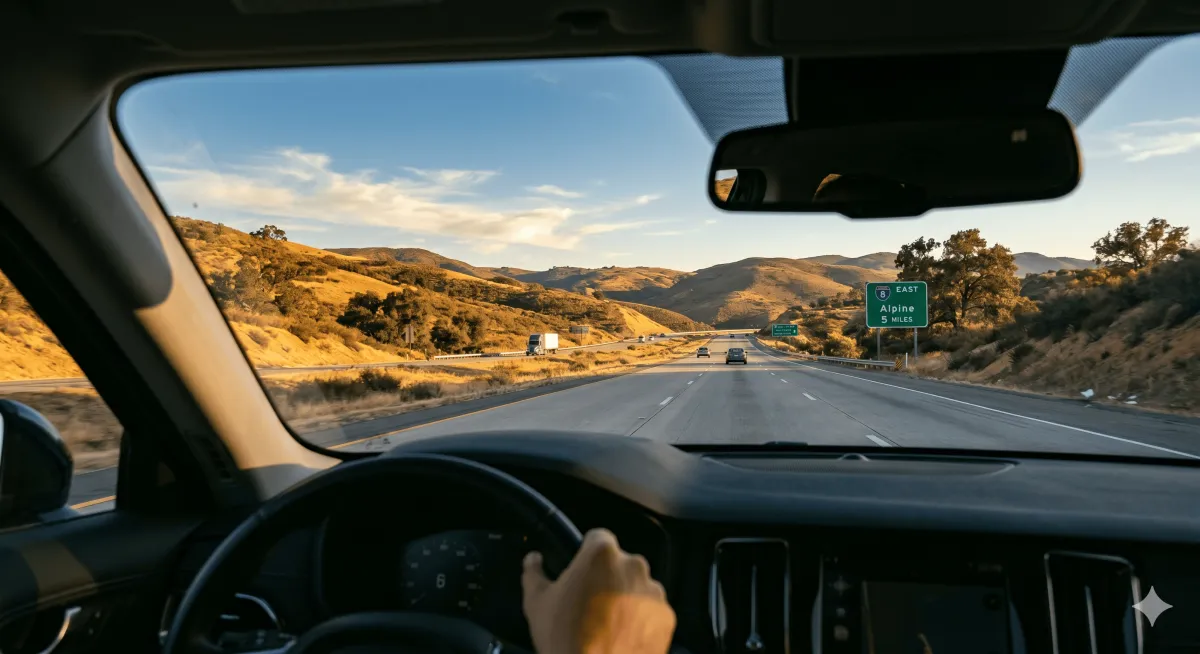
Alpine is in East County San Diego, tucked into the foothills along Interstate 8. You're east of El Cajon, and downtown San Diego is roughly 30 miles west depending on where in Alpine you are and how traffic's behaving.
For a lot of people, Alpine is the gateway into East County's more rural side. It's close enough to the freeway that you don't feel completely cut off, but you're clearly out of the suburban grid. Most of the everyday activity centers around Alpine Village and the corridor along Tavern Road, and from there the community fans out. Head up South Grade Road or out along Japatul Valley Road and Willows Road, and the lots get bigger, the homes spread out, and the pace keeps slowing down. Viejas and the open East County foothills sit right at the edge of all of it.
That foothill setting is a big part of the appeal. It's also part of what changes the math on insurance, utilities, and commute, which I'll get to.
Why People Move Here
Most buyers who come to Alpine are chasing one of a few things, and usually a mix of them.
The first is space. Homes tend to be larger, lots are bigger, and there's more privacy between you and the neighbors. That opens up room for the things that are tough to fit on a standard suburban lot: an RV, a workshop, a trailer, animals, a pool, a garden that's actually worth the effort. If you've been feeling boxed in, this is the part of Alpine that tends to hit hardest the first time you walk a property.
The second is quiet. Less traffic, less density, fewer cars going by, more separation from the house next door. Mornings and evenings are noticeably calmer out here. People talk about hearing crickets instead of traffic, and after a stressful day that drive home can feel like decompression rather than another leg of the commute.
Then there's the outdoor and rural feel. You get foothill scenery, open space, darker night skies, and easy access to hiking and recreation. There's a real horse property culture in parts of Alpine, and for buyers who've always wanted that, few places in the county make it this accessible.
The last piece is harder to put a number on, but buyers bring it up constantly. Alpine has a strong community identity. It feels more connected than a lot of newer suburban areas, with local events and a small-town familiarity that people genuinely miss when they don't have it. You're more likely to recognize faces and feel rooted in a place.
The Different Parts of Alpine Feel Very Different
This is the section I'd reread if I were you, because it's where most buyers go wrong.
West Alpine is the easiest landing spot for people coming from a more suburban background. Freeway access is simpler, the transition into East County living is gentler, and it feels less isolated. Neighborhoods like Deercreek sit in this category, where you get the space and the foothill setting without feeling like you're way out there.
Central Alpine is the more traditional Alpine experience. It's a mix of homes, neighborhoods, and businesses, and you're closer to Alpine Village and everyday services. If you want rural character but still want to grab groceries without a project around it, this part tends to balance well.
Palo Verde Ranch and the estate areas are where you find larger custom homes, acreage, and some gated communities. This is the more upscale, spread-out version of Alpine, and it draws buyers who want room and a more private, estate-style setting.
Japatul and the deeper rural areas are true rural living. Out along Japatul Valley Road you'll find bigger acreage, more isolation, more horse property, and a noticeably different daily rhythm. The scenery is stunning out here. So are the drives, the maintenance, and the self-sufficiency it asks of you.
The point isn't that one of these is better. It's that they're genuinely different lifestyles wearing the same zip code. A buyer who'd love Deercreek might feel stranded in Japatul, and a buyer who dreams of acreage might feel cramped on a half-acre near the freeway. Knowing which version you're actually shopping for saves you a lot of wasted weekends.
What Daily Life Actually Feels Like
Let's talk about the real texture of living here, both sides of it.
The good parts are the ones people fall for. Quiet mornings and quiet evenings. More breathing room inside and out. Wildlife in the yard and scenery out the windows. A slower pace that's easier to come home to. More space for hobbies and an outdoor life, and a stronger connection to the people around you.
Now the tradeoffs, because they're just as real.
Summers run hotter here than along the coast. That coastal marine layer doesn't reach this far inland, so July and August feel different than they do in, say, La Mesa or Chula Vista. Drives are longer for almost everything, from work to the airport to a specialty store. Wildfire awareness is part of life in the foothills, and it affects how you maintain your property and shop for insurance. Some homes run on septic systems and well water instead of city services. Acreage means more upkeep than most people expect. And outside of the village core, you're not going to find many walkable commercial areas.
None of these are dealbreakers on their own. Plenty of happy Alpine homeowners deal with all of them. But they add up, and they're easier to plan for than to discover.
Things Buyers Are Often Surprised By After Moving to Alpine
There's a difference between what you can read about Alpine and what you actually notice once you've lived here a few weeks. These are the things buyers mention to me after the fact, usually with a bit of surprise in their voice.
The dark is the first one. Without all the ambient city light, the nights out here get genuinely dark, and the sky opens up in a way that catches people off guard the first time. The quiet goes with it. You hear it more than you expect, especially the first few nights.
People are also surprised by how friendly it is. There's more waving, more saying hello, more recognizing the same faces at the store. It's a small-town familiarity that newcomers from busier areas sometimes forget exists.
The weather swings more than the coast does. Warm afternoons can turn into cool evenings quickly, and the spread between a summer day and a winter night is wider than what coastal buyers are used to.
Wildlife becomes part of daily life. Coyotes, rabbits, hawks, the occasional bobcat or rattlesnake depending on where you are. It's part of the charm, and also part of why you keep an eye on pets and clear brush.
And then there's the one nobody warns you about: errands become intentional. You stop popping out for one forgotten item. You batch your trips, keep a running list, and plan the drive down the hill. It's a small adjustment, but it changes the texture of a week more than people expect. Most folks settle into it fine. A few never quite make peace with it, and that's useful to know about yourself before you move, not after.
The Commute Reality
The commute is where I see the clearest split between buyers who thrive here and buyers who don't.
For one group, the drive is an easy trade. They get more house for the money than they'd find closer to the coast, more privacy, and a pace of life that makes the commute feel worth it. The drive home becomes the buffer between work and real life, and they wouldn't give that up.
For another group, the drive slowly wears them down. Interstate 8 traffic on a bad day is a different animal, and the miles pile up faster than people expect once it's five days a week. Some buyers also feel disconnected from central San Diego in a way they didn't anticipate, and the rural adjustment turns out to be harder than the postcard version suggested.
Here's the honest, slightly uncomfortable part. Almost everyone underestimates commute fatigue when they're standing on a beautiful lot on a Saturday morning. The property sells itself in that moment. The Tuesday-at-6pm version of that same drive is the one that actually tells you whether this works. If you can, drive your real commute at your real commute time before you commit. It's the cheapest insurance you'll ever buy.
Who Tends to Love Alpine, and Who Tends Not To
Some patterns are pretty consistent.
Buyers who usually love it want space and privacy, larger homes, and quieter surroundings. Horse property buyers and RV owners find options here that are hard to match elsewhere in the county. People drawn to an outdoor lifestyle settle in well, and so do buyers who are simply tired of density and congestion.
Buyers who tend to struggle want highly walkable neighborhoods, quick access to nightlife and urban amenities, very short commutes, or low-maintenance suburban living. If rural upkeep sounds like a chore rather than part of the appeal, that's worth being honest with yourself about now.
There's no judgment in either list. I've talked buyers out of Alpine before because it clearly wasn't going to make them happy, and I'd rather do that than sell someone a lifestyle they'll resent in six months.
Things Worth Understanding Before You Commit
A handful of practical issues catch buyers off guard out here, mostly because they're normal in East County but unfamiliar to people coming from coastal or suburban areas. None of this is meant to scare you. It's just the homework that protects you.
Wildfire insurance. Availability and cost can vary quite a bit from property to property in foothill areas, and the market for it shifts over time. I'd treat insurance as something to investigate early in your search rather than at the last minute, and I'd get real quotes on a specific property before you're emotionally committed. I'm not an insurance professional, so lean on a licensed agent for the specifics, but go in expecting it to be a real line item.
Septic systems and wells. Some Alpine properties rely on septic instead of sewer, and some draw water from a private well rather than a municipal supply. This is completely normal here. It just comes with maintenance responsibilities and inspection considerations that city buyers may never have dealt with. If a home you love has either, build the right inspections into your offer so you know what you're taking on.
Acreage maintenance. More land means more work, full stop. Brush clearance, fencing, road and driveway upkeep, irrigation. It's manageable and even enjoyable for the right owner, but go in with realistic expectations about time and cost rather than the fantasy version.
Internet and utilities. Service quality can vary depending on exactly where a property sits. If you work from home or depend on solid connectivity, check what's actually available at that specific address rather than assuming.
Common Mistakes I See Buyers Make
A few keep coming up, and they're avoidable.
The biggest is underestimating commute fatigue, which I already hammered on, but it earns the repeat.
Close behind is falling in love with acreage without really understanding the maintenance behind it. The land looks like freedom on a tour. It can feel like a part-time job once you own it, if it's more than you bargained for.
Another is assuming every part of Alpine feels the same. By now you know it doesn't. Treating a Deercreek home and a Japatul property as interchangeable is how people end up with a place that technically checks the boxes but doesn't fit their life.
Going too rural too quickly is a close cousin of that. Some buyers leap straight to deep acreage when a semi-rural property would've given them most of what they wanted with far less adjustment. There's no prize for going all in on day one.
And finally, not visiting at different times of day. Morning, evening, weekday, weekend, summer afternoon. The same property can feel like four different homes across those windows, and you want to meet all of them before you sign.
Frequently Asked Questions
Is Alpine a good place to live? It's a great fit if you value space, quiet, and a semi-rural or rural lifestyle, and a poor fit if you want walkability, short commutes, and urban amenities nearby. The honest answer depends entirely on what you're looking for.
How far is Alpine from San Diego? Roughly 30 miles to downtown along Interstate 8, though your real travel time depends on where in Alpine you live and the time of day you're driving.
Is Alpine considered rural? Parts of it are genuinely rural, and parts feel more semi-rural or suburban. West Alpine and areas near the village are more developed, while places like Japatul are true rural living.
What are the pros and cons of living in Alpine? The pros are space, privacy, scenery, quiet, and community feel. The cons are longer drives, hotter summers, wildfire and insurance considerations, more property maintenance, and fewer walkable amenities.
Is Alpine expensive? Prices vary widely by area, lot size, and property type, and the market changes over time, so it's best to look at current data for the specific kind of home you want. Many buyers find they get more space for their money here than closer to the coast, though that's a tradeoff against commute and amenities rather than a flat discount.
What is the weather like in Alpine? Warmer and drier than coastal San Diego, especially in summer, because the foothill location sits beyond the reach of the coastal marine layer. Evenings often cool off nicely.
Are there horse properties in Alpine? Yes. Alpine has an established horse property culture, particularly in the more rural and estate areas, and it's one of the more accessible parts of the county for that lifestyle.
Which parts of Alpine are closest to the freeway? West and central Alpine tend to offer easier Interstate 8 access compared to deeper rural sections of the community. The areas out along Japatul Valley Road and the surrounding hills trade that convenience for space and seclusion.
Is Alpine a good place for families? It offers larger homes, bigger lots, quieter surroundings, and room for outdoor activities, which many buyers prioritize. As with any move, it's worth evaluating schools, services, and commute against your own needs and confirming the current details for the specific area you're considering.
What surprises people after moving to Alpine? The most common surprises are how dark and quiet the nights get, how friendly the community feels, how much the weather swings between day and night, the amount of wildlife around, and how errands turn into planned trips rather than quick run-outs. Most people adjust quickly, but it's a real shift from suburban or coastal living.
Which parts of Alpine feel the least rural? West Alpine and the areas closer to Alpine Village and the Tavern Road corridor tend to feel the most familiar to suburban buyers. You still get space and the foothill setting, but with easier access to services and the freeway than the deeper rural areas farther out.
Keep Reading: Alpine and East County Guides
If you're working through an Alpine move, these companion guides go deeper on the pieces people ask about most:
Living in Deercreek: what to expect in one of West Alpine's most popular neighborhoods
Living in Palo Verde Ranch: the estate and acreage side of Alpine
Best Areas in Alpine for Horse Property: where the horse property lifestyle works best
Best Gated Communities Near Alpine: privacy and estate-style options
Best Areas in East County for Privacy: how to maximize space and seclusion
Final Thoughts
Alpine rewards buyers who know what they want. If you're after more space, quieter surroundings, a semi-rural or rural lifestyle, and a stronger sense of community, there's a lot here to love.
The key is matching the specific part of Alpine to your own comfort level with commute, privacy, maintenance, and rural living. Get that match right and Alpine can be one of the best decisions you make. Get it wrong and even a beautiful property can wear thin.
If you take one thing from all of this, let it be this: visit on purpose, drive the real commute, and be honest with yourself about the tradeoffs. Do that, and you'll know pretty quickly whether Alpine is your place.
Jacob Menath is a real estate agent in Alpine, CA helping buyers navigate Alpine and East County San Diego communities including Deercreek, Palo Verde Ranch, Rancho Palo Verde, and surrounding rural and semi-rural neighborhoods.
Menath Real Estate Team | Alpine, CA | Serving San Diego County