
What to Do If Major Home Issues Show Up After Buying
You closed on the house.
You moved in.
Then something happened that wasn't part of the plan.
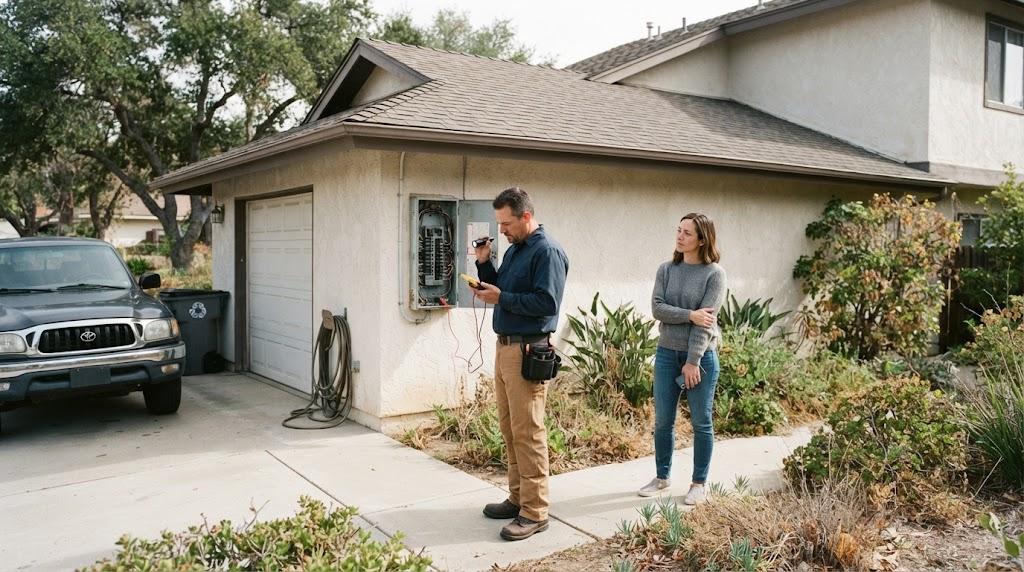
Maybe water starts coming through the wall during the first real storm. Maybe the septic system starts acting up. Maybe an electrician opens a panel and doesn't love what he sees. Or a contractor pulls back drywall for one small repair and finds something a lot bigger underneath.
Your first reaction is probably something like, "How did nobody catch this?"
That's a fair question. But before you try to figure out who's responsible, there's a more useful place to start.
I'm Jacob Menath, a real estate agent with Menath Real Estate Team in Alpine, California, helping buyers and sellers throughout Alpine and East County San Diego navigate major real estate and lifestyle transitions. When a serious problem shows up after closing, I'd start with the property itself. What actually happened? How urgent is it? And what do you need to do next?
The short answer
If a major issue turns up after you've bought the home:
Handle anything that's an immediate safety or damage concern.
Document what you found.
Get the right professional to diagnose it, not guess at it.
Keep every report, estimate, invoice, and communication.
Go back and reread your inspection report and transaction file.
Figure out if insurance, a warranty, or a contractor needs to be involved.
If you're concerned the issue may involve a pre-purchase disclosure problem, preserve your records and consider getting qualified legal guidance promptly.
Stabilize the problem first. Then establish the facts. Then figure out who else needs to be in the conversation.
Start with safety, not blame
This comes before everything else, and it's easy to skip when you're upset.
If there's active water intrusion, an electrical hazard, a structural concern, a sewage or septic backup, anything fire related, or a gas or propane issue, that needs attention right away. I'm not going to walk you through how to fix any of those yourself here. Call the right professional and don't wait on it.
Determining who's ultimately responsible shouldn't come before addressing an immediate safety or property-damage concern.
Document what you found before it changes
Once the immediate danger is handled, slow down and document the condition before repairs materially change it, when that's practical and safe.
Take photos and video. Note the date you discovered it, where it happened, and what you noticed right before. Save any professional's initial observations, along with estimates, invoices, and written communication.
If repairs or demolition are going to change what's visible, it's worth asking the professional or attorney involved what should be preserved first.
Today's obvious problem has a way of becoming a lot harder to reconstruct six months from now, once the wall is patched and the memory has faded.
Resist the urge to diagnose it yourself
This is an easy place to get ahead of yourself.
A crack in the slab doesn't automatically mean the foundation is failing. Water on the floor doesn't tell you on its own where it came from. A septic backup doesn't explain why it happened.
Get the right specialist for the actual issue, whether that's a roofer, plumber, electrician, HVAC technician, septic professional, structural engineer, surveyor, or general contractor. Before you ask how much it's going to cost, or who's on the hook for it, find out what you're actually dealing with.
Look at the scope, not just the symptom
This is the part that separates a good evaluation from a quick guess.
If it's water intrusion, the stain on the ceiling is usually just the symptom, not the story. Worth asking:
What's actually causing it?
Is it isolated to one spot, or is it part of something bigger?
Is there hidden damage behind what you can see?
Is it still happening, or was it a one time event?
Does anything else need to be evaluated because of it?
What happens if it's left alone?
The thing you can see isn't always the whole problem.
Get more than a price when the issue is significant
For a small repair, a quote is fine. For something major, the cheapest number you get isn't necessarily the information you actually need.
What you're usually looking for is the cause, the scope, the realistic options, and then the cost, in that order, rather than jumping straight to "how much to fix this."
A repair estimate tells you a price. A good evaluation helps you understand what you're actually paying to solve. I won't tell you that you always need three bids, because circumstances differ and sometimes one thorough evaluation is worth more than three rushed ones.
Pull out your original inspection report
Once you have a clearer picture of the issue, go back to your pre-purchase paperwork.
Look at what was actually inspected, what was observed, what limitations the inspector noted, and whether further evaluation was recommended at the time. Check whether the affected area was even accessible during the inspection, and look through any photos or related repair requests from the transaction.
Don't start with "the inspector missed this." Start with "what did the report actually say about this area or system?" Those are two different conversations, and the second one is a lot more useful.
Memory tells you what you think you were told. The report tells you what was actually documented.
Review the rest of your transaction file too
If the condition looks like it may have existed before closing, it's worth going through the full file, not just the inspection report.
That can include seller disclosures, the purchase agreement and any addenda, agent related disclosures, repair documents, contractor records, escrow paperwork, emails and texts, and permit or property records.
I'd be careful here about interpreting legal responsibility on your own. Finding something after closing doesn't automatically tell you whether it was known, disclosed, discoverable at the time, or something that developed after you moved in. If you're concerned that a significant condition may have existed before closing and wasn't disclosed, I've covered that separately in "What Happens If Home Problems Weren't Disclosed Before Purchase in California?"
Consider whether insurance needs to be involved
If the issue involves significant or ongoing damage, it's worth contacting your insurance professional early to understand whether your policy may be relevant and what steps they want you to take. Coverage depends on your specific policy and the circumstances, so I wouldn't assume something is or isn't covered based on general advice online, including this article.
A repair problem and an insurance coverage question aren't necessarily the same question, even though they can feel connected in the moment.
Check for a warranty or recent contractor work
Depending on the home and the issue, there may be a home warranty, a manufacturer warranty, or documentation tied to recent contractor work, an installer, or the original builder.
I can't promise you coverage exists, but before assuming the entire cost is yours to handle without checking, it's worth looking at what documentation came with the house and what work has been done on it recently.
Alpine and rural East County homes can add another layer
This is where local property type matters.
On an Alpine or rural East County property, a "major home issue" isn't always a problem with the house itself. It might involve the septic system, a private well, propane, drainage, grading, a private or shared road, an easement, an outbuilding, a retaining wall, a boundary question, or something tied to horse facilities or acreage.
A septic symptom doesn't automatically tell you whether you're dealing with a limited repair or a larger system problem. That's why getting an appropriate septic professional involved matters before assuming the most expensive outcome.
A symptom can tell you something needs attention. It doesn't always tell you what the final diagnosis will be. That's true for wells, propane systems, and drainage issues just as much as it is for septic.
What if the problem looks like it existed before closing?
Once you understand what the issue actually is, it's natural to start wondering whether it existed before you bought the home. That's a fair question, but it's a separate investigation from diagnosing and repairing the property.
Whether it existed before closing, whether anyone knew about it, and whether someone was legally required to disclose it are three related but different questions. I'd encourage you not to collapse them into one conclusion before you have the facts.
Don't make accusations before you have the facts
This one is short on purpose.
It's understandable to feel angry when a repair turns out to be expensive. But "this repair is expensive" doesn't automatically mean "someone hid this from me." Use the frustration as a reason to look into it carefully, not as a substitute for evidence.
Keep one running file from day one
Start a single folder, digital or physical, and keep everything in it: photos and video, professional reports, estimates, invoices, insurance communications, warranty information, relevant pages from your transaction file, permit or property records, and related emails or texts. Keep a simple timeline as you go.
When a problem gets complicated, staying organized becomes part of solving it.
Separate the property problem from the financial problem
If the repair is substantial, you're actually dealing with two questions at once. What does the property need? And how does paying for it affect the rest of your plans?
Maybe you had renovations planned. Maybe those reserves were meant for something else. Maybe you were already thinking about another move down the road. A major repair can quickly become a broader life-planning question, and I'm not going to offer financial advice here, but it's worth naming that these are two separate conversations happening at the same time.
What if this changes whether I want to keep the home?
Sometimes the real question underneath all of this isn't "how do I fix it." It's "do I still want this property."
Maybe repairing it makes sense and life goes on as planned. Maybe you need to understand how it affects resale down the road. Maybe the issue needs to be resolved before any sale conversation even starts. "How do I fix this" and "what does this mean for my future with this property" are two different questions, and the second one is where I can be genuinely useful.
Know which professional owns which question
Here's roughly how that breaks down:
Physical condition of the property → the appropriate specialist for that system
Insurance coverage → your insurance professional
Loan related questions → your lender
Tax consequences → a tax professional
Legal liability or nondisclosure → a qualified real estate attorney
Future sale or property positioning → your real estate agent
A complicated property problem gets easier to navigate when the right question goes to the right professional.
A common scenario
A common first question is: "How much is this going to cost me?"
That's completely understandable. But there are a few questions worth answering first. What exactly happened? Is it still getting worse? Who's actually qualified to evaluate it? What does the paperwork say? Could insurance or a warranty be relevant? Does it look new, or could it predate your purchase?
Once those answers start coming together, the bigger picture usually makes a lot more sense, and the cost question gets easier to think through clearly.
Don't solve the most expensive version of the problem before you know which problem you actually have.
Questions worth asking yourself
Is anyone or anything in immediate danger?
Is additional damage happening right now?
Have I documented the condition?
What professional should actually evaluate this?
Do I understand the cause?
Do I understand the full scope?
What needs to be handled right away, and what can reasonably wait?
What did the seller disclosures say?
Was further evaluation recommended before closing?
Could insurance be relevant here?
Is there a warranty or recent contractor work involved?
Have I kept the reports, estimates, invoices, and communications?
Does this look like it existed before closing?
Am I assuming someone knew about it without actually having evidence?
Do I need legal guidance at this point?
Am I making a major repair decision before I fully understand the diagnosis?
Have I created a simple timeline of when I discovered the problem and what happened afterward?
Does this change my plans for the property?
The bigger question underneath all of it: what do I actually know right now, and what answer do I still need next?
Frequently asked questions
What should I do first if I find a major problem after buying a house?
Handle any immediate health, safety, or ongoing damage concerns first. Then document the condition and get the right professional involved to determine what you're actually dealing with.
Who should I call first when I discover a major home problem?
It depends on the problem. If there's an immediate safety or ongoing property-damage concern, start with the appropriate professional for that condition. Once the situation is stable, document what happened and determine whether your inspector, insurance professional, warranty provider, real estate agent, attorney, or another specialist also needs to be involved.
Should I repair the problem before figuring out who is responsible?
Immediate safety and ongoing damage may need attention right away. When circumstances allow, document the condition before major repairs materially change it. If you believe the issue could become a significant legal or insurance dispute, consider getting appropriate professional guidance early rather than trying to determine responsibility yourself.
Should I call my real estate agent if something goes wrong after closing?
It can help, especially if you need assistance locating transaction documents, understanding where something appeared in the file, finding the right property professionals, or thinking through what it means for your plans going forward. Your agent shouldn't be the one determining legal liability.
Should I call my home inspector?
If the issue relates to something the original inspection covered, it's worth reviewing that report and reaching out to the inspector. Start with what the report actually documented, including any limitations and recommendations for further evaluation.
What if the repair costs thousands of dollars?
A high cost makes it even more important to understand the cause and scope before making decisions. Consider whether insurance, a warranty, or recent contractor work might be relevant, and get the right professional guidance before moving forward.
What if the problem existed before I bought the home?
That doesn't automatically mean someone failed to disclose it wrongfully. Whether it existed before closing, whether anyone knew, and whether disclosure was legally required are separate questions. If you're in this situation, I've covered what to do next in "What Happens If Home Problems Weren't Disclosed Before Purchase in California?"
What if I discover unpermitted work?
Start by figuring out what actually exists and what the property or permit records show. Try not to jump from "this wasn't permitted" straight to a conclusion about who's responsible before you have the facts.
Can I sell a home after discovering a major problem?
Discovering a problem doesn't necessarily mean a future sale is impossible, but a known condition can raise disclosure, repair, pricing, negotiation, and marketability questions. Before deciding how to move forward, it's worth understanding the condition fully and getting appropriate legal or professional guidance about your obligations.
The bottom line
When a major problem shows up after closing, you don't have to solve everything at once.
Protect people and the property first. Document what happened. Get the right professional to diagnose it. Understand the full scope, not just what's visible. Go back through your original records. Check whether insurance, warranties, or other professionals need to be part of this. Then work through what it means for you financially, legally, and as the homeowner.
The first question isn't really "who caused this." It's "what am I actually dealing with, and what needs to happen next."
Jacob Menath is a real estate agent with Menath Real Estate Team in Alpine, California, helping buyers and sellers throughout Alpine and East County San Diego navigate major real estate and lifestyle transitions.
Menath Real Estate Team | Alpine, CA | Serving San Diego County



Have questions?
Menath Real Estate Team
Jacob & Kristin Menath, REALTORS®
2710 Alpine Blvd Ste K PMB 10106
Alpine, CA 91901
www.menathrealestate.com
CA DRE #01742516 | CA DRE #01522683