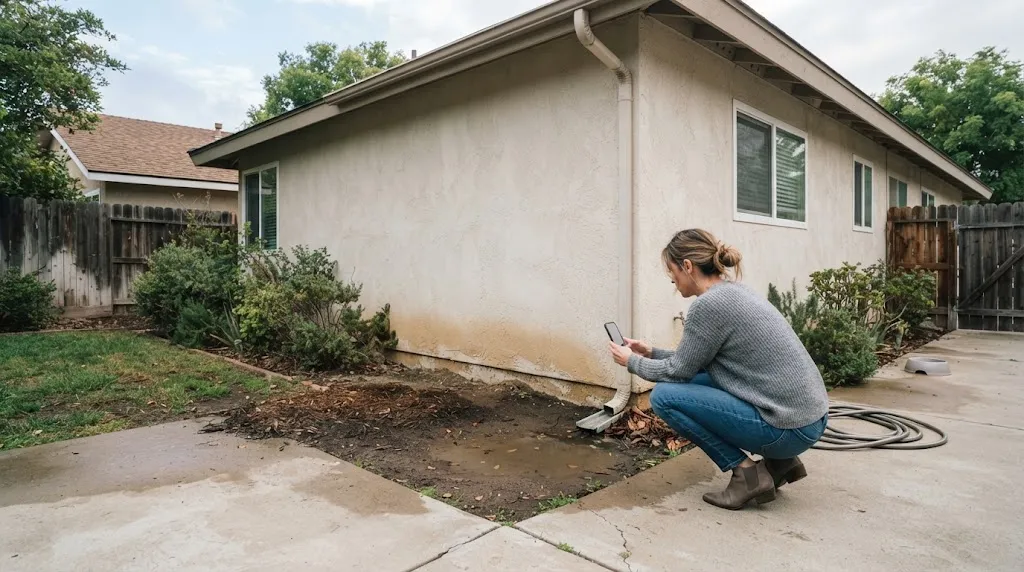
What Happens If Home Problems Weren't Disclosed Before Purchase in California?
You bought the house.
Escrow closed. You moved in. Things settled down.
Then you found something you weren't expecting. Maybe it's water intrusion in a corner you never noticed during your walkthroughs. A drainage issue that only shows up after a real storm. Something with the roof. An addition that doesn't quite match the permit records. A septic system acting up. A boundary question with the neighbor. Or a repair that looks like it was done just well enough to pass a quick look.
And now you're sitting with the same question a lot of buyers ask me:
"Was someone supposed to tell me about this?"
I'm Jacob Menath, a real estate agent with Menath Real Estate Team in Alpine, helping buyers and sellers throughout Alpine and East County San Diego navigate major real estate and lifestyle transitions. On Alpine and rural East County properties, the question can involve more than the house itself, from septic and drainage to roads, boundaries, outbuildings, and permits.
Before anything else, I wouldn't jump straight to "the seller definitely hid this," and I wouldn't assume "I already closed, so there's nothing I can do" either. Neither one is fair to you, because neither one is based on the facts yet. And in this situation, the facts are everything.
The short answer
If you discover an undisclosed problem after buying a California home, start by documenting the condition and reviewing what you actually received before closing.
That usually means going back through:
Your seller disclosures
Inspection reports
Any agent-related disclosures
Repair documentation
Escrow documents
The purchase agreement and relevant addenda
Permits or property records
Emails and text messages from the transaction
Contractor reports
Photographs from before and after you moved in
From there, try to work out a few things: what the problem actually is, when it likely started, whether it was disclosed anywhere in your paperwork, whether there was any evidence of it during your inspections, and whether there's anything suggesting someone knew about it before the sale.
If the issue is significant, it's worth getting that advice promptly. Not every situation calls for an attorney right away, but if you believe important information may have been withheld, don't sit on it.
But here's the piece that gets skipped in a lot of "what to do" articles: don't start with who to blame. Start with what you can document.
A problem after closing doesn't automatically mean someone failed to disclose it
This is the distinction that matters most, and it's the one that gets lost when someone is upset and staring at a repair estimate.
Homes have problems. Things break. Conditions change over time. Some defects genuinely aren't discoverable until later, no matter how careful everyone was. And sometimes a condition existed before the sale without the seller actually knowing about it.
California nondisclosure disputes can turn on several different facts, including what the seller knew, what was disclosed, what the buyer knew or could discover, whether the information was important to the transaction, and whether the buyer suffered harm. The exact legal requirements depend on the claim and the circumstances.
An undiscovered problem and a legally actionable nondisclosure aren't automatically the same thing, even though they can feel identical when you're the one holding the bill.
Start with the disclosure package you actually received
Before relying on memory of what was said in a hallway conversation months ago, pull the actual transaction file.
Read the documents again, slowly, instead of skimming for the one line you're worried isn't there. Depending on your transaction, this may include the seller disclosure forms, the inspection reports, any disclosures tied to the agents involved, repair records, and other property documents that came through escrow.
California has statutory disclosure requirements for certain residential sales, including the Transfer Disclosure Statement framework under Civil Code section 1102 and the sections that follow it. What you need right now isn't a legal tutorial on that framework. What you need is to know what your own file actually says, not what you remember it saying.
Compare what you found with what was disclosed
Say you've found water intrusion. Don't just search the paperwork for a single checkbox that says "water leak: yes or no."
Look at the whole record instead. Was there any mention of previous repairs, drainage work, roof work, moisture, insurance claims, contractor recommendations, inspection observations, or areas that couldn't be fully inspected at the time?
I'm not in a position to decide whether the disclosure was legally sufficient, and honestly, neither is any real estate agent. What this step is really about is understanding whether the condition you're looking at now connects to information that was already sitting somewhere in your file before you closed. Sometimes the answer shows up in the disclosure. Sometimes it's buried in an inspection report. And sometimes the more telling thing is what's missing from both, though what's missing doesn't by itself prove something should have been there.
Document the condition before you lose the evidence
This is one of the most practical things I can tell a buyer in this situation.
If you find something significant, take photographs. Take video if it helps show the scope. Write down when you discovered it. Save any communications that reference it. Keep invoices and repair estimates. Preserve reports from any professional who looked at it. Before discarding potentially relevant materials, consider asking the appropriate professional or attorney whether they should be preserved. Bring in qualified professionals when the issue calls for it.
If there's an urgent safety or damage-control issue, deal with it. That comes first, always. But when you have the option, document the condition before a repair changes what the evidence actually shows. For anything that might turn into a real dispute, it's worth asking an attorney how evidence should be preserved before you start tearing into walls or flooring.
Find out what the problem actually is
A stain isn't a diagnosis. A crack isn't automatically a foundation failure. A slow drain doesn't prove the seller knew the septic system was failing.
Before you get anywhere near the question of who knew what, get the right professional involved to tell you what you're actually dealing with. Depending on the issue, that might be a home inspector, roofer, plumber, electrician, septic professional, structural engineer, surveyor, or general contractor.
This matters especially on Alpine and rural East County properties, where the condition you're investigating may involve systems, land, access, drainage, or improvements beyond the house itself.
Was there evidence the condition existed before you bought the home?
This is a different question than proving someone knew about it, and it's worth separating in your own mind.
A qualified professional can sometimes speak to the apparent age or history of a condition. There may also be old repair records, previous permits, contractor invoices, photographs, prior inspection reports, or even earlier transaction documents that shed light on when something started.
I'd caution against turning this into an investigation of your own, like calling neighbors or confronting the seller directly. That rarely goes the way people hope, and it can complicate things later if there ends up being a real dispute. "This existed before closing" and "the seller knew about this before closing" are two separate questions, and it's worth holding onto that distinction even when your instinct is to collapse them into one.
Seller knowledge can matter, but suspicion isn't proof
I want to be careful here, because this is where I see buyers talk themselves into a conclusion before they have the facts to back it up.
Seller knowledge can be an important issue in a California nondisclosure dispute, depending on the legal claim and the facts involved.
"They lived there for ten years, so they had to know" may feel intuitive, but length of ownership alone doesn't establish what someone actually knew. Suspicion can absolutely tell you what to investigate. It doesn't establish what someone legally knew.
Materiality matters too
Not every undisclosed detail gets treated the same way. Whether an undisclosed fact was legally significant can matter too, and that's another determination I wouldn't try to make as the real estate agent.
What I can tell you is this: the more significant the issue, the more important it becomes to establish exactly what it is, what was disclosed, and what evidence exists from before the sale.
What if my inspector missed it?
This is a fair question, and it's one I get often.
Before pointing a finger at the inspector, go back to the actual inspection report. Look at its stated scope, which areas were inspected, what limitations were noted, whether further evaluation was recommended anywhere, and whether any part of the property simply wasn't visible or accessible at the time.
The fact that an inspector didn't find something doesn't automatically tell you whether the condition was reasonably discoverable when the inspection happened. If there's a real concern, that's a conversation for the inspector or another qualified professional, not something to sort out on your own from a photo.
What about the real estate agents?
California law can place disclosure and inspection-related duties on real estate licensees in residential transactions, but what applied in your specific case, and whether any duty was actually breached, depends on the facts of your transaction.
I'm not going to tell you "the agent should have caught it," because I don't know your file and I'm not the right person to make that determination even when I do. If you're concerned about what an agent knew, observed, disclosed, or should have done, preserve your transaction records and take the specific facts to a qualified attorney. A real estate agent isn't the person who should determine whether another party is legally liable.
Alpine and rural properties can make the facts more complicated
This is where the local reality tends to show up.
A post-closing issue on an Alpine or East County property can involve a lot more than the walls of the house itself. Depending on the property, you might be dealing with questions around:
Septic
Private water
Roads
Easements
Drainage and grading
Property boundaries
Outbuildings
Permits
Retaining structures
Horse-property improvements
On a rural property, the thing you discover after closing is sometimes somewhere out past the house entirely.
Unpermitted work can be especially confusing
Say you discover an addition, a conversion, an electrical change, a retaining wall, or an outbuilding, and start questioning whether it was ever permitted.
Don't jump straight to "the seller illegally hid this." First, figure out what actually exists, what records are available, what was represented to you before closing, what was disclosed, and what the relevant local agency's records actually show. Establish the permit facts before turning a permit question into an accusation.
Don't start tearing everything apart before getting advice
A buyer who discovers moisture may understandably want to open the wall immediately and figure out what's happening.
Sometimes emergency remediation really is necessary, and that has to come first for safety reasons. But if there's a chance this turns into a real dispute, changing the condition changes what evidence is left to look at. For anything urgent involving health, safety, or ongoing property damage, handle it. For a significant suspected nondisclosure issue that isn't an emergency, it's worth getting professional and legal guidance early, before major repairs or demolition begin, so you know what should be documented first.
Keep a timeline
This sounds simple, and it is, but it's one of the most useful things you can do.
Write down your closing date, your move-in date, the date you discovered the issue, who discovered it, which professionals you contacted and what they told you, any repairs you performed, expenses you incurred, and any communications with the other parties involved.
Months from now, a written timeline will serve you far better than trying to reconstruct everything from memory.
Don't wait too long to get legal advice
California Courts has been clear that deadlines to bring lawsuits vary depending on the type of claim, can be fact-specific, and may in some situations depend on when a problem was or reasonably should have been discovered. Their own guidance recommends speaking with a lawyer if you're uncertain about the deadline that applies to your situation.
I'm not going to publish a universal statute-of-limitations number here, because that would be a disservice to you. If you think you may have a serious nondisclosure issue, don't try to calculate your legal deadline from an article online. That's attorney territory, and it's worth treating it that way.
What I can actually help with
I want to be straightforward about where my role starts and ends here.
I can help you:
Locate transaction documents
Understand where certain information appeared in your real estate file
Identify which property professionals might be useful for your specific issue
Provide local context on the property or area
Help you organize your questions before you talk to an attorney
Talk through what this might mean for your real estate plans going forward
What I can't do is tell you:
Whether fraud occurred
Whether someone breached a legal duty
Who's legally liable
What damages you might be entitled to
Whether you should file a lawsuit
What your legal deadline is
Those are questions for a qualified attorney, not your real estate agent.
A common scenario
A common reaction sounds something like: "We found this after closing. The seller had to know."
Maybe they did. Maybe they didn't. That's genuinely not where I'd start the conversation.
I'd start with what exactly they found, what the disclosures actually said, what the inspection report said, what evidence exists about when the condition began, whether the right specialist has evaluated it yet, and whether everything has been documented. And if the facts point toward a real disclosure concern, the next question is simple: have you talked to a qualified California real estate attorney yet.
Good decisions start with evidence, not accusations.
Questions worth asking yourself
What exactly did I discover?
When did I discover it?
Is there an immediate safety or damage concern?
What do my seller disclosures actually say?
What did my inspection report say?
Was further inspection recommended anywhere?
Was the area visible or accessible before purchase?
Have I photographed and documented the condition?
Has an appropriate specialist evaluated it?
Is there evidence the condition existed before closing?
Is there evidence of prior repairs?
Are there permits or property records relevant to it?
Do I have communications that mention the issue?
Have I kept invoices and estimates?
Have I preserved a complete copy of my purchase agreement and addenda?
Have I spoken with my real estate agent?
Have I avoided making assumptions about who knew what before I've established the facts?
Is this significant enough that I should speak with a California real estate attorney promptly?
The bigger question underneath all of it: what do I actually know, and what am I still assuming?
Frequently Asked Questions
What happens if a seller doesn't disclose a problem in California?
It depends on the facts and the legal theory involved. Finding a problem after closing doesn't automatically establish wrongful nondisclosure. Questions may include what the seller knew, what was disclosed, what the buyer knew or reasonably could discover, how significant the information was, and whether the buyer suffered harm. A qualified California real estate attorney can evaluate how the law applies to the specific transaction.
Can I sue a seller for not disclosing a problem?
Potentially, depending on the facts and applicable law. Whether you have a viable claim, against whom, what remedies might be available, and what deadlines apply are legal questions. Preserve your records and speak with qualified legal counsel promptly.
What if the seller says they didn't know about the problem?
Knowledge can be an important issue in a nondisclosure claim. Don't assume that length of ownership, or the condition itself, automatically proves what a seller knew. The evidence and specific facts matter here.
What if my inspector missed the problem?
Go back to the inspection report, its limitations, which areas were inspected, and any recommendations for further evaluation. Whether the condition was reasonably discoverable, and whether anyone breached a duty, are fact-specific questions.
Should I contact the seller after discovering a problem?
For a significant potential dispute, it's worth getting legal advice before deciding how to communicate with other parties. In the meantime, preserve the relevant documents, photographs, reports, and communications.
What if I discover unpermitted work after closing?
First establish what work actually exists, what the property or permit records show, and what was represented or disclosed during the transaction. If it's significant, check with the appropriate local agency and qualified professionals, and get legal advice if you believe disclosure obligations may have been violated.
What if I find evidence the seller repaired the problem before selling?
Prior repair evidence may be important, but don't assume it proves wrongful nondisclosure by itself. Document what you found, preserve relevant records, compare it with the transaction disclosures and inspection reports, and have the condition evaluated by the appropriate professional. If the issue is significant, take the evidence to a qualified California real estate attorney.
Does buying a home "as-is" mean the seller didn't have to disclose problems?
Don't assume an "as-is" purchase automatically answers a disclosure question. The effect of your contract language, and any applicable disclosure duties, depends on the facts and the law. Review your actual agreement and disclosures, and speak with a qualified California real estate attorney if there's a significant dispute.
How long do I have to make a nondisclosure claim?
Don't rely on a generic number you find online. California legal deadlines vary by claim and circumstances, and when the problem was discovered can matter in some situations. California Courts recommends speaking with an attorney when you're uncertain about the deadline that applies to you.
The bottom line
Discovering a major problem after buying a California home is frustrating, and it's fair to feel unsettled by it.
But there's a real gap between "I found a problem" and "the seller committed fraud." Start with the facts. Document the condition. Review your disclosures. Review your inspection report. Get the right property professional involved. Preserve your records. Build a timeline. Then, if the facts suggest something significant may not have been disclosed, get qualified California real estate legal advice promptly.
There are really two separate questions in front of you. What's wrong with the property? And was someone legally required to tell you about it before you bought? You need the right professional answering each one, and they're not usually the same person.
Jacob Menath is a real estate agent with Menath Real Estate Team in Alpine, California, helping buyers and sellers throughout Alpine and East County San Diego navigate major real estate and lifestyle transitions.
Menath Real Estate Team | Alpine, CA | Serving San Diego County



