What to Check Before Buying a Home in Alpine, CA
When buyers worry about expensive surprises, they usually start by looking at the house.
The roof. The HVAC. The plumbing.
And they should.
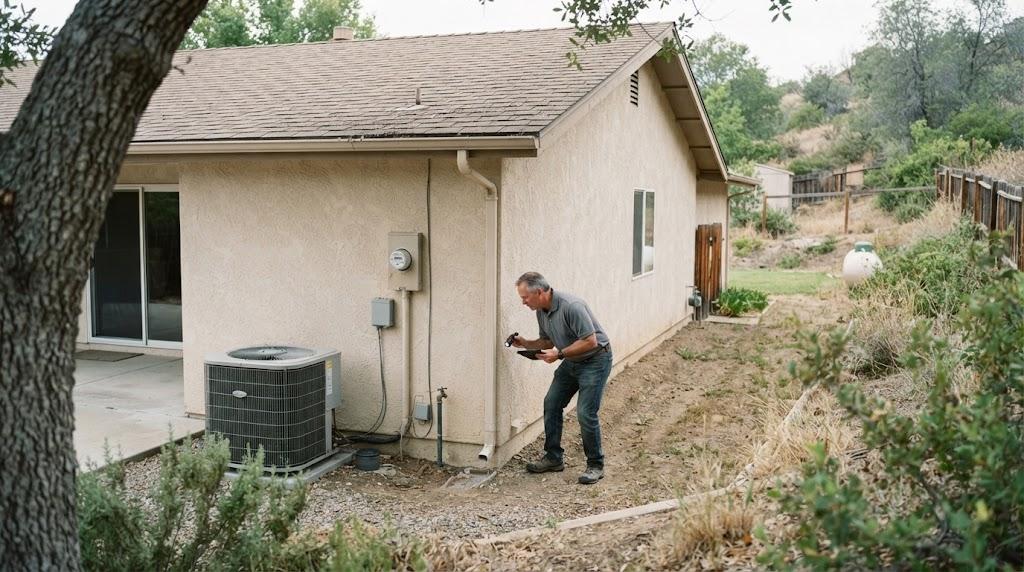
But in Alpine, I want buyers looking beyond the front door too.
Because depending on the property, the expensive surprise might involve the septic system. Or the road. Or drainage. Or an outbuilding. Or insurance. Or realizing that the acreage you were excited about requires far more maintenance than you expected.
I'm Jacob Menath, a real estate agent with Menath Real Estate Team in Alpine, California, helping buyers and sellers throughout Alpine and East County San Diego navigate major lifestyle transitions.
Because I work extensively with rural and semi-rural properties in this area, I spend a lot of time helping buyers understand the parts of a property that aren't always obvious from the listing. And when I'm walking a property with someone, one question matters more than almost any other:
What are we assuming about this property that we haven't actually verified yet?
The short answer
Before buying a home in Alpine, look at both the house and the property around it.
Depending on the home, that can mean understanding the major systems, the septic, the water source, whether the road is private or shared, insurance availability, wildfire considerations, drainage and terrain, how usable the acreage actually is, any outbuildings or additions, permit history, utilities and internet, solar arrangements, and what ongoing maintenance you're signing up for.
You won't eliminate every future repair or expense. That's not realistic, and I wouldn't promise it to anyone.
The goal is to reduce the number of surprises that come from something you could have looked into before buying.
A surprise is one thing. An assumption you never checked is another.
Start with the house itself
Don't let the rural side of things distract you from ordinary property condition. That still matters just as much here as anywhere else.
Depending on the home, that means paying attention to the roof, the HVAC system, plumbing, electrical, foundation, windows, drainage around the structure, and any previous improvements.
Alpine has some unusual properties, but the house itself still deserves the same careful attention you'd give a home anywhere in the county.
Age doesn't automatically mean condition problems. A beautiful remodel doesn't automatically mean the underlying systems were addressed either.
Cosmetic condition and underlying condition are two different questions.
(Internal link: How Do Older Homes Affect Resale Value in San Diego?)
Understand the septic system before you own it
If the property has septic, don't just check a box that says "septic" and move on to the next line item.
Understand the system serving that particular home. Ask about available records, where it's located on the property, and what property-specific inspection or evaluation is appropriate during your purchase. If you've never owned a home with septic before, it's worth learning what maintaining one actually involves, too, since it's a different rhythm than being connected to a city sewer line.
A septic system isn't automatically an expensive problem. Not understanding the system you're buying can become one.
Know exactly where the water comes from
Alpine homes get their water in different ways. Some are on public water. Some rely on a private well. Some have other property-specific arrangements.
Don't assume two homes on nearby roads have identical water setups, because they often don't.
Ask directly: where does this house get its water?
If a private well is involved, get information on the specific system, whatever records exist, and appropriate professional testing before you rely on it. If your plans for the property depend on a particular level or type of water use, investigate that assumption specifically rather than assuming the existing water source supports your intended use.
Get insurance information early
This is one of the more important steps, and I recommend addressing it early.
I wouldn't wait until you're emotionally attached to an Alpine home to start asking about insurance. Availability and pricing are specific to the property, and they can change over time based on factors outside anyone's control.
Get information for the actual property from an insurance professional early enough that the information can meaningfully factor into your decision.
Two nearby homes may not necessarily have identical insurance availability or pricing, which is why I recommend getting property-specific information directly from an insurance professional.
Look beyond the listing when it comes to wildfire
Wildfire preparedness is part of owning property out here, but it isn't something I'd reduce to a ZIP code or a general reputation.
Look at the property itself. How is it situated? What's around it? What vegetation is on the lot, and what kind of ongoing maintenance would defensible space actually require? How does access work if you ever needed to leave quickly?
I'm not in a position to assign risk myself, and I wouldn't want to. What I can do is point you toward the right property-specific information instead of letting anyone make assumptions from a listing photo.
Understand the road before you depend on it
If access to the home is private or shared, don't wait until after closing to find out who's responsible for maintaining it.
Understand how access actually works. Who uses the road? What condition is it in? Is there a maintenance agreement, and if so, what does it say? If anything about the legal rights or obligations feels unclear, that's worth getting proper guidance on before you close, not after.
The road you'd drive every day deserves more attention than the two minutes you spend on it during a showing.
Pay attention to drainage, slope, and terrain
Properties can look very different in August than they do during a wet winter.
Walk the land and pay attention to the terrain and any visible drainage features. Are there slopes or retaining features? Are there low spots or areas near the structure that seem worth a closer look?
I'm not going to draw conclusions for you, and you shouldn't draw them for yourself either without the right information. If something raises a question, investigate it with the appropriate professional rather than drawing a conclusion from the showing alone.
A dry-day showing doesn't tell you everything about how a property behaves once the rain starts.
Don't pay for acreage you only understand on paper
Acreage is one of the biggest reasons buyers start looking in Alpine in the first place. It's also one of the easiest things to misjudge.
Don't stop at the number on the listing. Walk the property. Look at the slope, the access points, the configuration, and whatever improvements already exist. Think honestly about what you'll actually use versus what just sounds appealing on paper.
Two acres on the listing doesn't automatically mean two usable acres that work the way you pictured them.
If you're buying with a specific use or future plan in mind, verify that the property actually supports it rather than assuming acreage alone makes it possible.
Understand every structure you're paying for
A workshop, barn, garage, shed, ADU, or converted space can be one of the most appealing parts of an Alpine property. It can also raise a few questions worth answering before you make it part of your offer.
What exactly is the structure? What condition is it in? What records exist for it? If part of what you're paying for is that extra building, make sure your understanding of it matches reality rather than a guess formed while walking through it once.
Don't assign value to an assumption.
(Internal link: Do Workshops and Outbuildings Add Value in Alpine?)
Look into permit information where it matters
Older and custom properties tend to accumulate changes over the years, and Alpine has plenty of both.
If an addition, conversion, outbuilding, or other improvement is a meaningful part of why you're interested in the property, it's worth looking into available permit information. This isn't about assuming an older improvement is automatically a problem. It's about understanding what you're actually paying for.
Verify internet and utilities at the address
Don't assume that "available in Alpine" means available at the specific home you're buying. Service options can vary by address, so verify availability at the specific property.
If reliable internet matters for work, school, or streaming, verify service at the actual address before you get too far along. Likewise, get a clear picture of how the home is served by utilities, and whether something like propane is part of the day-to-day ownership experience.
General availability tells you about Alpine as a whole. Address-specific availability tells you about your house.
Understand the solar before you count the savings
Solar panels can look like an obvious win on a listing sheet. Before you build assumptions about future energy costs around them, understand the arrangement attached to that specific property.
Is the system owned outright? Financed? Leased? Are there agreements or ongoing obligations that come with it? Get the relevant details and, where needed, appropriate professional guidance rather than assuming panels on the roof automatically mean lower bills.
Solar on the roof doesn't tell you the financial arrangement behind it.
Calculate the maintenance in time, not just money
Buyers naturally ask, what is this property going to cost me?
I'd also ask, how much of my time is this property going to require?
Depending on the home, that can mean vegetation and brush management, trees, fencing, a long driveway or private road, drainage, acreage upkeep, outbuildings, and landscaping that a smaller in-town lot simply doesn't demand.
Sometimes the surprise isn't the repair bill. It's realizing you bought yourself another job.
Know which kind of buyer you are before the acreage becomes your Saturday.
Don't let a beautiful remodel end the investigation
Fresh paint, new flooring, updated countertops, a gorgeous kitchen. These are easy to evaluate during a showing, and they're also the things you're most likely to notice first.
But cosmetic improvements don't answer every question about an older home. Depending on the property, the major systems and past improvements underneath the finishes may deserve their own separate look.
A beautiful kitchen tells you about the kitchen. It doesn't tell you everything about the house.
A pattern I see with buyers
Buyers often arrive at a property asking, what's wrong with it?
That's understandable. But eventually I want the question to shift to, what don't we understand yet?
Those are different questions.
A septic system isn't automatically wrong. A private road isn't automatically wrong. A well isn't automatically wrong. A steep lot isn't automatically wrong. An older house isn't automatically wrong. They simply create questions that need answers before you commit.
Good due diligence isn't about finding a reason not to buy the property. It's about understanding the property well enough to decide, with confidence, whether you still want to.
Questions worth asking yourself
What do I actually know about the home's major systems?
What am I assuming based only on cosmetic condition?
Does the property have septic, and do I understand it?
Where does the water come from?
Is access public, private, or shared, and who maintains it?
What does insurance look like for this exact property?
What wildfire-related ownership considerations should I look into?
How does water move across the property when it rains?
How usable is the acreage, really?
What additional structures exist, and what do I know about them?
Are there improvements where permit information matters?
Is internet actually available at this address?
Does the home run on propane?
What is the solar arrangement associated with the property?
What will I need to maintain, and how much time will that take?
What am I most excited about here, and have I actually verified the assumptions I'm making about it?
What feature of this property could create the biggest ongoing expense or responsibility after I own it?
The big question underneath all of them: what could surprise me after closing that I still have the chance to look into right now?
Frequently asked questions
What should I inspect before buying a home in Alpine? It depends on the specific property. Beyond the home itself, Alpine buyers may need to look into septic systems, wells or water sources, private roads, drainage, outbuildings, insurance, utilities, and acreage usability.
What are the biggest hidden costs of owning a home in Alpine? There isn't one universal list, since Alpine properties vary quite a bit. Depending on the property, ownership costs can involve maintenance, insurance, septic, wells, propane, private roads, acreage upkeep, vegetation management, outbuildings, or major home systems.
Should I get insurance information before making an offer on an Alpine home? It's worth getting insurance information early enough that it can inform your decision rather than come as a surprise afterward. Since insurance is property-specific and can change over time, get current information from an insurance professional for the actual home you're considering.
Should I worry about septic when buying in Alpine? Not automatically. Plenty of Alpine homes use septic systems successfully for years. What matters is understanding the specific system tied to the property and getting the right evaluation before you buy.
What should I know before buying acreage in Alpine? Look past the total acreage number. Consider terrain, slope, access, configuration, maintenance requirements, existing improvements, and whether the property genuinely supports what you want to use it for.
Are private roads a problem in Alpine? Not necessarily. If a property uses private or shared access, it's worth understanding the road's condition, how maintenance is handled, any relevant agreements, and other property-specific details before you rely on it.
How can I avoid buying a home with expensive problems? You can't guarantee a home will never need an unexpected repair, and I wouldn't tell you otherwise. The goal is to investigate the property carefully, bring in the right professionals, understand what you're actually buying, and reduce the number of assumptions you're carrying into closing.
Are Alpine homes more expensive to maintain? Not necessarily. Maintenance depends much more on the specific property than the ZIP code. A larger parcel with vegetation, private access, outbuildings, septic, or other property-specific features may involve responsibilities that a smaller conventional property doesn't. That's why it's important to evaluate the ownership requirements of the actual home you're considering.
The bottom line
So, what should you check before buying a home in Alpine to avoid costly surprises?
Check your assumptions.
Understand the house. Understand the land. Understand the water. Understand the septic. Understand the road. Understand the insurance. Understand the improvements. Understand the utilities. And understand what maintaining all of it will actually require of you.
You can't predict every future repair. But you can reduce the number of surprises created by assumptions you had the opportunity to investigate.
Don't ask only, "What's wrong with this house?"
Ask, "What don't I understand about this property yet?"
That's usually where the most important questions begin.
Jacob Menath is a real estate agent in Alpine, CA serving San Diego County, helping homeowners make informed, confident decisions when buying their home and navigating major life transitions.
Menath Real Estate Team | Alpine, CA | Serving San Diego County



