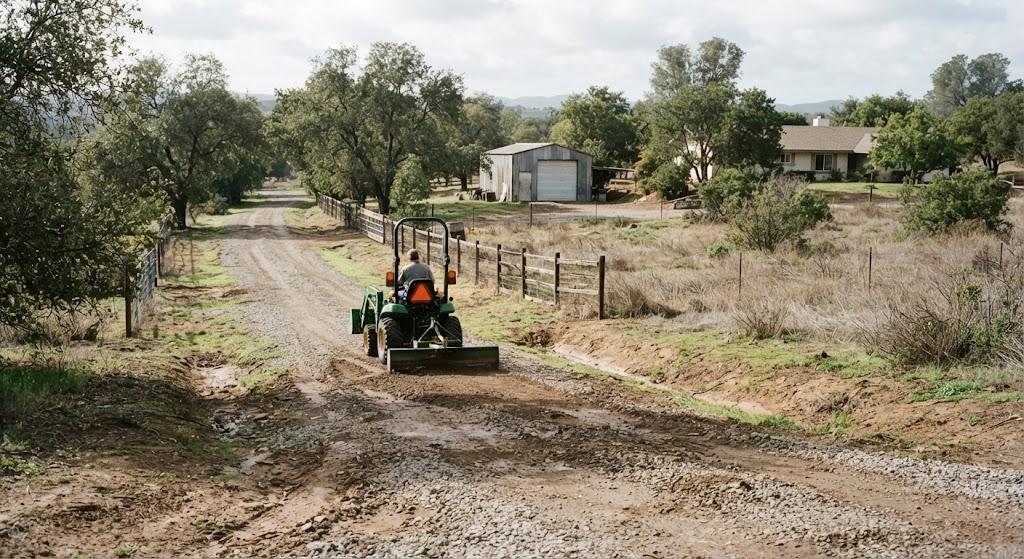
How Expensive Are Rural Property Repairs in East County?
How Expensive Are Unexpected Repairs on Rural Properties in East County San Diego?
When buyers ask me whether rural properties are expensive to repair, my honest answer is usually the same.
It depends on what you're actually responsible for.
A rural home can have every repair expense a conventional home has. The roof can fail. The HVAC can need replacement. Plumbing can need work. None of that changes just because the property has acreage.
But depending on the property, you may also be responsible for a septic system, a well, a long driveway or private road, drainage, fencing, trees, outbuildings, or other infrastructure you never had to think about at your last house.
I'm Jacob Menath, a real estate agent with Menath Real Estate Team in Alpine, California, helping buyers and sellers throughout Alpine and East County San Diego navigate major lifestyle transitions. A lot of the buyers I work with are coming from a very different kind of property, and when I'm helping someone evaluate a rural home, I don't want them asking only "what could break inside the house?" I want them asking "what am I responsible for maintaining everywhere on this property?"
Those are two different questions. And the second one is the one that actually protects your budget.
The short answer
There isn't one number I can give every buyer for unexpected rural repairs, and I'd be cautious of any article that promises one.
A small repair to a single component and a full system replacement aren't the same thing. Fixing a short stretch of driveway and dealing with a larger access or drainage problem aren't the same thing either. Costs depend on the specific system, its condition, how hard it is to reach, and how much work it actually needs.
So instead of chasing a dollar figure, the more useful move is identifying the property's major expense categories before you buy. Once you know what you're actually taking on, you can start asking better questions and getting real information, instead of guessing at a number that may not apply to your situation at all.
The bigger question isn't "how much do rural repairs cost?" It's "what systems and responsibilities on this property could eventually cost me money?"
Start with the same repairs every home can have
Rural doesn't replace conventional home maintenance. It adds to it.
You still have a roof, an HVAC system, plumbing, electrical, a foundation, windows, and the usual exterior wear that any home deals with over time.
Sometimes buyers get so focused on the unusual parts of a rural property, the septic, the well, the acreage, that they forget the house itself can still create the biggest repair expense on the property. A well-maintained septic system doesn't make an aging roof disappear. A great well doesn't do anything for outdated electrical, and age-related wear is its own category worth understanding.
Rural due diligence starts with the house. It just doesn't end there.
Septic repairs can vary dramatically
There's a real difference between routine septic maintenance and discovering that a system needs significant repair or replacement.
That's why I won't tell a buyer "septic systems cost X." It's not a useful answer, because it doesn't account for the actual system serving the property, its components, condition, or maintenance history.
What matters is understanding the specific system, its components, condition, available records, and the work actually required. Review whatever records exist and get the appropriate property-specific evaluation before you're relying on assumptions.
Don't budget for "a septic system." Understand the septic system you're actually buying.
A well can turn water into a property-specific expense
A private well isn't automatically expensive or problematic.
But a well introduces its own components, maintenance considerations, and questions about the water source that someone coming from public water may not have dealt with before.
If a property depends on a well, look into the system itself. Available records, condition, and the right testing or professional evaluation will tell you far more than a general estimate ever could.
The surprise isn't usually that the property has a well. The surprise is finding out something about that well after you already own it that you could have investigated before you bought.
Private roads and long driveways can become your responsibility
This is one of the biggest differences between rural and suburban ownership, and it's easy to overlook because it doesn't show up in the photos.
A long driveway looks great in listing pictures. It's less romantic when it needs grading, drainage work, or resurfacing.
And if the property uses a private or shared road, the first question isn't what repairs might cost. It's who is actually responsible for them. A buyer may assume a road is publicly maintained simply because nothing about it looks unusual during the showing. That's an assumption worth verifying.
Before you buy, understand both the physical condition of the access and whatever maintenance agreement exists, if one does at all.
The road you use every day is part of the property experience, even though it isn't technically part of the house.
Drainage problems can become property problems
Water doesn't care where the house ends and the acreage begins.
Drainage issues can affect driveways, slopes, landscaping, retaining features, structures, and even portions of usable land. That's why terrain deserves real attention during a purchase, not just a glance.
A sunny afternoon showing can tell you very little about how a property behaves during heavy rain. A property can look very different during wet weather than it does during a dry summer showing.
Don't evaluate drainage only when the ground is dry. And if something looks off, don't try to diagnose it yourself. Bring in the right professional to take a real look.
Trees, vegetation, and acreage create ongoing costs
One of the easiest rural costs to underestimate isn't a dramatic repair at all. It's everything that happens repeatedly.
Trees, brush, fencing, landscaping, weed abatement, driveway upkeep. A larger property can simply require more time, labor, equipment, or hired help, just because there's more property to manage.
This is where the lifestyle side of rural ownership meets the financial side. Buyers often picture the land and the privacy without picturing the ongoing work that comes with keeping it in shape.
Sometimes the expensive surprise isn't one giant repair. It's a responsibility that keeps showing up year after year.
Outbuildings give you more things to maintain
Depending on the property, you might be looking at a workshop, a barn, a detached garage, a shed, an ADU, or some combination of all of it.
Buyers naturally see the benefit right away. More storage. A workshop. Extra garage space. Additional usable space, depending on the property and how the structure can actually be used.
But every additional structure also comes with its own roof, exterior, and sometimes its own electrical system, doors, and drainage considerations. Each one is something that may eventually need attention, on its own timeline, separate from the house.
More improvements can create more utility. They can also create more things to maintain.
Access can affect the repair itself
This is something that surprises a lot of buyers who haven't owned rural property before.
The same repair isn't necessarily the same job on every property. Where is the damaged component? Can equipment actually reach it? How difficult is the terrain? Is the work happening close to the road, or farther onto the property where access is limited?
That doesn't automatically make rural repairs more expensive across the board. But it does mean the property's layout and access can become part of the repair conversation in a way it never would on a standard suburban lot.
Sometimes you're not only paying for what needs to be repaired. The property itself can influence how the repair has to happen.
Deferred maintenance can compound
A property doesn't need to be perfect. Almost none of them are.
But when several systems or areas have been neglected at the same time, the ownership picture can change fast. Maybe the house needs some work. The driveway needs attention. The fencing is tired. The vegetation hasn't been managed in a while. An outbuilding needs a new roof.
Individually, each item might be manageable on its own. Together, they can represent a very different commitment than the buyer originally pictured.
One repair is a project. Five neglected systems can become a plan. That's why I look at deferred maintenance collectively, not just item by item.
Don't confuse purchase price with cost of ownership
This is one of the most important things I try to get across early in the process.
A rural property may give you more house, more land, more privacy, or more improvements for your budget than a comparable property closer in. That's often part of the appeal.
But purchase price is only one piece of affordability. I also want buyers thinking about maintenance, insurance, utilities, property systems, land upkeep, future repairs, and the time all of it takes.
The question isn't only whether you can afford to buy the property. It's whether you're comfortable owning the property after you buy it.
Should you keep a larger repair reserve for a rural property?
I want to be careful here, because I'm not going to hand you a specific dollar figure. I wouldn't give every rural homeowner the same emergency-fund number, because the properties themselves can be completely different from one another.
What I'd start with instead is identifying the major systems and responsibilities attached to the specific property you're considering. A conventional home on a smaller lot and an acreage property with a well, a septic system, private access, and multiple outbuildings simply don't have the same maintenance profile, and they shouldn't be budgeted the same way.
From there, talk with the appropriate financial and property professionals about what reserve makes sense for your financial situation and the property you're considering.
Your repair reserve should reflect the property you actually own, not a generic rule for rural homes in general.
The best time to understand a potential expense is before you own it
You can't inspect your way into a house that will never need repairs. That's not realistic, and it's not the goal.
Things break. Systems age. Properties require maintenance, rural or not.
The goal is to identify as many known systems, responsibilities, and existing conditions as reasonably possible before the property becomes yours. That can help turn some potential surprises into factors you've at least identified and considered before buying.
You can't eliminate future repairs. You can reduce how many of them feel like they came out of nowhere.
A pattern I see with buyers
Buyers often ask me, "how much should I budget for repairs?"
Before I can answer that honestly, I need to know what they're actually buying.
Is there septic? A well? A private road? Two acres or ten? One structure on the property, or four? What does the terrain look like? How much ongoing maintenance realistically comes with it?
Once we work through those questions, the conversation usually shifts. It stops being "are rural homes expensive to maintain?" and becomes "what will this particular property require from me?"
That's a much more useful question, because you're not buying the average rural property. You're buying one specific property with one specific set of responsibilities.
Questions worth asking yourself
What are the major systems in the house, and what condition are they in?
Does the property have septic? Does it rely on a well?
Who maintains the road, and how much of it am I responsible for?
What drainage or terrain characteristics deserve a closer look?
How much acreage will require regular upkeep?
What vegetation or tree maintenance comes with the property?
What fencing will I be responsible for?
How many additional structures am I taking on, and what do I know about their condition?
Could limited access make certain repairs more involved?
Are several areas showing deferred maintenance at the same time?
What does property-specific insurance look like here?
What recurring expenses haven't I had before?
How much of this work would I realistically do myself, and how much would I hire out?
Which system or feature on this property could create the largest expense if it needed major work?
Which costs are one-time repair risks, and which are recurring ownership responsibilities?
The big question underneath all of it: if something needs attention after I move in, do I understand enough about this property to know what I'm responsible for?
Frequently asked questions
Are rural properties more expensive to maintain? Not automatically. It depends on the specific property. A rural property with acreage, private access, septic, a well, multiple structures, or extensive vegetation may have more systems and responsibilities than a conventional home on a smaller lot, but that's not true of every rural property.
How much should I budget for unexpected rural home repairs? There isn't one number that fits every rural property. A useful budget depends on the condition of the home, its systems, the acreage, the infrastructure, any additional structures, and your own financial situation.
Are septic systems expensive to repair? Costs vary substantially depending on the specific system and the work needed. Rather than relying on a generic estimate, understand the system serving the property and get the appropriate professional evaluation.
Are wells expensive to maintain? A well introduces property-specific components and responsibilities, but costs depend on the particular system and what it needs. Understand the well you're buying rather than assuming every well creates the same expense.
Can private roads be expensive to maintain? They can create real maintenance expenses, but responsibility and cost vary by property. Understand both the road's condition and who is responsible for maintaining it before you buy.
What rural property costs do buyers sometimes overlook? Depending on the property, buyers may need to account for vegetation, acreage upkeep, fencing, private access, drainage, outbuildings, septic, wells, propane, insurance, and other property-specific responsibilities on top of normal home maintenance.
How can I avoid expensive surprises when buying rural property? You can't eliminate every future repair. But you can investigate the house, land, infrastructure, access, improvements, insurance, and maintenance responsibilities before buying, and bring in qualified professionals where it matters.
What is the most expensive thing that can go wrong on a rural property? There isn't one answer that applies to every rural property. A major home system, septic system, well-related component, access issue, drainage condition, or other property-specific feature could become significant depending on the scope of work involved. That's why identifying the major systems and responsibilities on the specific property is more useful than trying to name one universally expensive repair.
Should I avoid a rural property that needs repairs? Not necessarily. The more useful question is whether you understand the repairs, their likely scope, and the other responsibilities you're taking on with the property. One known repair may be easier to plan around than several areas of deferred maintenance you haven't fully investigated.
The bottom line
So, how expensive are unexpected repairs on rural properties? There isn't one honest number.
Some repairs are minor. Others can be significant. And rural properties can introduce systems and responsibilities that simply don't exist on every conventional suburban home.
That's why I'd rather help you understand what you're actually responsible for than hand you a dollar figure that may not apply to your property at all. The roof. The septic. The well. The road. The drainage. The acreage. The trees. The fencing. The outbuildings. The insurance. And the ordinary maintenance that comes with all of it.
The goal isn't to own a property that will never cost you money. That property doesn't exist. The goal is to understand the property well enough before buying that fewer expenses feel like they came out of nowhere.
Jacob Menath is a real estate agent in Alpine, CA serving San Diego County, helping homeowners make informed, confident decisions when buying their home and navigating major life transitions.
Menath Real Estate Team | Alpine, CA | Serving San Diego County



