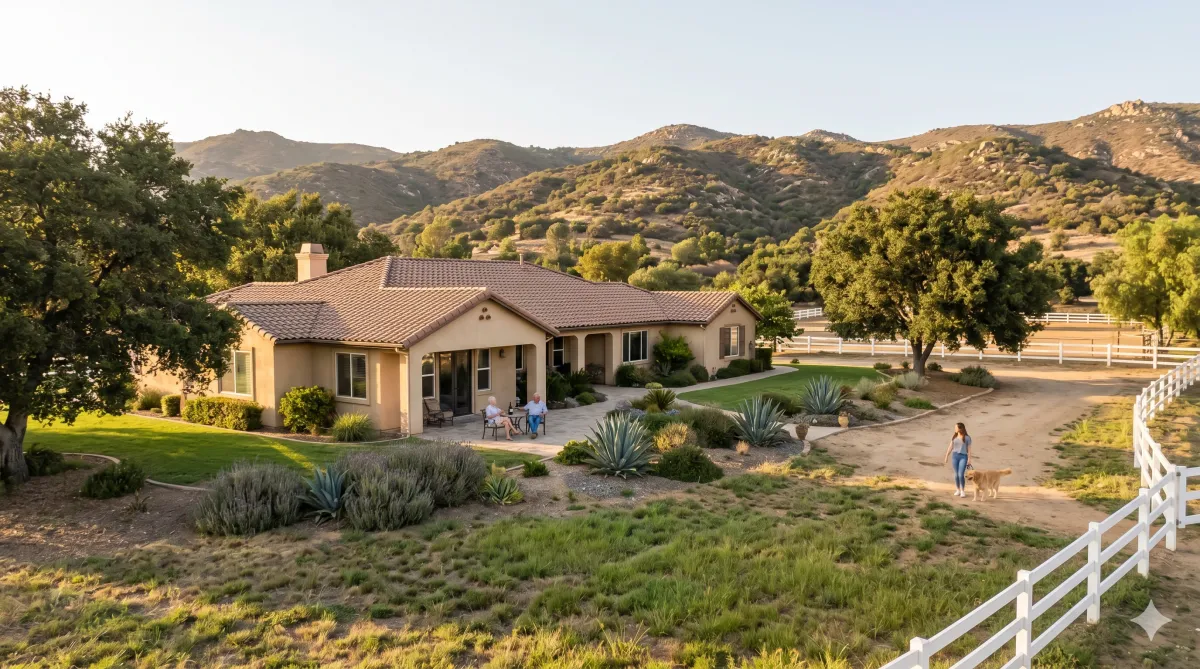
What Is It Like Living in Blossom Valley, El Cajon?
What Is It Like Living in Blossom Valley in El Cajon, CA?
If you've been looking at homes in East County, you've probably noticed how quickly the landscape changes once you get past the freeway and start heading toward the foothills. The lots get bigger. The pace slows down. Homes start to feel more like properties than just houses.
That's pretty much the experience of Blossom Valley.
It's a semi-rural pocket of East County, technically with an El Cajon mailing address, that draws buyers wanting more land, more privacy, and a quieter way of living without leaving San Diego County. People who like Blossom Valley usually want acreage, room for their toys, maybe a horse or two, and a view of something other than their neighbor's stucco wall.
It's not for everyone. The drives are longer. The summers are hotter. Insurance can be more complicated than what you'd deal with in Mira Mesa or La Mesa. But for the right buyer, it offers something that's getting harder to find inside the county line: actual space.
Here's what living there is really like, and what to think about before you commit.
Where Is Blossom Valley?
Blossom Valley sits in East County San Diego, tucked between the city of El Cajon and Alpine. Homes carry an El Cajon mailing address even though the area feels much different from the city of El Cajon itself. It's more rural, more spread out, and more tied to the foothill landscape than to anything you'd recognize as suburban.
You're just off Interstate 8, which makes it more accessible than people expect. From Blossom Valley you can reach Santee, La Mesa, and Mission Valley without too much trouble during off-peak hours. Downtown San Diego is roughly 25 to 30 miles away. Alpine, Lakeside, and Crest are all nearby. The commute gets tougher during rush hour, especially heading west on the 8, but it's manageable for people with some flexibility in their schedule.
Most buyers who land in Blossom Valley have already accepted they'll trade a longer drive for a different lifestyle. They're not trying to walk to a coffee shop. They're trying to step out the back door onto their own land.
What Living in Blossom Valley Feels Like
The first thing you notice is the quiet. You hear birds, the occasional dog, maybe someone working on a fence line in the distance. Not freeway noise.
Homes sit further apart than you'd find in most San Diego neighborhoods. Some are on quarter-acre lots, others on a full acre, and a fair number are on multi-acre parcels with horse setups or workshops in the back. The terrain rolls. There are hillsides, flat usable pads, oak trees, and the kind of foothill scenery that reminds you you're closer to the mountains than the beach.
Custom homes are common. You'll see ranch-style properties from the 60s, 70s, and 80s, older homes that have been added onto over the years, and the occasional newer custom build on a large parcel. It's not a tract neighborhood. Two homes on the same street might look nothing alike, and they might be priced very differently depending on land, condition, and usable acreage.
For people coming from denser parts of the county, it can feel like a different world. Some find that refreshing. Others find it isolating. It depends on what you're looking for.
What Buyers Tend to Love About It
The space is the obvious draw. If you own RVs, boats, trailers, or any of the usual "I need somewhere to put this" items, Blossom Valley solves that problem in a way HOA-bound neighborhoods can't.
People also tend to love:
Open views of the foothills and surrounding hills
A slower, more rural pace of life
The feeling of being removed from city traffic and noise
Buyers often describe it as feeling like they've left San Diego without actually leaving. That's a pretty fair description.
Types of Homes You'll Find
The housing stock varies more here than in most neighborhoods. You'll see ranch-style homes from decades past sitting on big lots. You'll see custom homes built over the past couple of decades. You'll see horse properties with arenas and barns. You'll see hillside homes with terraced yards and view decks. And occasionally you'll see newer construction on subdivided parcels.
One thing worth understanding early: not all "acreage" is the same. A property listed as a two-acre lot might have half an acre of usable flat space and the rest sloping down a hillside. That matters a lot if you're planning to put in a pool, a barn, a riding arena, an ADU, or even just a play area for kids. Two homes with similar lot sizes can have very different usability.
This is one of the most common things I help buyers think through before they write an offer.
The Honest Pros
Here's where Blossom Valley earns its appeal.
You generally get more land for your money than you would closer to the coast. You get privacy without leaving San Diego County. You get a lifestyle that fits people who want animals, hobbies, or just elbow room. You can have a workshop, a garden, an RV pad, and still be inside the county.
For buyers who've spent years in a smaller home with neighbors twenty feet away, the change can be significant. Kids and dogs get room to run. Hobbies that didn't fit before suddenly fit. Things you used to store in a garage finally have a proper home.
It's also scenic. The foothills are beautiful, especially in spring when everything greens up.
The Tradeoffs You Should Understand
This is where I try to be honest with buyers, because the tradeoffs are real and they catch people off guard if no one walks them through it.
Wildfire risk and insurance. Wildfire is a serious factor in this part of the county. Insurance has become more complicated and more expensive throughout rural East County in recent years, and Blossom Valley is no exception. Some properties have had policies non-renewed. Others require additional inspections or specific home-hardening measures. You may end up using the California FAIR Plan combined with a wraparound policy. Premiums can run noticeably higher than in lower-risk areas. Before falling in love with a home here, get insurance quotes early in the process. Insurance availability can shape what you're realistically able to buy.
Septic systems and wells. Septic systems are common in Blossom Valley. So are wells on some properties. These aren't problems, they're just systems most San Diego buyers haven't dealt with before. They require inspection, periodic maintenance, and a different mindset than city water and sewer. A failing septic system can be expensive to replace. A questionable well can affect daily life. Both are inspectable, and both are manageable, but you need to know what you're buying.
Commutes. Not impossibly long, but longer than what you'd have in La Mesa or Santee. If you commute to downtown daily, factor that in honestly. Drive the route at rush hour before you commit.
Heat. Coastal influence doesn't really reach this far inland. Expect more 90 and 100 degree days than you'd get closer to the ocean. Many homes are well set up for it with shade, mature landscaping, and good HVAC. Some aren't.
Walkability. Limited. You'll drive for groceries, restaurants, and most errands.
Property maintenance. Acreage takes more time. Brush clearance for fire defensibility is required and ongoing. Fences need attention. Land doesn't maintain itself.
Who Blossom Valley Is Best For
The buyers who do best in Blossom Valley generally want some version of the following:
More land and privacy than they currently have
Space for horses, animals, RVs, or hobbies
A quieter environment for their family
A change from denser parts of San Diego County
A rural-feeling lifestyle while staying within commuting distance of the city
A lot of buyers I work with in Blossom Valley are families looking to spread out, downsizers who want acreage instead of a smaller condo, or buyers leaving HOA-heavy neighborhoods because they're tired of being told what color to paint the trim.
Who May Not Be Happy Here
If walkability matters to you, this isn't the right fit. Same if you want a brand new tract home, a short commute to a coastal office, or a low-maintenance lifestyle with no acreage upkeep. Buyers who are nervous about wildfire risk or who don't want to deal with septic systems often realize partway through their search that Blossom Valley isn't for them.
That's okay. Better to figure that out before you're three weeks into escrow than after.
What to Investigate Before You Buy
When I walk a property in Blossom Valley with a buyer, here's what I want them paying attention to:
Fire insurance. Get quotes before going under contract, not after.
Septic and well systems. Order proper inspections. Understand the age, condition, and capacity. Ask about pumping history. If there's a well, ask about water quality testing and flow rate.
Easements and access. Some rural properties share driveways or have access easements. Some sit on private roads that homeowners maintain together. Read the title report carefully.
Slope and usable land. Walk the property. Look at where you'd actually use the space. Hillside acreage looks great on paper but may not work for what you have planned.
Road access. Some homes are off paved county roads. Others sit at the end of long, winding private roads that change condition with the seasons.
Zoning and animal regulations. If you're planning on horses, livestock, or running anything from the property, confirm what's allowed before you buy. Don't assume.
Common Buyer Mistakes
A few patterns I see repeat in this area:
Buyers assume all acreage is usable. It's not. Walk it before you write an offer.
Buyers underestimate insurance costs. By the time they get real quotes, they've already fallen in love with the home and the math suddenly looks different.
Buyers don't understand septic and well systems and skip the right inspections. Six months later they're dealing with a leach field problem they could have spotted up front.
Buyers focus on price per square foot. In Blossom Valley, that number can be misleading. Land, usability, condition, and systems matter more than what you'd get from dividing price by square footage.
Buyers underestimate commute realities. They tour the home on a Saturday at noon and forget about Monday morning at 7:30.
None of these mistakes are catastrophic if you catch them early. They get expensive when you don't.
Frequently Asked Questions
Is Blossom Valley a good place to live? For buyers who want space, privacy, and a semi-rural lifestyle within San Diego County, it tends to be a strong fit. For buyers who want walkability, short commutes, or newer tract neighborhoods, it usually isn't.
Is Blossom Valley considered El Cajon? Homes in Blossom Valley carry El Cajon mailing addresses, but the area feels different from the city of El Cajon. It's more rural and more spread out.
Are there horse properties in Blossom Valley? Yes. Many properties in the area are zoned and set up for horses, with arenas, barns, and pastures. It's one of the more accessible horse property areas in San Diego County.
Is Blossom Valley expensive? Pricing varies widely depending on lot size, usable acreage, home condition, and views. You'll generally pay more per home than in central El Cajon because of the land, but you also get more land. Comparing it directly to coastal or central San Diego pricing doesn't quite work because the product is different.
How far is Blossom Valley from downtown San Diego? Roughly 25 to 30 miles. Drive times depend heavily on traffic and time of day.
Does Blossom Valley have wildfire risk? Yes. Like much of rural East County, wildfire risk is a real consideration. Insurance, defensible space, and home hardening all matter here.
Are homes in Blossom Valley on septic systems? Many are. Some are connected to sewer depending on the location and the road they sit on. Always confirm before assuming.
What kind of buyers move to Blossom Valley? A mix. Families wanting more space, horse owners, hobbyists, RV owners, people leaving denser neighborhoods, and buyers looking for a more rural lifestyle while staying within commuting distance of the city.
Final Thoughts
Blossom Valley is one of those areas that either fits you or it doesn't, and that becomes clear pretty quickly once you start touring homes. For buyers who want land, privacy, and a slower pace without leaving San Diego County, it offers something that's increasingly hard to find. For buyers who want walkability, low maintenance, or short commutes, there are better options closer to the coast.
If you're considering it, take your time. Tour multiple properties. Walk the land. Get insurance quotes early. Don't fall in love with a hillside lot until you've stood on it.
The right home in Blossom Valley can feel like a completely different life. The wrong one can feel like an expensive lesson. Most of my job is helping buyers tell the difference before they commit.
Jacob Menath is a real estate agent in Alpine, CA helping buyers navigate East County San Diego communities including Blossom Valley, Alpine, Lakeside, and surrounding rural and semi-rural areas.
Menath Real Estate Team | Alpine, CA | Serving San Diego County