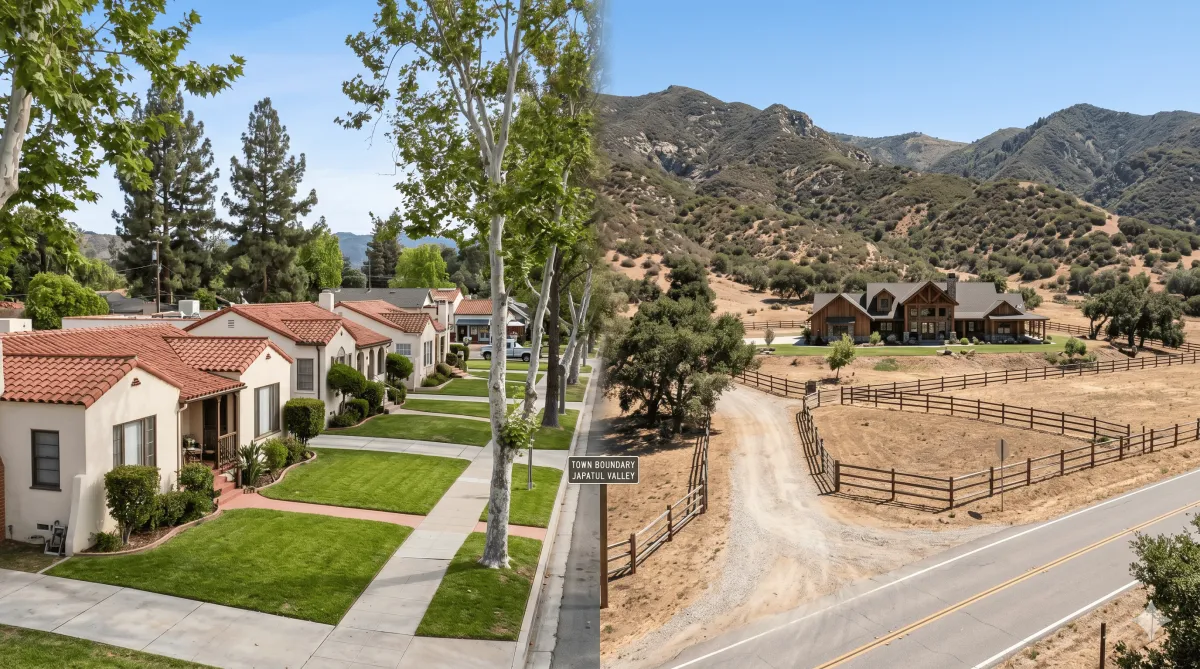
Are Home Values Higher in Town or Japatul Valley?
Are Home Values Higher in Town vs. More Rural Areas Like Japatul Valley?
It's a question that comes up often when homeowners in the Alpine area start thinking about selling, and the answer isn't as straightforward as most people expect. In some ways, yes, homes closer to central Alpine tend to be easier to comp and sell more predictably. But "higher value" and "easier to sell" aren't the same thing, and assuming one means the other can lead to some costly miscalculations.
A lot of sellers assume a more remote property should automatically command a premium because of the land and privacy. Sometimes it does. Sometimes it simply narrows the buyer pool.
The short version: location within the Alpine area does affect value, but the factors driving that difference are more nuanced than simply in-town versus rural. Usability, access, buyer pool size, and appraisal supportability all play a role, and they don't always point in the same direction.
What "In-Town" Actually Means in Alpine
When people refer to in-town Alpine, they're generally talking about properties closer to Alpine Boulevard and the surrounding neighborhoods, areas with shorter driveways, public water and sewer in some cases, and easier access to services. These homes tend to sit on smaller lots, have more nearby comps, and attract a broader range of buyers, including those who are newer to East County and want some of the rural feel without the full rural infrastructure.
Broader buyer pools generally mean faster sales and somewhat more predictable pricing. Appraisers have an easier time finding comparable sales within a reasonable distance. Lenders have fewer questions. The transaction tends to move more smoothly from offer to close.
That's a real advantage, and sellers in more central Alpine locations should understand it as such.
What Changes Out in Japatul Valley
Japatul Valley is a different situation in almost every dimension. Properties out there are more isolated, lots are larger, and the buyer who wants what's out there is a very specific type of buyer. That's not a criticism of Japatul Valley, it's simply the reality of what it is: a more remote, rural part of the Alpine area with longer drives to services, different infrastructure, and a character that appeals to buyers who are specifically looking for that level of privacy and space.
Homes out in Japatul and similar areas can absolutely command a strong price. Large parcels, mountain views, and genuine privacy have real value to the right buyer. But the pool of buyers who are both drawn to that lifestyle and financially able to purchase at the price point those properties often require is smaller than the pool for a more accessible Alpine home.
A smaller buyer pool means longer average time on market, fewer competing offers, and a sale outcome that depends more heavily on finding the right match than on broad market demand. That's a meaningful distinction when you're planning a sale and setting expectations around timing.
The Appraisal Problem Gets Worse with Distance
This is the part that catches sellers off guard more than anything else in the more rural pockets of Alpine and East County.
The further out you go, the harder it is for an appraiser to find truly comparable sales. Japatul Valley doesn't have the transaction volume that central Alpine does. An appraiser working on a property out there may be pulling comps from a wide geographic area, adjusting for lot size differences, road access, water source, and other variables that don't have clean numerical benchmarks.
The result can be an appraised value that doesn't fully capture what the property feels worth to a motivated buyer. And when the appraisal comes in below the purchase price, which happens more frequently on rural and remote properties than on standard suburban ones, the deal either needs to be renegotiated or the buyer needs to cover the cash gap. In today's market, buyers are less willing to do the latter.
And when a rural appraisal comes in low, sellers are often frustrated because the buyer may emotionally value the property more than the lender does.
This doesn't mean you can't price for the full value of a remote property. It means you need to go in understanding how appraisal risk works and pricing in a way that accounts for it.
Infrastructure Differences That Affect Buyer Decisions
One of the clearest dividing lines between in-town Alpine and more rural areas like Japatul is infrastructure, and specifically how buyers and lenders perceive it.
In-town properties in Alpine are more likely to have access to public utilities. Properties in Japatul Valley and similar areas are almost universally on well water and septic. That's not unusual for East County, and experienced buyers who've lived in rural San Diego County understand it. But it adds complexity to the transaction that in-town sales don't have.
Well inspections, septic certifications, and water quality testing are standard parts of escrow on these properties. Any of those can surface issues that slow things down or create renegotiation. The further out the property, the more important it is to know the status of those systems before you list. A well that tests poorly or a septic system that's approaching the end of its useful life becomes a much bigger deal when you're already dealing with a narrow buyer pool and limited comps.
Road access is another factor that varies considerably. Some properties in the more rural parts of Alpine are at the end of shared driveways or private roads with easement arrangements that require explanation. Buyers, lenders, and title companies all want to understand how access works and who's responsible for maintaining it. Having that documentation organized before you go into escrow saves time and prevents surprises.
Wildfire Risk and Insurance Vary by Location Too
Wildfire risk and insurance availability are relevant across most of Alpine, but the exposure tends to be more significant in the outlying areas. Properties in Japatul Valley and similar locations are often deeper in fire-prone terrain, with longer response times for emergency services and more complex defensible space requirements given larger lot sizes.
Insurance carriers have pulled back from portions of rural San Diego County more aggressively than they have from closer-in communities. If your property is in a very high fire hazard severity zone and standard insurers have declined coverage, that's information buyers need, and lenders will require. Being on the FAIR Plan isn't necessarily a deal killer, but it affects how buyers think about ongoing carrying costs, and it tends to slow down the early conversations around financing.
Getting clear on your insurance situation before you list, and being ready to explain it to buyers, is more important the further out your property is.
How to Think About Pricing Across These Areas
The mistake sellers in rural Alpine areas sometimes make is comparing their sale price expectations to what they see selling in more central locations without accounting for the differences in buyer pool, infrastructure complexity, and appraisal risk.
A home closer to town may sell faster and with a cleaner appraisal, but that doesn't mean a property in Japatul can't command a strong price. It means the pricing strategy, the marketing approach, and the timeline expectations need to be calibrated for what the property actually is.
The smaller the buyer pool, the less room there is for pricing mistakes.
Pricing too aggressively on a remote property creates a predictable problem: the home sits, days on market accumulate, and then the seller ends up making a price reduction that draws even more skepticism from buyers. A well-considered price from the start, one that's grounded in what the appraisal can realistically support and what the buyer pool can absorb, usually leads to a better outcome than chasing a number that the market won't confirm.
That requires an honest conversation about what nearby rural comps actually show, not what you hope the property is worth based on how you feel about it.
The Emotional Side of This Decision
Sellers who've lived in more remote Alpine areas for a long time often have a deep connection to their property. The quiet, the land, the distance from everything, those things have real personal value.
And that emotional connection can make pricing objectively much harder than sellers expect.
It can be hard to hear that the buyer pool is narrower than you'd like or that the appraisal process is going to be more complicated than it would be for a home closer to town.
That's understandable. It doesn't make the information less true.
The sellers who navigate this most successfully are the ones who separate what the property means to them from what the market is telling them. Both things can be real at the same time. Your property can be genuinely special and still require a realistic, patient approach to selling it.
Frequently Asked Questions
Do rural Alpine homes sell for less than in-town Alpine homes?
Not necessarily less in absolute terms, but they often take longer and involve more complexity. Price per square foot comparisons between very different property types can be misleading. The more useful question is whether a specific property is priced accurately for its location, infrastructure, and buyer pool.
Is Japatul Valley hard to sell in?
It requires more patience and a more targeted approach than the central Alpine. The buyer who wants a Japatul Valley property is a real buyer, but you're not casting a wide net. Marketing, pricing, and timeline expectations all need to reflect that.
Will my well and septic system affect my sale price out in a rural area?
They can affect the transaction process more than the price itself, especially if issues come up during inspections. Knowing the status of those systems before you list, and being able to provide documentation, reduces friction and protects you from late-stage renegotiations.
How do I find comparable sales for a rural property in Alpine?
That's exactly what you need: a local agent who works these properties to help with. Generic automated valuations tend to be less accurate on rural and acreage properties. A careful, manual analysis of recent sales in the broader East County rural market, with honest adjustments for differences, is the more reliable approach.
Can I price for my view or my acreage if there aren't many comps to support it?
You can try, but understand the risk. If the property goes into contract and the appraisal doesn't support the price, you'll either renegotiate or restart. Pricing closer to what the data can support upfront tends to lead to more stable transactions.
Understanding where your property sits in this spectrum, whether closer to town, further out in Japatul, or somewhere in between, is one of the most useful things you can do before you start thinking about list price or timing. The location shapes almost every other decision in the sale.
Not every Alpine property sells the same way. Knowing which category yours falls into and planning accordingly is where successful sales start.
Jacob Menath is a real estate agent in Alpine, CA, serving San Diego County, helping homeowners make informed, confident decisions when selling their home and navigating major life transitions.
Menath Real Estate Team | Alpine, CA | Serving San Diego County