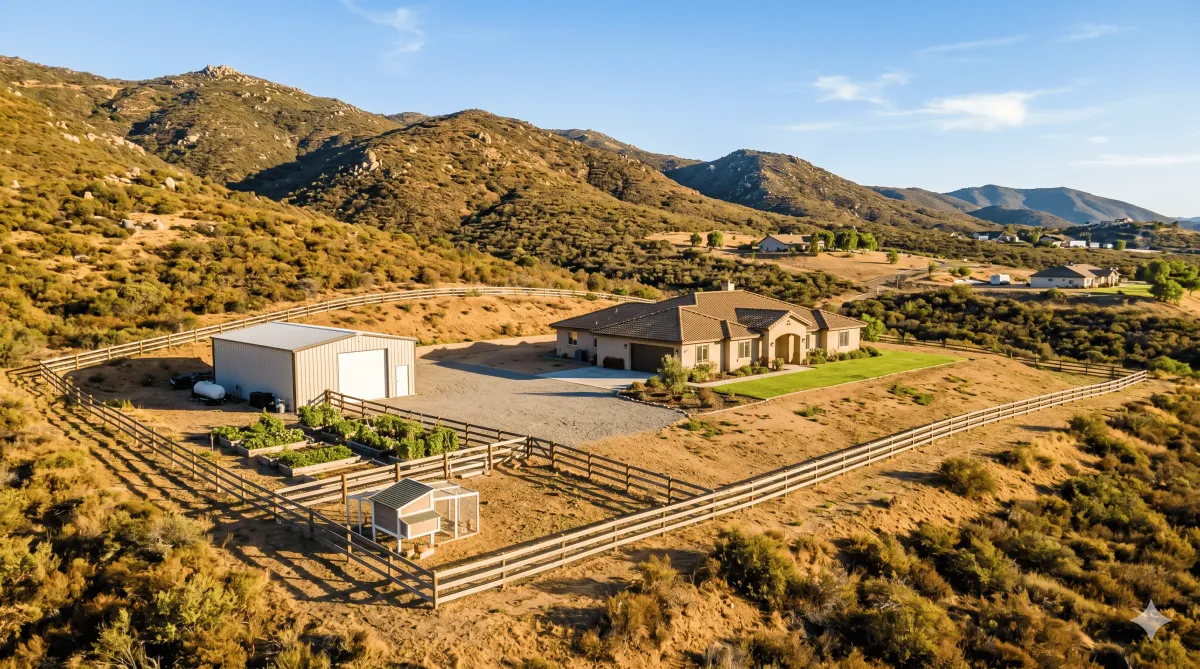
Is Owning Acreage in Alpine a Benefit When Selling?
Is Owning Acreage in Alpine a Benefit or a Challenge When Selling?
The honest answer is both, and which one it is depends almost entirely on the specifics of your property and how well you understand your buyer pool going in.
Acreage in Alpine is genuinely appealing to a certain type of buyer. Space, privacy, room for animals or a shop or a garden, the ability to actually use your land. These are real selling points, and they attract buyers who are specifically looking for what you have.
A lot of sellers assume acreage automatically makes a property easier to sell. In reality, it usually makes the buyer pool more specific.
But that same acreage can create complications that sellers don't always anticipate: appraisal difficulty, a narrower buyer pool, longer timelines, and logistical questions during escrow that don't come up with a standard suburban home.
If you own a few acres in Alpine and you're thinking about selling, the goal is to go in knowing both sides of that equation.
Why Acreage Is an Asset in This Market
East County buyers often come to Alpine specifically because they want land. That's worth saying plainly. Buyers who are coming from closer-in San Diego neighborhoods, or from out of state, are frequently drawn to East County because property sizes here allow for a lifestyle that isn't available in most of San Diego County.
If your property has usable acreage, meaning relatively flat, accessible land that someone can actually do something with, that's a genuine advantage. Horse properties, hobby farms, properties with room for an ADU or a workshop, homes where you can park a trailer or an RV without asking permission. These features attract buyers with specific intent, and specific-intent buyers are often serious buyers.
The demand is real. The question is whether your property's particular combination of features, acreage type, access, and condition matches what those buyers are actually looking for.
Where Acreage Gets Complicated
Here's what sellers sometimes don't anticipate: land doesn't always add value in a way that shows up cleanly in an appraisal.
Appraisers work with comparable sales. In a denser neighborhood, comps are usually plentiful and relatively similar. In Alpine, especially on properties with acreage, truly comparable sales can be scarce. An appraiser may have to look at properties with meaningfully different lot sizes, locations, or features and make adjustments that don't fully capture what your land is worth to the right buyer.
The result can be an appraised value that comes in lower than the purchase price, especially if you're priced at the high end of what the market can support. And in today's environment, where buyers are less likely to bridge an appraisal gap out of pocket, that creates a real problem.
This doesn't mean you can't price for the value of your acreage. It means you need to price with one eye on what an appraiser is likely to support, not just what the land feels worth emotionally.
Buyers may emotionally love the land. Lenders still require the numbers to work.
The Usability Question
Not all acreage is equal, and buyers know this.
A two-acre parcel with a flat, fenced yard, a barn, and good road access is a fundamentally different asset than a two-acre parcel where most of the land is steep hillside, dense brush, or located on the wrong side of a ravine. Both show up as two acres on the listing sheet. They don't sell the same way.
Buyers who are serious about land use will walk the property and ask specific questions. Can you fence it? Is there water access for animals or irrigation? How does access work if there's a shared driveway or easement? Is the land in a defensible space zone that creates ongoing maintenance obligations?
If your land is genuinely usable, make sure that's clear and visible in how the property is presented. If significant portions aren't usable, don't price as if they are. Buyers will figure it out during the showing or the inspection, and discovering that disconnect late in escrow usually creates stress, renegotiation, or both.
Well Water and Septic on Acreage Properties
Most Alpine properties with meaningful acreage are on well water, septic, or both. These systems are normal in East County and not inherently a problem, but they require honest handling during the sale.
Buyers who are new to rural properties, and there are plenty of them in the market right now, may not fully understand how wells and septic systems work. They'll learn during escrow when their lender requires inspections or when their agent explains it to them. How smoothly that process goes depends on what your systems look like and whether you're prepared for the questions.
A well that hasn't been tested recently, or a septic system that's aging and hasn't been pumped or inspected in years, can create delays or renegotiations mid-escrow. Having those inspections done ahead of time, or at a minimum knowing what they'll show, removes a significant source of uncertainty. Surprises in escrow rarely benefit the seller.
Road Access and Easement Issues
This is one of the more underestimated complications on acreage properties in Alpine.
Shared driveways, private roads, and easement arrangements that made perfect sense when you moved in can become real friction points during a sale. Buyers and their lenders will want to understand the access situation clearly. If there's a recorded easement, what are the terms? Who maintains the road? Are there any disputes with neighbors over access?
If your property has a long shared driveway or sits at the end of a private road, this will come up. Not necessarily as a dealbreaker, but as a due diligence item that takes time to work through. Getting ahead of it means locating the relevant documents, knowing what they say, and being able to present the situation clearly to buyers rather than discovering complications after you're already in escrow.
The Buyer Pool Is Smaller Than You Think
This is the part that surprises some sellers. Acreage sounds universally appealing, and in some ways it is. But the pool of buyers who are actually qualified, actually serious about land ownership, and actually comfortable with the realities of rural property is more specific than the general buyer pool.
And when the buyer pool is smaller, pricing mistakes become more expensive.
Buyers with financing limitations may not qualify at the price point your property warrants. First-time buyers who are drawn to the idea of land often underestimate the costs and responsibilities of maintaining a larger property.
A lot of buyers love the idea of acreage more than the day-to-day reality of maintaining it.
Out-of-area buyers sometimes make offers and then get spooked by what they discover during due diligence when the rural realities of the property, well, septic, fire clearance, defensible space requirements, set in more concretely.
None of this means your property won't sell. It means your marketing needs to target the right buyers, your pricing needs to reflect what that buyer pool can actually support, and your expectations around timeline need to be realistic.
Wildfire and Fire Clearance on Larger Lots
Properties with acreage in Alpine are often in high fire hazard severity zones, and the defensible space and fire clearance requirements are not optional. Buyers and their insurers will ask about this.
If your property has significant vegetation, a long driveway, or structures that haven't been maintained to current defensible space standards, that will come up. Some buyers are comfortable taking it on. Others aren't. Getting a fire clearance inspection before you list and addressing any obvious issues reduces the chance that a buyer will use fire clearance as a reason to renegotiate or walk away.
Insurance also comes up earlier in the transaction now than it used to. If your property is on the FAIR Plan, or if standard insurance carriers have declined coverage, that's information buyers will need. It's better to have that conversation upfront than to have it surface three weeks into escrow when the buyer is already emotionally committed to the property.
What Sellers with Acreage Should Do Before Listing
A few things that consistently make the process smoother:
Walk your own property with a buyer's eye before you list it. What does someone see when they're trying to understand how usable the land is? Is the acreage presented clearly, or does it just look like overgrowth and brush?
Know the status of your well, septic, and any easements before the buyer asks. Pulling together those documents in advance saves time and reduces escrow friction.
Get a realistic market analysis from someone who actually understands how to comp rural and acreage properties in East County. A general comparative market analysis that doesn't account for the specific nature of your land isn't useful.
And think carefully about who your buyer is likely to be. Someone moving from Rancho Bernardo who wants more space is a different buyer than someone relocating from out of state, specifically to have land for horses or a small operation. Marketing to the right audience matters more on acreage properties than it does on standard suburban listings.
Frequently Asked Questions
Does acreage automatically increase the value of my Alpine home?
Not automatically. The value depends on how usable the land is, how it compares to nearby sales, and what the appraiser can support with comps. Usable, accessible acreage in good condition tends to add value. Steep, inaccessible, or heavily vegetated acreage adds less than sellers often expect.
Will buyers be scared off by a well and septic?
Not generally, especially buyers who've lived in East County before. Buyers who are new to rural properties may need some education, but these are manageable issues. Having recent inspection reports available makes a meaningful difference in how smoothly escrow proceeds.
How do I price a property with acreage when there aren't many comps?
Carefully and with help from someone who understands rural property valuation in this area. Appraisers and buyers will look at land value, usability, improvements, and comparable rural sales within a reasonable distance. Pricing too aggressively without appraisal support is a common mistake.
Does my property need to be fully cleared for fire defensible space before I sell?
Legally, disclosure obligations and local requirements vary, and you should consult with your agent about what applies to your specific property. Practically speaking, visible fire clearance issues tend to become negotiating points or cause buyer hesitation. Addressing them before you list is usually worth it.
How long does it typically take to sell an acreage property in Alpine?
Longer on average than a standard home on a smaller lot, simply because the buyer pool is more specific. Well-prepared and accurately priced acreage properties do sell, but expecting the same timeline as a suburban listing is usually optimistic.
Acreage in Alpine can absolutely be a selling asset. But it requires a more thoughtful approach than a standard listing. Knowing what you have, who's likely to want it, and what complications to get ahead of makes the difference between a smooth sale and a drawn-out, stressful one.
The land is part of the value. Make sure the way you sell it reflects that.
Jacob Menath is a real estate agent in Alpine, CA, serving San Diego County, helping homeowners make informed, confident decisions when selling their home and navigating major life transitions.
Menath Real Estate Team | Alpine, CA | Serving San Diego County