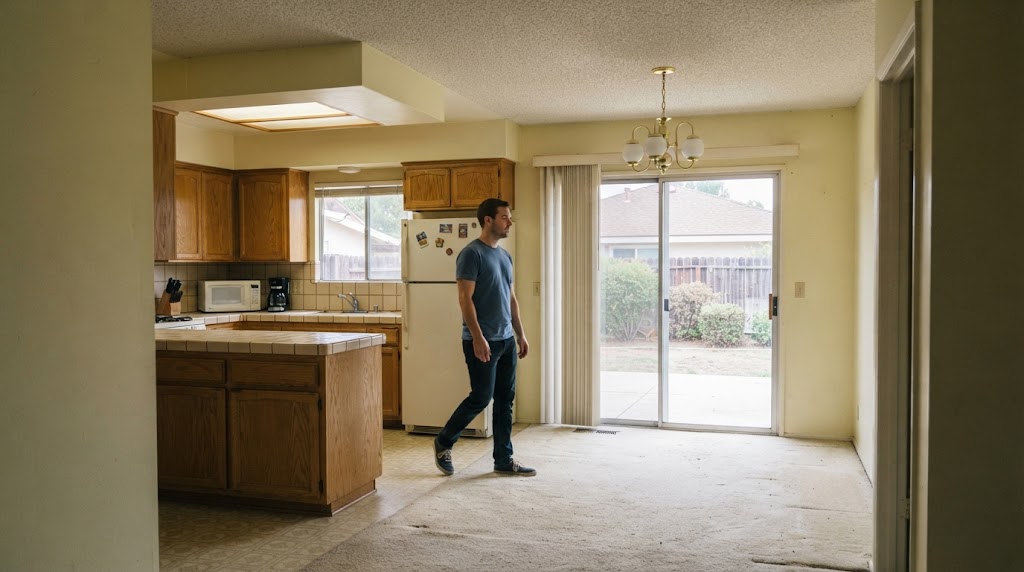
Why Ugly Houses Can Be Great Opportunities in San Diego
Why Ugly Houses Can Be Great Opportunities in San Diego
By Jacob Menath, Real Estate Agent in Alpine, CA | Menath Real Estate Team
Helping San Diego buyers make smart, long-term real estate decisions
Most buyers walk into a home, see old carpet and dark cabinets, and mentally check out within sixty seconds.
I get it. After months of scrolling Zillow and watching renovation shows, it's hard not to flinch at popcorn ceilings, faded paint, and overgrown landscaping. But some of the best opportunities I see in San Diego County are the homes other buyers dismiss too quickly.
What most buyers miss is that cosmetic problems and structural problems are not the same thing. And the difference between those two often separates the buyers who build equity from the ones who overpay for finishes.
The Short Answer
Ugly houses can be great opportunities because they tend to attract less competition, scare off emotional buyers, and leave room to create real value over time. A dated kitchen or worn carpet doesn't change the fundamentals of a property. Location, lot, layout, and structural condition matter far more for the long haul.
If you can separate cosmetic flaws from genuine structural issues, you sometimes find homes with stronger long-term equity potential than the perfectly staged listing down the street.
That said, not every ugly home is a smart buy. Let's walk through how to tell the difference.
In Simple Terms
Ugly houses can create strong long-term opportunities when they have:
Good locations
Functional layouts
Usable lots
Solid structural condition
Realistic improvement potential
Less buyer competition
Many buyers overreact to cosmetic problems while underestimating how much value simple improvements can create over time.
In This Guide
Why buyers react so emotionally to ugly homes
Cosmetic issues vs. structural problems
What experienced buyers actually pay attention to
What improvements add real value
When a fixer-upper is a bad idea
Common buyer mistakes
How ugly homes create future opportunities
Why Buyers React So Emotionally to Ugly Homes
Most people can picture themselves in a beautiful home within thirty seconds. Very few can picture what an ugly home could become.
That's not a flaw. It's just how buying tends to work. You walk in, your gut reacts, and your brain spends the rest of the showing trying to justify what your gut already decided.
The problem is that gut reactions get heavily influenced by surface-level things:
Old flooring
Outdated paint colors
Cluttered rooms
Bad lighting
Strong smells
Overgrown yards
None of those things actually tell you whether a home is a good buy.
Buyers Often Confuse Ugly With Bad
It's easy to walk through a home with stained carpet, dim lighting, and crowded furniture and assume the whole property is in rough shape. Often, it isn't. It just hasn't been refreshed in a while.
A home can have:
Solid bones
A great lot
A functional floor plan
A strong location
…and still look like it was last decorated in 1992.
Those are very different problems than a cracked foundation or a failing roof.
Turnkey Homes Trigger Emotional Competition
The flip side is the perfectly remodeled home. Fresh paint, new flooring, staged furniture, modern fixtures. It looks great in photos and even better in person.
And that's exactly where buyers tend to overpay.
The prettier the home, the more emotional the competition usually becomes. You're not just bidding against other buyers. You're bidding against their imagination.
In a turnkey home, most of the easy value has already been captured by the seller and priced into the listing. There's not much room left to create equity through your own work.
What Experienced Buyers Look At Instead
When experienced buyers walk through a home, they're usually not focused on what they can see. They're focused on what they can't easily change.
Things you can change:
Paint
Flooring
Fixtures
Cabinet faces
Landscaping
Lighting
Appliances
Things you can't change (or can't change easily):
Location
Lot size and shape
Views
Neighborhood
Floor plan structure
Orientation and natural light
Commute access
School boundaries
You can repaint a wall in a weekend. You can't move the property to a better street.
What Smart Buyers Pay Attention To
Experienced buyers usually focus on:
Location fundamentals
Lot usability
Layout functionality
Structural condition
Long-term demand
Future flexibility
Realistic improvement potential
Instead of focusing only on:
Paint colors
Staging
Trendy finishes
Landscaping cosmetics
Instagram appeal
The cosmetics are just the wrapping.
Cosmetic Problems vs. Structural Problems
This is the section worth slowing down on, because confusing these two is where buyers get burned.
Cosmetic problems usually include:
Old or worn flooring
Outdated paint colors
Tired kitchens and bathrooms
Bad landscaping
Dated light fixtures
Popcorn ceilings
Wallpaper
Worn cabinets
Old appliances
These are largely surface-level. They affect how a home looks and feels, not whether it holds up over time. Most can be addressed in stages, often without taking out a major loan or living through a year of construction.
Structural and system problems may include:
Foundation issues
Major roof problems
Drainage and grading problems
Electrical concerns
Plumbing failures
Septic problems
Slope instability
Major water damage or moisture issues
These belong in a different category entirely. They can be expensive, slow to fix, and in some cases hard to fully resolve. They can also affect insurability and financing.
An ugly house can create opportunity. A structurally compromised house can create financial stress very quickly.
This is one of the reasons inspections matter so much. A good inspection helps you separate the two, so you're making decisions based on what's actually wrong with the property, not just what you can see on a Saturday afternoon walk-through.
Out here in East County, this matters even more. Older homes in Alpine, Lakeside, Jamul, and parts of El Cajon often come with septic systems, well water, propane, and sometimes shared driveways or private roads. None of those are necessarily problems. But they require a different level of due diligence than a newer home in a tract neighborhood.
Why Location Matters More Than Finishes
I'll keep saying this in different ways, because it's that important.
You can change finishes. You can't relocate the property.
A beautifully remodeled home on a difficult lot, a busy road, or in a neighborhood that's losing demand is still on that lot, that road, and in that neighborhood ten years later. A dated home on a great street with strong long-term demand is still on that great street.
In San Diego County specifically, location nuance runs deep. The difference between two homes a few miles apart can include:
School boundaries
Commute time to job centers
Fire risk and insurance considerations
Access to amenities
Views and elevation
Lot usability for things like horses, RVs, or future additions
Buyers looking in East County communities like Alpine, Santee, Lakeside, La Mesa, and Jamul often find that the homes with the best long-term flexibility are not always the prettiest. They're the ones with the right combination of land, layout, and access.
What Improvements Actually Add Value
If you do buy an ugly home, the next question is what to actually do with it.
The improvements that tend to create the most value are usually less exciting than what you see on TV.
Improvements that often go a long way:
Fresh paint, inside and out
Updated flooring
Cleaned up landscaping and curb appeal
Better lighting
Kitchen refreshes (not necessarily full remodels)
Bathroom updates
Improving functionality (storage, layout tweaks, lighting)
Notice what isn't on that list: high-end designer finishes, ultra-custom built-ins, and the kind of remodels that look great on Instagram but rarely return what they cost.
Why Over-Remodeling Can Backfire
A lot of buyers who fall in love with a fixer-upper end up spending too much trying to make it the nicest home on the street. That sounds appealing. It usually isn't.
When you over-improve relative to the neighborhood, you often spend money you don't get back. The street usually sets the ceiling.
The goal isn't creating the fanciest home on the street. The goal is creating smart, functional value that fits the neighborhood.
Simple, clean, well-executed improvements almost always outperform expensive custom ones.
Why Ugly Homes Often Have Less Competition
Here's the part most buyers don't fully appreciate until they've been through a few offer situations.
When a home is ugly, the emotional buyers stay home. They drive by, look at the photos, and keep scrolling. That leaves a smaller, often more thoughtful group of buyers actually considering the property.
That can mean:
Fewer competing offers
More room to negotiate price
More flexibility on inspection issues
Less pressure to waive contingencies
More reasonable timelines
A quieter open house sometimes creates a better long-term opportunity than a packed one.
A quick example from East County
I recently walked through a dated home in Lakeside with buyers who almost skipped it based on the photos. Old carpet, dark paint, a tired kitchen. The listing had been sitting longer than it should have.
But the lot was usable, the layout worked, and the location was strong. Once we looked past the cosmetics, the fundamentals were genuinely good.
A few simple updates after closing changed the way the home felt completely. And because there wasn't a bidding war on the property the way there had been on the remodeled homes a few streets over, my buyers had more room to negotiate, more flexibility on inspection items, and a calmer process overall.
That kind of outcome isn't guaranteed on every ugly home. But it's a pattern I see often when buyers are willing to evaluate a property based on what it is, not just how it looks.
Are Ugly Houses Better Investments Than Turnkey Homes?
It depends on the specific property, but here's the honest pattern:
Ugly houses often offer more upside but require more work and more careful evaluation. Turnkey homes offer convenience and less risk but usually come with premium pricing and tougher competition.
For a buyer who has the budget, the time, and the willingness to make improvements over time, an ugly home in the right location can be a strong long-term position. For a buyer who needs to move in immediately and doesn't want any projects, a turnkey home in a good location may be the better fit, even at a higher price.
Neither is universally better. The right answer depends on your situation, your budget, your timeline, and what you actually want out of the home.
When Ugly Homes Are NOT Good Opportunities
This is the part I always want buyers to hear clearly.
Not every fixer-upper is a smart buy. Some homes are ugly for cosmetic reasons. Some are ugly because they've been neglected in ways that go far beyond paint and carpet.
Be careful when a home has:
Foundation or structural damage
Significant drainage or grading issues
Roof problems that have already caused interior damage
Aging or failing electrical and plumbing systems
Septic problems or unknown system age
Insurability concerns, especially in higher fire-risk areas
Renovation needs that exceed your realistic budget, timeline, or skill level
A poor location that no amount of improvement will fix
Buying the wrong fixer-upper can erase the upside very quickly. I've watched buyers walk into a "deal" and walk out two years later having spent more than they would have on a turnkey home in a better location.
This is where a careful inspection, an honest conversation about your budget, and a realistic look at your tolerance for projects all matter.
If a home needs a hundred thousand dollars in structural and system work, that needs to be priced in. And you need to know going in whether you actually want to take that on.
How Move-Up Buyers Usually Build Equity
Most homeowners I work with who have built meaningful equity over time didn't do it by waiting for the perfect home. They did it by buying something imperfect, owning it for a while, improving it gradually, and letting time do its work.
The pattern usually looks something like this:
Buy a home that's slightly less polished than what other buyers want
Make practical improvements over time
Let the property appreciate alongside the area
Use that equity to move up later
It isn't glamorous. It doesn't happen in a single weekend. But it's how a lot of San Diego homeowners ended up in the homes they live in today.
Common Buyer Mistakes to Avoid
When buyers run into trouble with ugly homes, it's usually because of one of these mistakes:
Overpaying for trendy finishes. Finishes change. Location doesn't.
Ignoring location fundamentals. A pretty home in the wrong spot stays in the wrong spot.
Confusing cosmetic issues with structural problems. A bad smell is not the same as a bad foundation.
Overestimating your renovation appetite. Projects almost always take longer and cost more than expected.
Buying emotionally instead of strategically. Your gut is useful. It isn't the whole picture.
Expecting fast appreciation. Real estate generally rewards patience, not impatience.
Over-remodeling beyond the neighborhood. The street usually sets the ceiling.
Waiting endlessly for a perfect turnkey home. Perfect homes come with premium prices and tough competition.
You don't have to avoid every one of these to do well. But knowing the patterns helps you make better decisions in the moment.
Real Estate Equity Usually Builds Slowly
I think this part gets lost in a lot of online real estate content.
Most of the homeowners I know who built real wealth through property didn't do it through a single brilliant purchase. They did it by buying thoughtfully, living in the home, taking care of it, and letting equity compound over years.
A lot of those homeowners started with homes other buyers passed on.
Patience matters. Strategy matters. And the willingness to look past surface-level issues often matters more than people realize.
Frequently Asked Questions
Are fixer-uppers worth buying in San Diego? They can be, but only when the price reflects the work needed and the problems are mostly cosmetic. A fixer-upper with structural or system issues that exceed your budget is a different conversation.
What cosmetic issues should buyers ignore? Paint, flooring, light fixtures, dated cabinets, landscaping, and outdated bathrooms are usually fixable over time and shouldn't be the reason you walk away from an otherwise good property.
What repairs tend to scare buyers the most? Foundation problems, roof damage, drainage issues, electrical concerns, plumbing failures, and septic problems all tend to raise flags. These deserve careful inspection and, often, professional opinions before moving forward.
How do ugly houses create equity? By attracting less competition at purchase, leaving room for improvements that add value over time, and giving the buyer space to grow into a stronger position as the property gets updated and the area matures.
What renovations add the most value? Paint, flooring, landscaping, lighting, modest kitchen and bathroom updates, and improvements that make the home function better in daily life. These tend to outperform high-end custom remodels.
Should first-time buyers consider a fixer-upper? Sometimes, yes. But only with a realistic budget, a clear understanding of what's wrong with the home, and an honest look at how much project work you actually want to take on.
What makes a fixer-upper too risky? Major structural damage, insurability concerns, severe deferred maintenance, a poor location, or renovation needs that go beyond your budget, timeline, or skill level.
Thinking Through Your Next Move
If you're trying to figure out whether an ugly house is actually a smart opportunity, what problems should genuinely concern you, or how to evaluate a property for long-term potential, that's a conversation worth having before you write an offer.
Jacob and Kristin Menath help San Diego buyers think through those decisions realistically and without pressure. The goal isn't to push you toward any particular property. It's to help you make a decision you'll feel good about in five and ten years, not just on closing day.
About Jacob and Kristin Menath
Jacob and Kristin Menath are real estate professionals based in Alpine, CA, serving buyers and homeowners throughout San Diego County, including East County communities like Alpine, Lakeside, Santee, El Cajon, Jamul, and La Mesa.
They work with:
First-time buyers
Move-up buyers
Downsizing homeowners
Families making long-term real estate decisions
Their approach focuses on practical guidance, thoughtful strategy, and helping buyers make confident ownership decisions that fit their long-term plans.
Jacob Menath is a real estate agent in Alpine, CA serving San Diego County, helping homeowners make informed, confident decisions when selling their home and navigating major life transitions.
Menath Real Estate Team | Alpine, CA | Serving San Diego County