How to Build Equity Through Real Estate in San Diego
How Smart Buyers Create Equity Through Real Estate in San Diego
By Jacob Menath | Menath Real Estate Team | Alpine, CA Helping San Diego buyers make smart long-term real estate decisions
A lot of buyers in San Diego start with the same checklist. Updated kitchen, fresh paint, new flooring, no projects waiting. And there's nothing wrong with wanting a turnkey home. After what houses cost around here, "move-in ready" is a fair thing to ask for.
The catch is that the homes everyone wants are usually the homes everyone is bidding on. Lots of competition, narrow room for future value, and very little margin for the kind of upside that quietly builds wealth over time.
Meanwhile, the buyers who tend to come out ahead ten or fifteen years later often did something less glamorous. They bought homes that needed work. They looked past dated finishes. They paid attention to location, layout, and long-term demand instead of staging photos.
Not because they were chasing flips. Because they understood how equity actually gets created.
How Buyers Actually Create Equity in San Diego
Most homeowners build equity through some combination of:
The property appreciating over time
Paying down the mortgage each month
Buying a home with realistic upside potential
Making smart, measured improvements
Holding the property long enough for those forces to compound
In San Diego specifically, buyers who think carefully about location, long-term demand, cosmetic opportunity, and future flexibility usually end up in a stronger position than buyers focused only on what the home looked like the day they toured it.
That's the short answer. The rest of this article is about how to apply that thinking without falling into the traps that catch a lot of buyers along the way.
What Equity Actually Means
Equity is the difference between what your home is worth and what you still owe on it.
If your home is worth $800,000 and your loan balance is $500,000, you have roughly $300,000 in equity. That number moves up as the property appreciates and as you pay down the loan.
Eventually that equity can:
Help fund a move-up purchase
Give you financial flexibility you didn't have before
Support other long-term decisions
Or simply provide stability when life shifts
The thing most buyers underestimate is the timing. Equity usually builds slowly. It compounds over years, not months. Buyers who expect fast gains often end up frustrated or making rushed decisions they regret.
Why Ugly Houses Often Create Opportunity
This is the part most buyers struggle with the most.
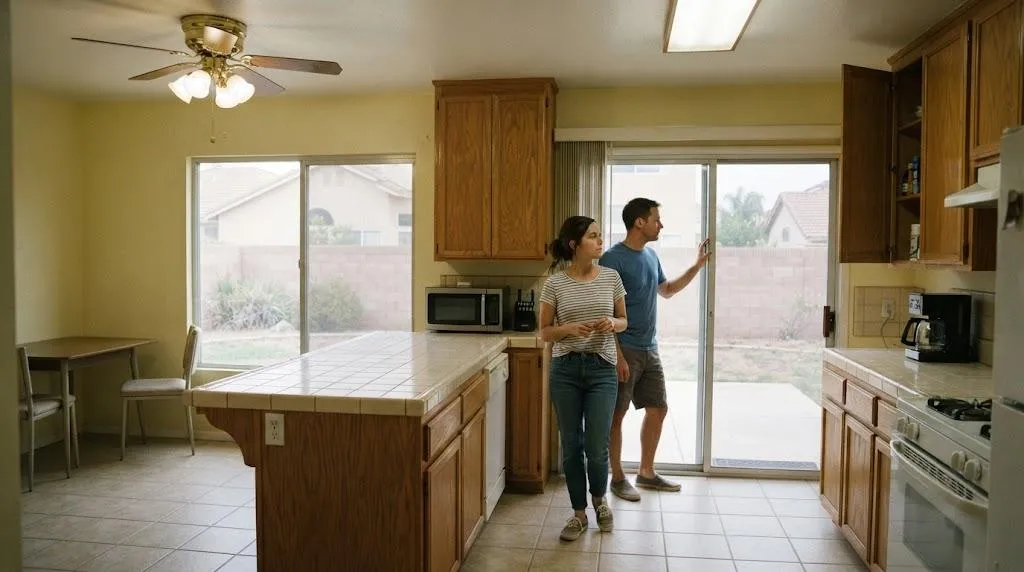
When you walk into a home with worn carpet, brassy light fixtures, a yellowed kitchen from 1992, and overgrown landscaping, your brain wants to walk back out. That reaction is completely normal. It's also, very often, where opportunity lives.
Most Buyers Overreact to Cosmetic Issues
Things that scare buyers off:
Old paint colors
Dated flooring
Ugly kitchens
Overgrown yards
Bad staging or no staging at all
Old light fixtures and hardware
Popcorn ceilings
Wallpaper from another decade
Almost all of those are surface-level. A lot of buyers confuse ugly with bad. Those are not the same thing.
Cosmetic Problems Are Easier to Fix Than Location Problems
A dated kitchen can be updated. A weird hallway color can be painted. Old carpet can come out. Landscaping can be redone over a couple of weekends.
What can't be changed:
Where the house sits
The school zone
The commute
The neighborhood trajectory
The lot itself
The land and roads around it
Buyers often overpay for finishes and underpay attention to fundamentals. Then they're stuck in a beautiful home in a location that doesn't quite work.
Competition Is Usually Lower on Imperfect Homes
When you tour a fully remodeled home with white oak floors and a waterfall island, you're rarely the only one there. Emotional buyers show up in force. Bidding pressure climbs. Negotiation room evaporates.
When you tour a home with brown carpet and a peeling fence, the open house is quieter. That quiet often means:
Fewer emotional buyers competing for the property
More negotiating room
Better terms
Real upside if you're willing to put in some work
I knew a buyer who picked up a small three-bedroom in Lakeside about ten years back. It needed paint, flooring, and a kitchen refresh, and it sat on the market longer than most homes did at the time. He got it under list with seller concessions. A few years and a handful of careful updates later, it was worth a number that surprised everyone but him. He didn't get rich quick. He just bought smart and gave it time.
What Improvements Actually Add Value
Once you own the home, the next question is which improvements are worth doing. This is where a lot of homeowners burn money.
The improvements that tend to pay off most consistently:
Paint, inside and out
Updated flooring in main living areas
Lighting upgrades (this one is underrated)
Landscaping and curb appeal
Kitchen refreshes (not always full remodels)
Bathroom updates
Functional layout improvements when the floor plan allows
Notice what's not on that list. Imported tile from Italy. Wine cellars. Custom built-ins for a niche hobby. Six-figure outdoor kitchens.
Simple, clean, functional improvements usually outperform highly customized remodels. The goal isn't to create the fanciest house on the street. The goal is to create smart value the next buyer will recognize and pay for.
Why Over-Remodeling Can Backfire
I see this happen often in East County. Someone buys a solid older home in Alpine or Jamul, falls in love with it, and pours $200,000 into upgrades the neighborhood comps simply won't support.
Common ways this goes sideways:
Spending well past what resale will return in your area
Making emotional choices instead of strategic ones
Picking finishes only you love
Adding luxury features the surrounding market doesn't price in
Over-personalizing in ways that narrow your future buyer pool
The healthier rule of thumb: renovate in line with your neighborhood, not above it.
Why Location Still Matters Most
This is the part of real estate that hasn't changed in fifty years, no matter what trends come through.
When buyers ask me what to prioritize, location is almost always the answer. Schools, commute access, the trajectory of the area, long-term desirability, how much developable land is left nearby. Those factors do the heavy lifting on appreciation over time.
In San Diego County, you can see this play out across very different communities:
Alpine and East County offer space, a different pace, and properties that simply don't exist closer to the coast. Demand for that kind of lifestyle has stayed steady.
Santee and Lakeside have seen real shifts over the last decade as more buyers look inland for value and square footage.
La Mesa and El Cajon offer walkable pockets, established neighborhoods, and access that newer suburbs can't match.
Coastal areas carry their own pricing logic, with land constraints driving long-term demand.
Each of those areas serves a different kind of buyer with different priorities. The point isn't that one is better. The point is this: you can improve a property, but you can't relocate it. Pay close attention to where the home sits before you fall in love with what's inside it.
Why Long-Term Ownership Matters
Equity rewards patience more than it rewards cleverness.
Appreciation takes time. Principal pays down slowly in the early years and faster later on. Markets move in cycles. Buyers who hold through the cycles usually do better than buyers who try to time them.
Long-term ownership also gives you:
Stability through changing markets
Refinancing flexibility when rates shift
A growing equity position to use for a future move
Time for your improvements to mature in value
Most meaningful equity gets built through time and ownership, not quick wins.
How Move-Up Buyers Usually Build Wealth
Most of the homeowners I work with who eventually buy their "forever home" didn't start there. They built up to it.
The path usually looks something like this:
Buy a starter home, often smaller or older than ideal
Live in it, pay it down, make thoughtful improvements
Use the resulting equity as a down payment on the next home
Repeat once or twice across a decade or two
Almost no one buys their dream home first. The buyers who end up in beautiful homes in great San Diego neighborhoods usually got there through three or four ownership chapters, each one supporting the next.
If you're at the beginning of that journey, the most important purchase is the first one. It doesn't have to be perfect. It just has to make sense.
Common Mistakes Buyers Make
A few patterns I see often:
Overpaying for trendy finishes that will look dated in seven years
Ignoring location fundamentals because the interior is exciting
Assuming "ugly" means "bad" and walking away from real opportunity
Over-remodeling emotionally without thinking about resale
Expecting fast appreciation that the market may not deliver
Buying without long-term thinking
Underestimating cosmetic upside on homes that need light work
Waiting for the perfect property while better opportunities pass by
Most of these come from the same place: making a buying decision based on how the home feels in the moment instead of how it's likely to perform over the next fifteen years.
What Smart Buyers Focus On Instead
If you want to think more strategically, swap the usual questions for better ones:
Is this location fundamentally strong?
Does this property have realistic upside?
Are the issues cosmetic or structural?
Could simple improvements meaningfully increase value?
Would owning this home improve my long-term financial position?
Is this home financially sustainable for me long term?
Those questions sound less exciting than "do I love the kitchen?" but they tend to lead to better outcomes.
Smart buyers usually focus less on perfection and more on long-term potential.
Real Estate Wealth Usually Builds Gradually
If you take one thing from this article, take this:
A lot of the buyers who built meaningful wealth through real estate in San Diego didn't buy perfect homes. They bought properties with potential and gave those decisions time to work.
That's not a flashy strategy. It doesn't make for great social media. But it works, year after year, for people who are willing to be patient and think a few moves ahead.
FAQ
How do homeowners build equity? Through a combination of property appreciation, paying down the mortgage, smart improvements that increase value, and holding the property long enough for those factors to compound. There's no shortcut that consistently outperforms time and ownership.
What renovations add the most value? Paint, flooring, lighting, landscaping, kitchen and bath refreshes, and curb appeal updates. Functional improvements usually outperform luxury ones, especially when they bring the home closer to what buyers in your specific neighborhood expect.
Is buying a fixer-upper worth it in San Diego? It can be, if the location is strong, the issues are cosmetic rather than structural, and you have realistic expectations about cost and timeline. Fixer-uppers tend to come with less competition and more negotiating room, which is part of why experienced buyers seek them out.
What cosmetic issues should buyers ignore? Paint colors, dated flooring, old fixtures, ugly landscaping, popcorn ceilings, and outdated kitchens or baths when the bones are good. These are surface-level problems with surface-level fixes.
How do move-up buyers build wealth? By starting with an attainable first home, building equity over years through appreciation and paydown, then using that equity to fund the next purchase. Most homeowners who end up in their dream home built up to it across multiple properties.
Is location more important than finishes? Almost always. Finishes can be changed. Layouts can sometimes be improved. The location, the lot, and the surrounding area cannot. That's why experienced buyers prioritize location first.
What mistakes do buyers make when renovating? Over-remodeling beyond what the neighborhood supports, making emotional rather than strategic choices, picking overly personal finishes, and spending more than resale will return. Renovating in line with your neighborhood usually outperforms renovating above it.
If You're Trying to Decide What to Buy
If you're trying to figure out what makes a property a smart long-term purchase, whether a fixer-upper makes sense for your situation, how to think strategically about equity, or what kind of home creates the best future opportunities, those are exactly the conversations Jacob and Kristin help San Diego buyers work through. Realistically, strategically, and without pressure.
About Jacob and Kristin Menath
Jacob and Kristin Menath are real estate professionals based in Alpine, CA, serving buyers and homeowners throughout San Diego County, including East County communities like Alpine, Lakeside, Santee, El Cajon, Jamul, and La Mesa.
They work with:
First-time buyers
Move-up buyers
Downsizing homeowners
Families making long-term real estate decisions
Their approach focuses on practical guidance, thoughtful strategy, and helping buyers make confident ownership decisions that support their future long term.
Jacob Menath is a real estate agent in Alpine, CA serving San Diego County, helping homeowners make informed, confident decisions when selling their home and navigating major life transitions.
Menath Real Estate Team | Alpine, CA | Serving San Diego County