How to Build Wealth Through Real Estate in San Diego
How Regular People Build Wealth Through Real Estate in San Diego
By Jacob Menath
Real Estate Agent in Alpine, CA | Menath Real Estate Team
Helping San Diego buyers and homeowners make smart long-term real estate decisions
In This Guide
Why San Diego real estate matters long term
Why your first home doesn't need to be perfect
A real buyer story: from renting in Santee to building equity in Lakeside
How buyers actually get started with financing
Renting vs owning over time
How smart buyers create equity
How move-up buyers build wealth over time
Common first-time buyer mistakes
Whether you should keep or sell your current home
A lot of people assume they missed their chance to buy in San Diego.
Prices feel high. Rates feel high. Everything feels like it already happened without them. And when you're renting and watching the market from the outside, it's easy to believe that ownership is only for people who got in early or already had money.
That belief keeps a lot of people on the sidelines longer than they need to be.
The honest answer to how regular people build wealth through real estate in San Diego is simpler than most expect: they start with one smart purchase, they hold it, and they let time do most of the work. They don't start with a dream home. They start with an entry point. And then they build from there.
Jacob Menath is a real estate professional in Alpine, CA who has spent years helping buyers and homeowners across San Diego County think strategically about ownership, equity, and long-term opportunity. The pattern he sees most often isn't complicated. It's just consistent.
How Do Most People Build Wealth Through Real Estate?
Most homeowners build wealth through real estate by:
Buying property they can realistically afford
Holding it long enough for equity to accumulate
Building equity through appreciation and regular loan paydown
Making smart improvements that add value without overspending
Using that equity to create future opportunities
In San Diego, long-term ownership has historically rewarded buyers who purchased strategically and stayed patient. Not buyers who timed the market perfectly. Not buyers who started with a perfect home. Buyers who started.
In Simple Terms: How Most People Build Wealth Through Real Estate
Buy one property at a price that makes sense
Hold it long enough for equity to build
Make smart improvements where they matter
Use that equity to create future options
Repeat the process deliberately over time
Not by finding a perfect deal. Not by timing the market exactly right. One smart decision at a time.
Why San Diego Real Estate Matters Long Term
San Diego isn't expensive by accident.
The military presence, the biotech industry, the weather, the beaches, the outdoor lifestyle. All of it draws people from across the country and around the world in a way that keeps demand relatively consistent even when broader market conditions shift.
Underneath all of it is one of the most constrained land supplies in California. The ocean on one side, the border on the other, the mountains and desert cutting off expansion in every direction. You can't just build outward indefinitely.
Jacob calls this the island theory.
That physical constraint, combined with the diversity of industries and lifestyle appeal, has historically made long-term ownership here matter in ways it might not in markets with unlimited room to grow.
That doesn't mean values only move in one direction. Markets go through cycles. Short-term conditions vary. But the underlying fundamentals that make San Diego desirable tend to stay in place.
Where Entry Points Exist Across San Diego County
From coastal cities like La Jolla and Coronado to inland communities like El Cajon, Santee, La Mesa, and Lakeside, and foothill areas like Alpine and Jamul, the entry price varies significantly. East County tends to offer more approachable price points than coastal areas, which is why it attracts a lot of first-time buyers and move-up families looking for more space.
The commute tradeoffs are real. Alpine is about 30 minutes from downtown San Diego in normal traffic. Jamul is further east. But for buyers who need more square footage, acreage, or a property with land, East County often gives you options that simply don't exist at the same price closer to the coast.
(Related: Best Areas for First-Time Buyers in East County San Diego)
Most People Think About Their First House Wrong
This is probably the most important mindset shift you can make before you start searching.
Your first home probably isn't your forever home.
And if you're waiting for it to be, you may be waiting longer than the market will reward.
Why Buyers Get Stuck Waiting
The most common version looks like someone who wants the right neighborhood immediately, the right school area right away, the right layout and the right size before they've ever owned anything.
They watch the market for a year or two. Rates move. Prices move. And they keep adjusting the target.
Some of it is the dream home mindset, comparing a first purchase against something that typically takes a decade of ownership to reach. Some of it is fear. Some of it is watching what older generations bought and expecting to start there.
Perfection keeps people stuck.
And stuck means still renting five years from now, having built zero equity while someone else's mortgage got paid down.
What Smart First Purchases Often Look Like
They're usually not glamorous. But they're strategic.
A condo in a less competitive part of San Diego or East County
A townhouse with future appreciation potential
A cosmetic fixer that scared other buyers away with dated finishes
A smaller home in a neighborhood that was undervalued but improving
A property with future rental potential built into the layout
A home in Alpine, Lakeside, or Santee where the price-per-square-foot made sense
What they have in common is that they were purchased with the future in mind, not just what felt ideal at the time.
A smart first purchase and a dream home are not always the same thing. And that's okay.
Key Takeaway: What a Smart First Purchase Does
Gets you into the market
Starts building equity immediately
Creates future options that renting never can
Doesn't need to be perfect to be valuable
Sets the foundation for a move-up later
(Related: How Much Home Can You Afford in San Diego?)
A Real Example: From Renting in Santee to Building Equity in Lakeside
A couple came in a few years ago renting in Santee. They'd been searching for about 18 months. Their original target was a fully updated home in La Mesa, somewhere close to work, move-in ready, nothing to deal with.
The problem was the math. Every home that checked all their boxes was priced above what they were comfortable stretching to. And every time they got close, something happened: a bidding situation they weren't willing to match, an inspection that came back rough, a rate adjustment that changed the monthly payment enough to make them hesitate.
So they sat down and got honest about what they actually needed versus what they wanted right now. They shifted the search to Lakeside, where price-per-square-foot gave them more room. They found a smaller home with good bones, a solid neighborhood, and a cosmetic situation that had kept most buyers away. Dated paint, original flooring, a backyard that needed clearing.
They bought it anyway.
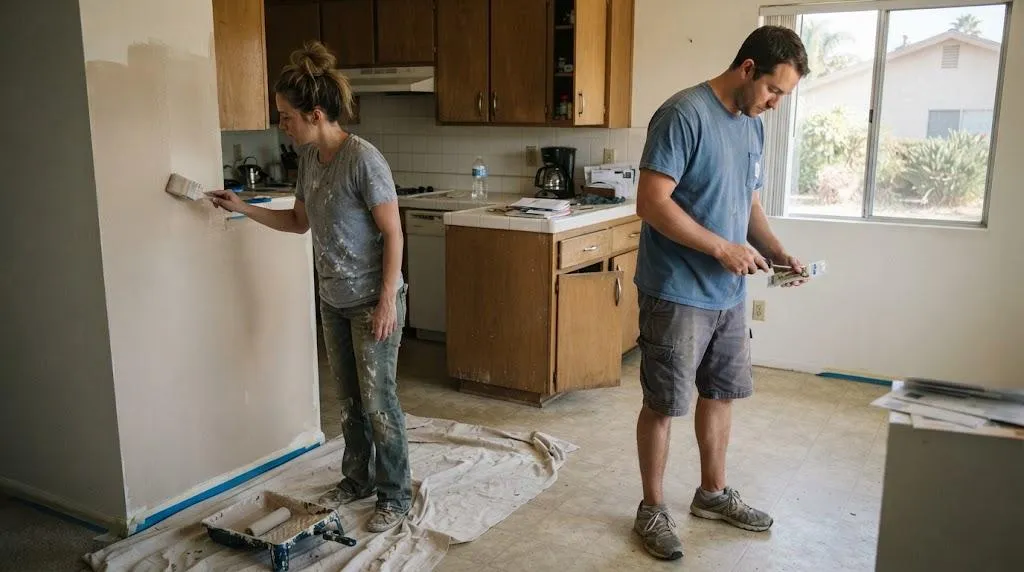
Over the next couple of years, they made mostly cosmetic updates. Paint, new flooring, some landscaping. Nothing dramatic. The improvements cost a fraction of what they would have paid to buy something updated from the start. And the equity they built, both through the improvements and through normal appreciation in the area, gave them options they wouldn't have had if they'd kept waiting for the La Mesa home.
That story isn't unusual. It's close to the pattern Jacob sees most often with first-time buyers across East County.
The buyers who build the most equity early aren't usually the ones who found the perfect home. They're the ones who bought something smart and got to work.
How People Actually Buy Their First Property
One of the biggest reasons buyers stay on the sidelines is that they misunderstand how financing actually works.
Most Buyers Do Not Put 20% Down
The 20% down requirement is more myth than reality for most buyers today.
FHA loans allow as little as 3.5% down
Conventional loans can often be done with 5%
VA loans, available to qualifying military members and veterans, can be done with no down payment at all
Gift funds from family members can often be used toward a down payment
You do pay for it in some cases. Loans with less than 20% down typically carry PMI, or private mortgage insurance, which adds to your monthly cost. But for many buyers, paying PMI while building equity is a smarter financial position than continuing to rent while waiting to save a larger down payment.
Whether that math works for your situation is worth working through with a lender directly.
(Related: What Is PMI and Is It Worth It for San Diego Buyers?)
Why the Lender Matters More Than Most Buyers Realize
Most buyers spend a lot of time thinking about which home to buy and not nearly enough time thinking about who handles their financing. That's a mistake.
A good lender communicates clearly, helps you understand your realistic numbers, and works through creative solutions when your situation isn't straightforward. A weak one goes quiet at the wrong moment or surprises you right before a deadline.
The first step usually isn't looking at homes. It's understanding your numbers.
Know your budget before you fall in love with something. It keeps the process cleaner and reduces stress significantly.
How to Think About Monthly Payments
A rough way to think about it: at current rates, every $100,000 borrowed typically results in roughly $600 to $700 per month in principal and interest, though that shifts with rates. Add property taxes, insurance, and potentially HOA fees on top for a more realistic total.
That number can feel large until you compare it against where rents are heading and what you're actually building toward over time.
Renting vs Owning Over Time
The monthly payment comparison tells only part of the story.
Why Ownership Feels Expensive at First
When you buy your first home, it almost always feels uncomfortable. The payment is usually higher than your rent. You're suddenly responsible for maintenance. There's uncertainty about whether you bought at the right time.
Jacob has said it directly to buyers many times: everything we bought felt expensive at first. That discomfort is almost always part of the early ownership experience.
Discomfort at the beginning doesn't mean the decision was wrong.
What Changes Over 10 Years
Your mortgage payment is fixed. Your rent isn't.
Renters across San Diego and East County have watched their monthly costs rise substantially over the past decade, often with little warning. A fixed-rate mortgage doesn't do that. The principal and interest stays the same from year one to year thirty.
Your loan balance gets paid down with every payment
Equity builds even without price appreciation
Rent increases can be avoided
Refinancing options may open up if rates improve
You may eventually own the property outright
What feels uncomfortable now can become one of the best financial decisions you ever made.
Key Takeaway: The Long-Term Ownership Advantage
Fixed mortgage payments vs rising rent
Equity builds even without significant appreciation
Long-term holders gain options renters never have
The discomfort early on is usually temporary
The financial gap between owning and renting typically widens over time
How Smart Buyers Create Equity
Not all equity comes from market appreciation. Some of it gets created.
Why Cosmetic Problems Create Opportunity
A dated kitchen, bad paint, carpet from two decades ago, a yard that needs work. These things cause most buyers to scroll past. They also create some of the best entry-point opportunities in the market.
Cosmetic problems look expensive. They usually aren't.
Paint, flooring, landscaping, and lighting can transform a property for a fraction of what most people assume. This is especially true in East County communities like Alpine, Lakeside, and Jamul, where you often find older homes on larger lots that have been sitting simply because they didn't photograph well.
(Related: Should You Buy a Fixer-Upper in San Diego?)
Sweat Equity vs Over-Improving
There's a real difference between strategic updates and over-improving for the neighborhood.
Fix the biggest objections buyers would have at resale
Focus on items that affect livability and first impressions
Avoid over-building for the local price ceiling
The goal is removing friction, not creating the nicest house on the block
The goal is removing friction, not creating the nicest house on the block.
The most valuable improvements often make a home feel clean, functional, and move-in ready, not the dramatic renovations that cost twice what the market supports.
Forced Appreciation in Simple Terms
Forced appreciation just means creating value through your actions rather than waiting for the market to do it for you. You buy a property that's underperforming, make smart improvements, and end up with a home worth more than you paid plus the cost of the work.
It's not complicated in concept. The discipline is staying strategic about which improvements actually move the needle.
How Move-Up Buyers Often Build Wealth
Move-up buyers don't start at the top. They build their way there.
The clearest wealth-building pattern Jacob sees across San Diego County isn't investors buying multiple properties all at once. It's regular homeowners who bought something smart, built equity, and used that equity as the foundation for a better next move.
It usually looks like this: a first-time buyer purchases a condo or townhouse in Santee, Lakeside, or El Cajon. They hold it for five to seven years. Equity builds through appreciation, loan paydown, and maybe a few smart improvements. When they're ready to move up to a larger home for a growing family or a different lifestyle, they're not starting from scratch. They're leveraging a foundation they built.
The first home funds the second. The second funds the third.
That's the trajectory most people don't see when they're still renting and watching the market from the outside.
The Sell or Keep Decision for Move-Up Buyers
When it's time to move up, one of the most important decisions is whether to sell the first property or hold it as a rental. There's no universal right answer. But the question is worth taking seriously before you decide.
What's your equity position and what would selling net you?
Can the property cash flow as a rental after all carrying costs?
Do you have the bandwidth to manage a rental while also managing a move?
Does holding the first property fit your long-term financial goals?
Some move-up buyers in East County find that holding the first home as a rental, especially if they locked in a low rate and the property can generate reasonable income, makes more sense than selling. Others find the equity is better deployed toward a larger down payment on the next home. Both can be the right answer depending on your specific situation.
(Related: Should You Sell or Keep Your Current Home in San Diego?)
What Long-Term Ownership Actually Looks Like
After the housing market crashed, there was a period where almost everyone had an opinion about real estate, and it was usually some version of: don't buy right now.
Jacob and Kristin bought a property anyway. The location made sense. The long-term fundamentals made sense. The price made sense. The noise from friends, family, and headlines didn't change the underlying logic.
Years later, that property had appreciated substantially and became one of the clearest lessons from their career.
"Everybody told us not to buy that property. The market didn't care what everybody said."
The people sitting on the sidelines waiting for certainty were often the same people who missed the opportunity entirely. That story isn't told as a win. It's told as a reminder of what long-term ownership rewards and what fear-driven waiting tends to cost.
Why Buyers Need to Choose Their Advisors Carefully
When you're making a major financial decision, people around you will have opinions. Parents who bought thirty years ago under entirely different conditions. Friends who read a concerning article last week. Family members who are genuinely trying to help but working from fear more than data.
Well-meaning people can give genuinely bad real estate advice.
Not because they don't care, but because their information is incomplete or filtered through their own emotional experience. Surrounding yourself with people who actually understand the current market, realistic financing options, and long-term ownership strategy matters more than most buyers realize.
Common First-Time Buyer Mistakes
These come up regularly across San Diego County, especially with buyers who have been in the research phase for a long time.
Waiting for the perfect market that never arrives
Assuming you need 20% down before you can buy
Letting emotional attachment override strategic thinking
Ignoring long-term ownership potential in favor of short-term comfort
Over-remodeling a property beyond what the neighborhood supports
Taking financial advice from people without relevant experience
Skipping the lender conversation until it's too late to fix issues
Underestimating carrying costs for fixers in East County or rural areas
Reality Check: Real Estate Is Not Risk-Free
Real estate is not risk-free. No honest advisor would tell you otherwise.
Most of this article is focused on what ownership can do for your long-term financial position. But the full picture requires acknowledging what can go wrong, because it does go wrong for some people, and understanding the risks is part of making a good decision.
Repairs happen, and they can be expensive and poorly timed
Markets fluctuate, and short-term declines are possible
Overextending on a purchase creates financial stress that compounds other problems
Not every property appreciates, and not every neighborhood improves
Landlording is work, and not everyone is suited for it
Life changes, and a home that made sense today might not make sense in three years
None of that means ownership is a bad idea. For most people in most situations, the long-term math still works in favor of buying over renting. But the people who do best tend to be the ones who went in with realistic expectations, bought within their means, and didn't count on appreciation to make a bad purchase work.
Smart buying means accounting for the downside, not just the upside.
Should You Sell Your Current Home or Keep It?
For homeowners who already own and are thinking about a move, this question comes up constantly. The right answer depends on your specific situation.
Questions Worth Asking Before You Decide
What is your current equity position?
What rate do you have on the existing mortgage?
Could the home realistically rent for more than your carrying costs?
Do you have the bandwidth to manage a rental property?
What are your long-term plans for where you're living?
Are you trying to simplify or build additional assets?
When Keeping a Home Can Make Sense
If you have a low interest rate on your existing mortgage and the property can generate positive cash flow as a rental, holding it while moving into something else can be worth exploring. You're keeping an appreciating asset while someone else helps cover the costs.
This is how a lot of San Diego homeowners build real estate wealth over time. Not through complex strategies, but by holding smart properties through multiple market cycles.
When Selling May Be the Smarter Move
Sometimes the equity is better deployed elsewhere. Sometimes managing a rental doesn't fit your life or timeline. Sometimes the numbers don't work as well as they appear once you factor in vacancies, maintenance, property management, and tax implications.
Using equity from a sale to reduce debt, increase a down payment on a better lifestyle fit, or simplify your financial picture can be just as valid a strategy as holding. The goal is to make the decision that actually serves your long-term situation.
Key Takeaway: Sell or Keep Checklist
Can the property cash flow as a rental?
Do you have the bandwidth to manage it?
Would the equity work harder somewhere else?
Does holding fit your long-term plans?
Have you talked through the tax implications with an advisor?
(Related: Should You Sell or Keep Your Current Home in San Diego?)
When Is the Right Time to Buy?
There is no perfect market.
Rates have been high and low and everywhere between. Inventory has been tight and balanced and oversupplied. Buyers who waited for the perfect conditions often found the market move without them.
Instead of asking whether you should wait, the more useful questions are:
Better Questions Than "Should I Wait?"
Can I comfortably afford this payment without financial stress?
Does this property make sense based on its long-term fundamentals?
Is there realistic upside in terms of appreciation, equity, or rental potential?
Does this purchase improve my long-term financial position compared to continuing to rent?
Am I financially and emotionally prepared for ownership?
If the answers to those questions are yes, the timing question tends to matter less than people think.
You don't need the perfect property. You need a smart first move.
Frequently Asked Questions
Is buying real estate in San Diego still worth it?
For most people thinking long term, yes. San Diego's underlying demand drivers and limited land supply haven't changed. Short-term conditions vary, but buyers who purchase at reasonable prices and hold for a meaningful period have generally done well here. East County communities like Alpine, Lakeside, Santee, and La Mesa continue to offer more accessible entry points than coastal areas.
How much money do you need to buy a home in San Diego?
Less than most people assume. Depending on the loan type, you may be able to purchase with as little as 3.5% down using an FHA loan, or zero down using a VA loan if you qualify. The more important starting point is understanding your actual budget by talking to a lender before you start seriously searching.
(Related: How Much Home Can You Afford in San Diego?)
Should I keep my first house as a rental?
It depends on your equity position, your current rate, what the property can realistically rent for, and whether you have the bandwidth to manage it. For some people it makes strong financial sense. For others, simplifying and redeploying the equity is smarter. There's no one-size-fits-all answer.
What is PMI and is it worth it?
PMI is private mortgage insurance, typically required when you put less than 20% down on a conventional loan. It adds to your monthly cost, generally somewhere in the range of 0.5% to 1.5% of the loan amount annually. For many buyers, paying PMI to get into a property and start building equity is a better financial position than continuing to rent while saving a larger down payment.
Is now a good time to buy in San Diego?
Timing the market perfectly is nearly impossible. What matters more is whether you're financially ready, whether the property makes sense, and whether ownership improves your long-term position. Those are factors within your control in a way that broader market conditions aren't.
What types of homes build the most equity?
Properties with realistic upside tend to be underpriced due to cosmetic issues, located in areas with improving demand, or purchased at prices that leave room for appreciation. In East County, older homes on larger lots in communities like Alpine, Jamul, and Lakeside often fit this description. Location, condition at purchase, and holding period tend to matter more than the property type.
Should I buy a fixer-upper in San Diego?
Cosmetic fixers can create real opportunity, especially in East County where you often find older homes on larger lots that need updating but sit on solid bones. The key is understanding what you're actually getting into before you close. Properties with well water, septic systems, older roofs, or road access considerations require extra diligence. A thorough pre-inspection and honest cost assessment prevents a smart buy from turning into an expensive lesson.
(Related: Should You Buy a Fixer-Upper in San Diego?)
Building Wealth Through Real Estate Isn't a Secret
It just requires getting started.
Most people who build meaningful wealth through real estate in San Diego didn't start with a perfect property. They started with a smart decision that made financial sense, held on through the uncomfortable early period, and let time and equity do the rest.
Most wealth in real estate gets built slowly, through ownership, time, smart decisions, and patience.
Not through a stroke of luck or a windfall. Through one ownership decision that opens the door to the next one.
If you're trying to figure out whether buying makes sense for your situation right now, whether to sell your current home or keep it as a rental, how much equity you actually have, or what a realistic next step looks like, Jacob and Kristin Menath help San Diego buyers and homeowners think through those decisions strategically, realistically, and without pressure.
About Jacob and Kristin Menath
Jacob and Kristin Menath are real estate professionals based in Alpine, CA serving buyers and homeowners across San Diego County, with deep experience in East County communities including Alpine, Lakeside, Santee, El Cajon, Jamul, and La Mesa.
They specialize in helping:
Move-up buyers planning their next chapter
Downsizing homeowners navigating major lifestyle transitions
Families making long-term real estate decisions
Buyers looking to build equity strategically over time
Their approach focuses on calm guidance, practical strategy, and helping clients make confident long-term decisions without pressure. They stay directly involved throughout the process, from early planning conversations through closing and beyond.
Jacob Menath is a real estate agent in Alpine, CA serving San Diego County, helping homeowners make informed, confident decisions when selling their home and navigating major life transitions.
Menath Real Estate Team | Alpine, CA | Serving San Diego County