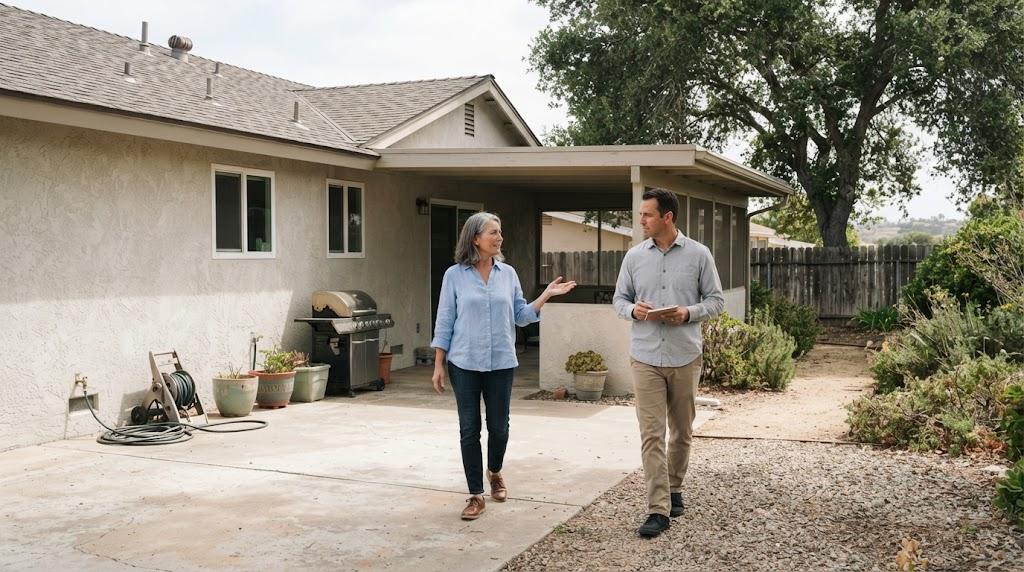
Seller Legal Obligations When Selling a Home in California
Selling a home isn't just about picking a price, accepting an offer, and handing over the keys.
In California, sellers also have real disclosure and paperwork responsibilities before a sale can close. That matters even more if your property has an older roof, a past leak, additions, septic, a well, acreage, shared access, or anything else a buyer might want to know about before they sign.
I'm Jacob Menath, a real estate agent with Menath Real Estate Team in Alpine, California, helping buyers and sellers throughout Alpine and East County San Diego navigate major real estate and lifestyle transitions.
Disclosure questions are an important part of preparing a California home for sale.
Here's the short version, and then we'll get into the details.
The short answer
California home sellers can have significant disclosure and transaction obligations, but the exact requirements depend on the property, type of sale, applicable exemptions, and circumstances. Depending on your situation, that can include things like:
A written property disclosure statement covering known conditions
Material facts that could affect the property's value or desirability
Natural hazard disclosures for certain hazard areas
Lead-based paint requirements for older homes
Smoke detector and carbon monoxide requirements
HOA documents, if the property is part of a common interest development
Other property-specific disclosures, notices, or certifications that may apply
Which of these actually apply to you depends on your particular home, so this isn't a one-size-fits-all checklist. I'll walk through the general landscape here, but for anything specific to your property, that's a conversation for your agent and, where needed, a California real estate attorney.
One thing I tell almost every seller I work with:
Don't decide for the buyer what information matters.
If you're not sure whether something needs to be mentioned, that uncertainty is a reason to ask, not a reason to leave it off the form.
California takes seller disclosure seriously
California's disclosure rules are built around a document most sellers have heard of even if they've never filled one out: the Transfer Disclosure Statement, or TDS.
California law includes a statutory Transfer Disclosure Statement framework for many transfers of residential property. Whether the TDS and related requirements apply to a particular transaction can depend on the property and type of transfer.
There are exemptions and transaction-specific rules, which is why sellers shouldn't assume every sale uses exactly the same disclosure process. So if you're getting ready to list, don't rely on a blog post from a few years back, or honestly, this one either, once enough time has passed. Ask your agent what the current forms and requirements look like for your specific sale.
Here's a mindset shift that helps a lot of sellers:
Don't start by asking, "Can the buyer find this themselves?" Start by asking, "What am I required to disclose?"
Those are two different questions, and the first one gets sellers into trouble more often than you'd think.
Known property conditions and material information
Known property conditions and material information are an important part of the disclosure conversation.
That covers things like:
Water intrusion or past leaks
Roof issues
Drainage problems
Structural concerns
Prior damage or significant repairs
Boundary questions
Additions or modifications
Other conditions that could affect value or desirability
Not every item on that list creates a specific legal obligation in every situation. That depends on the facts. But here's the general rule I share with clients:
If you know about a significant property issue, don't assume silence is safer than disclosure.
Sellers can be tempted to leave something out because it feels like ancient history or because the repair appears complete. That's usually where the next section becomes relevant.
Don't guess when you're filling out the forms
Disclosure forms ask specific questions, and it's tempting to answer them the way you wish the answer were, instead of the way it actually is.
A few patterns worth avoiding:
Answering "no" when the honest answer is "I don't know."
Minimizing something because it feels embarrassing or inconvenient.
Trying to diagnose a technical issue yourself instead of relying on records or a professional opinion.
Relying entirely on memory for something that happened years ago.
None of these come from bad intentions. Most sellers just want the sale to go smoothly, and it's human nature to round the story toward "fine." But a disclosure form isn't the place to turn uncertainty into certainty.
If you genuinely don't know, don't turn an assumption into a factual answer. Review the question carefully and get guidance when needed.
A repaired problem isn't the same as a problem that never happened
This is one of the more common seller conversations I have, so it's worth spending a minute on.
Say there was a leak a few years back. You had it repaired. Everything's looked fine since. It's tempting to think, "it's fixed, so why bring it up?"
I understand the instinct. But a completed repair doesn't necessarily make the property's history irrelevant. Read the applicable disclosure questions carefully, and if you're not sure how to characterize something you fixed, that's worth a quick conversation with your agent or, for anything with legal weight, an attorney.
Here's the line I keep coming back to with clients:
"Repaired" and "never happened" aren't the same thing.
It sounds obvious written out like that. In the middle of preparing a listing, though, it's easy to lose sight of.
Permits and improvements deserve a closer look
This one comes up constantly in Alpine and East County, where a lot of homes have additions, outbuildings, workshops, or horse facilities that were built over the years, sometimes by a previous owner, sometimes decades ago.
Common areas of uncertainty:
Room additions
Garage conversions
Electrical work
Outbuildings and workshops
Retaining walls
Decks
Horse facilities and arenas
Just because something has been standing for twenty years doesn't mean it was permitted. And just because you assume it was permitted doesn't mean you actually know that.
If you're unsure whether an improvement was permitted, don't advertise an assumption as a fact.
If you don't know, that's the honest answer, and it's worth establishing what records are available before making representations about permit status. Permit records, contractor invoices, and county records can sometimes fill in gaps in your own memory.
Rural properties often raise questions that go beyond the house itself
This is where a lot of Alpine and East County sellers run into questions, because the house is often only part of the story.
Depending on the property, relevant topics can include:
Septic systems
Private wells or shared water systems
Propane
Private or shared roads
Easements
Drainage and grading
Acreage and boundaries
Outbuildings
Horse improvements
Access and maintenance arrangements
On a lot of these properties, some of the most important information a buyer needs isn't about the kitchen or the roof. It's about the land and the systems around the house.
On an Alpine property, some of the most important information may be about the land and systems around the house, not just the house itself.
Records involving septic service, private water, shared-road arrangements, or other rural systems may become relevant depending on the property and the disclosure questions involved. Getting that documentation together before you go to market is usually easier than trying to reconstruct it after an offer comes in.
Natural hazard disclosures
California has disclosure requirements tied to specified natural hazard areas, and this is genuinely relevant for a lot of foothill and East County properties.
I'm not the person who determines whether a specific parcel falls into a particular hazard zone. The transaction's applicable reports, records, and professionals can help establish what applies to the particular property. What I can tell you is that this is a normal, expected part of selling in this part of San Diego County, and it's worth understanding early rather than being surprised by it mid-escrow.
Wildfire insurance is a separate practical issue
Insurance availability and cost are separate from the seller's disclosure obligations, but they can still matter to a buyer evaluating an Alpine or East County property. For current coverage questions, buyers and sellers should speak directly with an insurance professional.
Older homes can carry additional requirements
For most housing built before 1978, federal lead-based-paint disclosure requirements can apply. This isn't something I'll turn into a full compliance course here, but it's another example of why sellers shouldn't assume every California transaction uses identical paperwork.
The age of the property can create additional disclosure requirements, which is another reason sellers shouldn't assume every California transaction uses exactly the same paperwork.
If you're not sure whether this applies to your home, ask before you're deep into escrow. The EPA's Lead-Based Paint Disclosure Rule is a useful starting reference.
HOA and common interest development properties
If your property sits inside an HOA, condo association, or similar common interest development, additional association-related documents may be required as part of the transaction. Governing documents and other association information are common examples.
The property type can change the paperwork required to sell it.
This is one more reason a generic checklist only gets you so far. Your specific property and its structure matter.
Your agent has responsibilities too, but that doesn't replace yours
I want to be clear about something here, because I think it gets misunderstood sometimes.
The seller's disclosures and the real estate professional's responsibilities are related, but they're not interchangeable.
I can help you navigate the transaction, organize your property information, and flag questions that need to go to another professional. What I can't do is stand in for your own knowledge of the property, or determine on your behalf whether every legal disclosure duty has been satisfied. That's not me passing the buck. It's an honest description of where my role starts and ends.
Don't hide a problem because you're afraid it'll kill the deal
This might be the section I feel most strongly about.
A seller will sometimes think, "if I mention this, nobody's going to buy the house."
I understand why that thought shows up. But it's usually the wrong way to think about it.
A known problem doesn't necessarily make a home unsellable. Trying to minimize a known issue can create additional problems if the buyer later believes important information wasn't properly disclosed.
A known condition can become part of the buyer's evaluation, pricing, inspections, negotiations, and overall decision. Buyers who know what they're getting into can still move forward. Buyers who feel blindsided after closing tend to respond very differently, and that's a situation nobody wants to end up in.
I'll add one caution here too: disclosing something doesn't automatically eliminate liability on its own. It depends on how it's disclosed and what the facts are. That's exactly why the right professionals need to be involved when something significant comes up.
Selling "As-Is" Doesn't Mean "No Disclosures"
This trips up more sellers than almost anything else on this list.
Don't assume "as-is" contract language eliminates disclosure obligations. What that language means in your particular transaction, and what disclosure duties still apply, should be evaluated using the actual contract and applicable law.
If you're considering an as-is sale, that's a good time to have a specific conversation with your agent and, where appropriate, an attorney about what it does and doesn't cover for your situation.
What if you're not sure whether something needs to be disclosed?
Honestly, this might be the most useful question in this entire article.
Don't guess. Don't hide it. And don't let an internet article, including this one, make the legal determination for you.
Instead, start gathering:
What you actually know, in plain terms
Relevant dates
Repair records
Contractor information
Permits or related records
Photos
Previous inspection or contractor reports
Insurance-related documents, if relevant
Then bring that information to the right person. As a general pattern:
Your agent can help with the transaction process, forms, and organizing property information
An attorney can help interpret disclosure law and liability questions
A property professional (inspector, contractor, septic or well specialist) can help assess technical condition
The county or relevant agency can help confirm permits and property records
Uncertainty is a reason to ask a question, not a reason to make the issue disappear from the conversation.
Good records make all of this easier
If you've read anything else I've written about preparing to sell, this will sound familiar. Documentation makes almost every part of this process smoother.
Hold onto things like:
Repair invoices
Permit paperwork
Contractor records
Warranties
Inspection reports
System information, especially for septic, well, or solar
Other property-related documents
Documentation is usually more useful than trying to reconstruct ten years of property history from memory.
Where I fit into all of this
Here's what I can actually help with as your agent:
Preparing for the transaction and understanding the process
Organizing your property information into something usable
Identifying which questions need to go to another professional
Coordinating documents and timelines through escrow
Thinking through how known conditions might affect marketing and buyer expectations
Helping you compare how repairing a known condition versus selling in its current condition may affect your real estate strategy
What I'm not the right person to determine:
Whether you've satisfied every legal disclosure duty
Whether withholding something creates liability
Whether a specific situation amounts to fraud
How a particular statute applies to your exact facts
Whether you need an attorney
My role is to help you navigate the real estate transaction clearly, not to replace the attorney, inspector, contractor, or other professional your situation may require.
A common seller question
A common question sounds something like: "That happened years ago, but we fixed it. Do I really need to mention it?"
There's no generic yes or no answer to that, and I won't pretend there is. What actually helps in that situation looks more like walking through:
What exactly happened?
What was repaired, and by whom?
What records exist?
What does the specific disclosure question on the form actually ask?
Is there anything about the history that's genuinely unsure?
Does this need to go to an attorney before it's answered?
Don't decide something is irrelevant just because it isn't causing a problem today.
Questions worth asking yourself before you list
If you're getting ready to sell, it's worth sitting down with a notepad and going through these honestly:
What problems have I actually experienced while owning this home?
What major repairs have been done?
Have there been any leaks or water intrusion?
Are there known drainage or grading issues?
Have I made additions or alterations to the property?
Do I know whether those improvements were permitted?
What do I know about septic, water, roads, easements, or boundaries?
Are there any shared-property arrangements I should account for?
What documents and repair records do I actually have on hand?
Am I relying on something a previous owner told me rather than something I've verified?
Are there property features I'm advertising that I haven't confirmed?
Do I have documentation supporting major repairs or improvements?
Am I answering from real knowledge, or am I assuming?
Is there anything I'm tempted to leave out because I'm worried it'll affect the sale?
Is there anything I'm unsure about that should go to a professional before I list?
And the bigger question underneath all of it:
If a buyer discovered this after closing, would I wish we'd addressed it clearly during the sale?
Frequently asked questions
What does a seller have to disclose when selling a home in California?
California sellers can have significant disclosure obligations depending on the property and the transaction. Rather than relying on a generic checklist, work through the applicable disclosure forms carefully and get professional or legal guidance for anything specific to your property.
Do I have to disclose a problem if I already repaired it?
Don't assume a past problem becomes irrelevant just because it was repaired. Review the disclosure questions carefully, and if you're unsure how to describe the property's history, ask for guidance.
Do I have to disclose something that happened before I owned the home?
If you know information about the property's history, don't assume it becomes irrelevant simply because it happened before you owned the home. Whether and how particular information should be disclosed depends on the facts and applicable requirements, so review the disclosure questions carefully and get professional or legal guidance when needed.
Do I have to disclose something the buyer could probably see for themselves?
Buyer visibility isn't your legal test. Whether something must be disclosed depends on the actual requirements and facts involved, not on whether you think a buyer might notice it anyway.
Do I have to disclose unpermitted work?
Permit and disclosure questions can be very fact-specific. Don't present unknown permit status as if it were confirmed. Look into what records actually exist, and get guidance on how to answer the disclosure questions accurately.
What if I don't know whether an addition was permitted?
Don't represent unknown permit status as confirmed. Start by identifying what records are available and what you actually know about the improvement. If you're uncertain how that information should be handled in the transaction, get appropriate professional or legal guidance.
Does selling my California home "as-is" mean I don't have to disclose problems?
Don't assume that it does. The effect of "as-is" language, and the disclosure obligations that still apply, depend on the contract, property, transaction, and applicable law.
Can I sell a California home that needs major repairs?
A home doesn't necessarily need to be in perfect condition to be sold. Known condition can affect disclosure, pricing, buyer expectations, inspections, financing, insurance, and negotiations. It's worth understanding the full picture before choosing a strategy.
What happens if I forget to disclose something?
That depends heavily on the facts: what the information was, what you knew, what requirements applied, and what happened afterward. If you realize something significant was missed, during the transaction or after closing, get qualified legal guidance rather than trying to sort it out based on general information online.
The bottom line
Selling a California home involves more than finding a buyer and agreeing on a number.
It also means providing accurate information about the property and working through the disclosures that apply to your particular transaction.
Don't guess. Don't minimize something just because it was repaired. Don't present an assumption as a fact. And don't decide on the buyer's behalf that something isn't worth mentioning.
When you're not sure, get the right professional involved before you move forward.
Good disclosure isn't about making a property look perfect. It's about handling what is actually known about the property clearly and appropriately during the transaction.
Jacob Menath is a real estate agent with Menath Real Estate Team in Alpine, California, helping buyers and sellers throughout Alpine and East County San Diego navigate major real estate and lifestyle transitions.
Menath Real Estate Team | Alpine, CA | Serving San Diego County
This article provides general real estate information and is not legal advice. California disclosure requirements depend on the property, transaction, and circumstances and may change over time. For legal advice about your specific disclosure obligations, consult a qualified California real estate attorney.



