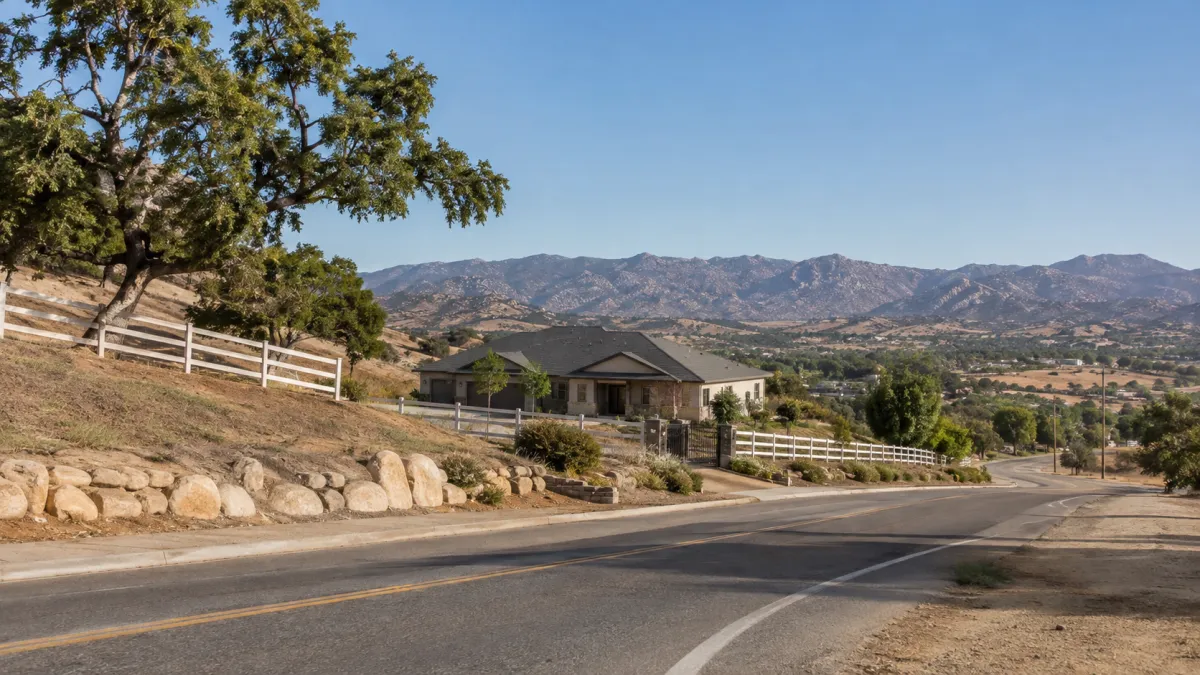
Is Alpine CA Considered Rural?
Is Alpine, CA Considered Rural?
If you're thinking about a move to Alpine, one of the first questions you'll probably ask is whether it counts as rural. It comes up in almost every conversation I have with people who haven't spent much time out here yet.
The honest answer is that it depends on what you mean by rural.
If you're coming from downtown San Diego, Mission Valley, or even parts of Santee, Alpine is going to feel rural. The lots are bigger, the pace is slower, and open space is just a normal part of the day. But if you're picturing somewhere like Julian or Mount Laguna, Alpine won't feel nearly as remote as you might expect.
Most of the time, Alpine lands somewhere in the middle. The clearest way to describe it is semi-rural.
I'm Jacob Menath with the Menath Real Estate Team here in Alpine, and I help buyers and sellers across Alpine and East County San Diego think through exactly this kind of question before they commit to a big move.
Quick answer: is Alpine considered rural?
Alpine is generally considered semi-rural. A few quick points to set the stage:
Larger lots and acreage are common throughout the area.
Horse properties exist in many neighborhoods.
Open space and privacy are a real part of daily life.
Most residents still have easy access to grocery stores, restaurants, schools, and Interstate 8.
Alpine is not as built-up as Santee or La Mesa, but it's not as remote as Julian.
That's the short version. The longer version is more interesting, because "rural" means different things to different people.
What does rural actually mean?
When buyers ask if Alpine is rural, they're almost never asking for a zoning definition.
What they really want to know is simpler: "What would my life feel like if I lived there?"
That's a much more useful question, and it's the one worth answering. A zoning map can tell you what's allowed on a parcel. It can't tell you how far you'll drive for groceries, whether you'll hear coyotes at night, or how it feels to pull into your driveway after a long day. Those everyday details are what people are actually trying to picture.
So instead of arguing over labels, it helps to look at the two sides of Alpine. The part that feels rural, and the part that keeps it from feeling isolated.
Why Alpine feels rural
The first thing most people notice is the land.
Lots out here tend to be larger than what you'd find in a typical San Diego suburb. Plenty of properties sit on half an acre, an acre, or more, and acreage parcels aren't unusual. That alone changes the feel of a neighborhood. There's more room between homes, more space for a garden or a workshop or a few animals, and less of the shoulder-to-shoulder layout you get closer to the coast.
Horse properties are part of that picture too. You'll find them scattered throughout the community, with stables, riding rings, and trails that connect to open land. Not everyone owns horses, but the option is common enough that it shapes how a lot of Alpine looks and lives.
Then there's the open space. Alpine is surrounded by hills, oak canyons, and stretches of undeveloped land. You see it on the drive in, you see it from a lot of backyards, and it gives the whole area a more natural, unhurried feel.
Wildlife comes with that territory. Deer, rabbits, hawks, the occasional bobcat, and yes, coyotes you'll hear at night. It's a normal part of living closer to open land, and most people who choose Alpine consider it a feature, not a downside.
The night sky is another one. Because there's less density and less light, the stars are easier to see than they are in the more developed parts of the county. I've had buyers tell me they hadn't seen that many stars from their own backyard in years. It's a small thing until you experience it, and then it becomes one of the details people mention most.
Put all of that together, and it's easy to see why Alpine reads as rural to someone arriving from a denser area. The space is real. The quiet is real. The room to breathe is real.
Why Alpine doesn't feel isolated
Here's the part that surprises people.
You can have acreage in Alpine and still be five minutes from groceries.
The town has its own grocery stores, restaurants, coffee spots, hardware, schools, and the everyday services most people rely on. You're not planning a half-day expedition every time you need milk. For a place that feels this open, the conveniences are closer than newcomers expect.
There's a community side to it as well. Local events, the schools, the parks, and the businesses along the main corridor give Alpine a real center of gravity. It functions like a town, not just a collection of remote properties. If you're weighing the whole picture, it's worth reading Is Alpine a Good Place to Live? and Is Alpine a Hidden Gem? alongside this one, since the open space and privacy people come here for is only half the story.
And then there's Interstate 8, which runs right through the area. That single detail does a lot of work. It keeps Alpine connected to the rest of San Diego County and makes the commute to places like El Cajon, La Mesa, or farther west more manageable than the map might suggest. Traffic and timing always vary, so it's worth driving your own commute before you decide. But the access is there, and it's a big reason Alpine doesn't feel cut off.
That balance is the whole point. You get the space without giving up the basics.
Different parts of Alpine feel different
One thing I'd encourage you to keep in mind: Alpine isn't one single experience. The feel changes depending on where you are.
Alpine Heights and the more established neighborhoods closer to town tend to feel a little more settled and connected, with that semi-rural character but easy access to services.
Palo Verde Ranch leans into the larger-lot, open feel that draws people who want more room and a quieter setting.
Harbison Canyon, just down the hill, has its own identity and its own mix of properties, with a tucked-away, woodsy feel in parts of it.
Japatul Valley sits farther out and feels noticeably more rural. If you're looking for real distance and seclusion, this is the direction it shows up.
The areas near Tavern Road run the full range, from more suburban-feeling pockets to properties that feel genuinely out in the country, sometimes within a short drive of each other.
This is why I always tell people not to judge Alpine from a single visit to a single street. Two homes a few miles apart can offer completely different lifestyles. Part of my job is helping you match the area to the life you're actually trying to build, not just the listing photos.
The moment Alpine clicks for most buyers
There's a pattern I see over and over.
People assume Alpine is far away. Many have never spent real time here. They've driven past the exits on the way to somewhere else and filled in the blanks with a guess.
Then they finally come out and look around.
One of the most common reactions I hear is some version of, "That's it? I thought it was much farther away." The drive is shorter than they pictured, the town has more going on than they assumed, and the property options are better than they expected for the price of admission.
That moment, when the idea of Alpine meets the reality of it, is usually when things shift. In many cases, Alpine goes from being a place they never considered to one of their top choices in a single afternoon.
A pattern I see with relocation buyers
This shows up a lot with people relocating from other parts of the county.
A buyer will spend weeks looking in places like Santee, Rancho San Diego, or La Mesa. They're chasing space and a little more privacy, but the inventory in those areas keeps pushing them toward smaller lots or higher prices than they hoped for.
Eventually someone suggests they take a look at Alpine.
What tends to surprise them is the combination. The drive is more reasonable than they assumed. The views and open space are a real step up. The community feels welcoming and grounded. And there's simply more property available for the kind of lifestyle they had in mind.
It doesn't make Alpine the right answer for everyone. But for buyers who want room without isolation, it often checks boxes the other areas couldn't.
A client story
One recent client captures this perfectly.
She was living in Point Loma while her whole family had settled in Alpine. She wanted to be closer to them, but she'd built Alpine up in her mind as being much farther away than it really is. That perceived distance was the main thing holding her back.
When we started looking, she found a property closer into town with easy freeway access, and the gap she'd been worried about mostly disappeared. Today she's about six minutes from her newest grandbaby and four minutes from her other grandkids, who are at her house at least three times a week now.
Here's the part that stuck with me. Even back when the whole family lived in San Diego, they only saw each other once a week at most, sometimes only once a month. Now that's flipped completely. And she's still only about thirty-five minutes from the beach.
The property itself opened things up too. She's on about an acre now, with a big yard and a panoramic view of the mountains she didn't have before. She's always been friendly with her neighbors, but on her quiet cul-de-sac she's found that the connection comes easily, without the effort it used to take to get to know people. She's even thinking about building on her land, and she's able to do dog rescue now that she finally has the room for it.
She didn't move to Alpine to get away from her life. She moved to get closer to it, and she ended up with more room to grow it than she expected. For her, that made all the difference.
How Alpine compares to nearby communities
It helps to place Alpine next to the areas people usually weigh it against.
Santee feels more suburban, with tighter lots, more retail, and a more conventional neighborhood layout.
Rancho San Diego also leans suburban, more developed and built-up than Alpine.
Blossom Valley sits closer to Alpine in spirit, with a similar semi-rural feel and that mix of space and access.
Julian is more rural, smaller and more removed, with a mountain-town character all its own.
Mount Laguna is much more remote, higher in elevation and far quieter, the kind of place where rural really does mean rural.
Line them up and Alpine's position becomes clear. It sits between the suburban communities to the west and the genuinely remote ones to the east.
Who usually loves living in Alpine?
Alpine tends to be a strong fit if you're looking for room and a quieter pace. Over the years, the people who settle in happily usually want some version of the same things:
Horse owners and anyone wanting property set up for animals.
Outdoor enthusiasts who value trails, open land, and access to nature.
Anyone who needs space to spread out, whether that's a garden, a shop, or just distance from the neighbors.
RV owners and people who need room to store and use larger vehicles or equipment.
Buyers leaving denser communities who want a different rhythm.
People who simply value privacy and open space in their day to day.
If a few of those describe you, Alpine is worth a serious look.
Who may prefer a different community?
It's only fair to call out the other side.
Alpine probably isn't the best fit if walkability is at the top of your list. This isn't a place where you'll stroll to dinner or run every errand on foot.
If you want a lively nightlife scene, you'll find more of that closer to the city.
If your priority is the shortest possible commute, you'll want to drive the route honestly and decide whether the distance works for your daily reality.
And if you're after low-maintenance living, keep in mind that larger lots and semi-rural properties come with more to manage. Land, septic systems, well water on some properties, longer driveways, and brush all take upkeep. That's not a drawback so much as a tradeoff, and it's one worth understanding before you fall in love with the views.
The maintenance question most buyers underestimate
There's one honest tradeoff I want you to go in clear-eyed about, because it's the thing people miss most when they move from a smaller place to a larger one.
We once helped a buyer purchase a beautiful two-acre property. Fully gated, lush landscaping, a pond, creeks running through it. It was a dream to walk through. But all of that beauty comes with a lot of upkeep, and the systems that keep it running, things like a well, pumps, complex electrical, and the pond, take real time, money, and attention.
He genuinely enjoys the place. He'd also tell you the day-to-day maintenance turned out to be more than he pictured. We've been helping him bring in the right people and get those systems dialed in so he can actually relax and enjoy the peace of his property instead of feeling run by it. It's a good reminder of something worth thinking through before you buy, not after.
So when you're looking at acreage, don't just ask what needs to be maintained. Ask the harder questions:
What will it realistically cost to keep up?
How much of my time and energy will it take?
Am I willing to hire help, and does that fit the budget?
How many systems am I taking on, and how comfortable am I managing them?
Sometimes the answer is that you want every bit of it and you'll love the work. Sometimes it points you toward a property with more xeriscaping, less lawn, and fewer systems to babysit. Neither choice is wrong. The costly mistake is not asking the question until you already own the place.
A bigger home on a bigger lot simply means more to maintain. It's one of the easiest things to overlook when you're falling for the listing photos, and one of the most useful to think through in advance.
Common misconceptions about Alpine
A few myths come up again and again. Worth clearing them up.
"Alpine is the middle of nowhere." It isn't. With Interstate 8 running through it and a real town center, Alpine is more connected than its reputation suggests.
"Everyone owns horses." Horse properties are common, but plenty of residents don't own a single animal. The option is there, not the requirement.
"You need acreage to live there." Not true. Alpine has a range of lot sizes, including more modest properties that still offer that semi-rural feel.
"There's nothing to do." Between local businesses, parks, trails, community events, and everything a short drive away, that doesn't hold up.
"Rural means inconvenient." This is the big one. Alpine shows that you can have space and privacy while still keeping daily life simple and close at hand.
Frequently asked questions
Is Alpine, CA considered rural? It's best described as semi-rural. Compared to Santee or La Mesa it feels noticeably more open, but next to Julian or Mount Laguna it's far more connected. A few pockets near town read as almost suburban, so the honest answer is that Alpine sits between the two.
Is Alpine more rural than Santee? Yes. Santee is built up, with smaller lots, shopping centers, and a standard suburban street grid. Alpine trades that for larger parcels, more space between homes, and open land you can see from a lot of backyards.
Are there horse properties in Alpine? Yes, and they're common throughout the area, with some neighborhoods offering trail access. That said, you don't need to own horses or even want them. Plenty of residents keep no animals at all and simply enjoy the extra room.
Can you have a rural lifestyle in Alpine without owning acreage? Yes. Many Alpine homes sit on smaller lots than people expect while still offering more space, privacy, and access to open land than you'll find in most suburban neighborhoods. The semi-rural feel comes from the surroundings as much as the lot size.
Does Alpine feel remote? Not really. You've got grocery stores, restaurants, and schools in town, plus Interstate 8 running right through, so daily errands don't revolve around the distance. It only starts to feel remote in the outer areas, and even those are closer to town than places like Julian or Mount Laguna.
What part of Alpine is most rural? The outer areas, like Japatul Valley and some stretches near Tavern Road, feel the most rural and secluded. Neighborhoods closer to town, such as Alpine Heights, feel more settled and connected while still keeping that semi-rural character.
What should I think about before buying acreage in Alpine? Look past the views and think about upkeep. Larger properties often come with a well, septic, pumps, landscaping, and other systems that take real time and money to maintain. Ask yourself what the day-to-day workload actually looks like, and whether you'll want to hire help, before you commit.
Is Alpine a good place to live? For people who want a balance of space and convenience, many find it's a strong fit, though the right answer depends on your priorities. It's worth reading Is Alpine a Good Place to Live? for the fuller picture.
The bottom line
Alpine is best described as semi-rural.
It offers many of the things people are after when they search for a rural lifestyle: more land, more privacy, open space, and easy access to the outdoors. At the same time, it holds onto the conveniences most of us rely on every day.
Most people who move to Alpine aren't trying to disappear into the countryside. They're looking for a different balance between space and convenience.
For a lot of buyers, that balance is exactly what Alpine provides. And if you're weighing whether it fits the life you're trying to build, that's a conversation worth having before you make the move, not after.
Jacob Menath is a real estate agent with Menath Real Estate Team in Alpine, California, helping buyers and sellers throughout Alpine and East County San Diego navigate major lifestyle transitions.