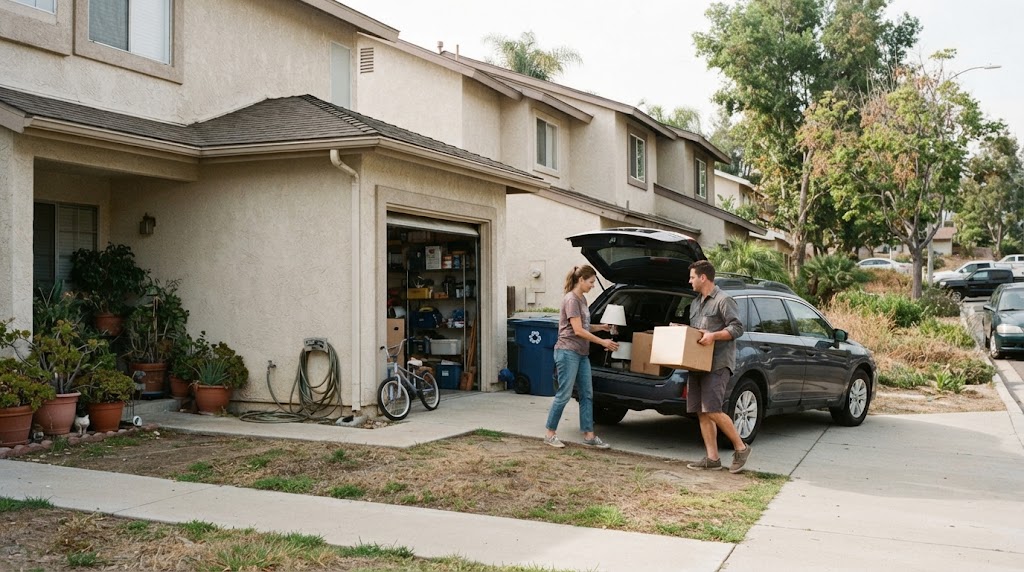
How Move-Up Buyers Build Wealth in San Diego
How Move-Up Buyers Build Wealth Through Real Estate in San Diego
By Jacob Menath
Real Estate Agent in Alpine, CA | Menath Real Estate Team
Helping San Diego buyers make smart long-term real estate decisions
In This Guide
How move-up buyers usually start
Why first homes are rarely forever homes
How equity actually builds
Why ownership creates future flexibility
How move-up buyers use equity strategically
Common mistakes buyers make
Why patience matters
What smart buyers focus on long term
A lot of buyers look around San Diego today and assume the homeowners they see must have done something extraordinary. Bought at the perfect time. Started wealthy. Found their dream home on the first try.
That isn't usually what happened.
Most move-up buyers I've worked with started somewhere much smaller. A condo. A townhome. A cosmetic fixer in a neighborhood that wasn't their first choice. Sometimes a longer commute than they wanted. Then over years of ownership, things shifted. Equity grew. Income changed. Priorities evolved. The first home quietly created the option to buy a better second one.
That gradual progression is how a lot of San Diego homeowners slowly improved their financial position.
How Do Move-Up Buyers Actually Build Wealth?
Most move-up buyers build wealth gradually through a few simple ingredients:
Long-term ownership
Principal paydown on the mortgage
Appreciation over time
Strategic purchases (not perfect ones)
Equity growth that compounds
Using one home to help buy the next
In San Diego, buyers who think long term instead of chasing perfection tend to end up with much stronger financial flexibility down the road. It rarely looks dramatic in the moment. It just adds up.
In Simple Terms
Most move-up buyers do not build wealth through one perfect purchase.
They usually build it gradually through:
long-term ownership
equity growth
manageable first purchases
strategic moves over time
and patience
A lot of homeowners living in expensive San Diego homes today started with much smaller, less impressive properties years earlier.
How Do People Actually Move Up Into Better Homes in San Diego?
The pattern usually looks something like this: they buy a manageable first home, live in it long enough for equity to build, then use that equity as a down payment for a better-fitting second home. Some buyers repeat the process once or twice more across a couple of decades.
The progression is rarely dramatic. It's almost always slower than people expect, and almost always more practical than the dream-home version social media tends to show.
Most Move-Up Buyers Did Not Start With Their Dream Home
This is probably the most important mindset shift I can offer anyone trying to figure out where to start.
A lot of homeowners are living in version three or four of their housing journey, not version one. The home they're in now exists because of decisions they made ten, fifteen, sometimes twenty years ago, on homes they no longer own.
Common starting points I see:
A small condo in El Cajon or La Mesa
A modest townhome closer to work
A starter house in Santee or Lakeside that needed paint, flooring, and patience
A semi-rural property in Alpine or Jamul that traded commute for square footage
A cosmetic fixer that scared off other buyers
None of those are glamorous. They're foundations. The first purchase usually solves one stage of life, not every stage of life.
First Homes Usually Solve One Stage of Life
If you're early in your career, the home you can afford right now is probably designed to fit:
Where your income is today
The size of your family today
Your savings today
Your priorities today
Those things change. The point of a first purchase isn't to predict the next twenty years. It's to start building the equity and stability that gives you options when those things do change.
How Equity Actually Builds
Equity is a simple idea that gets complicated in conversation, so let's keep it plain.
If your home's value rises over time while your loan balance slowly decreases, the gap between those two numbers grows. That gap is your equity. It's the part of the home that's actually yours.
Equity can eventually help fund:
A larger down payment on your next home
Renovations or improvements
A move into a different stage of life
Investment opportunities you didn't have access to before
Future financial flexibility you may not even be able to picture today
The mechanics are boring on purpose.
Most Equity Builds Slowly
This part is worth sitting with for a second.
Most homeowners who built meaningful equity did not do it quickly. They did it gradually, through time and ownership. The first few years of a mortgage feel like very little is happening. Then somewhere around year five, six, seven, the numbers start to look different. By year ten, they look very different.
Patience is doing more work than people realize.
Why Ownership Creates Future Flexibility
One of the quieter benefits of owning is something renters often don't see until much later: ownership creates options.
A few of those options include:
The ability to refinance if rates shift in your favor
A built-in source of down payment money for a move-up purchase
The ability to convert a property into a rental instead of selling it
Borrowing power for major life events
Stability in a monthly payment that doesn't reset every year
None of these are guaranteed, and none of them happen overnight. But they exist for owners in a way they often don't for long-term renters.
One Home Often Helps Buy the Next One
A lot of move-up buyers use the equity from one home to help buy the next one. That's the whole engine.
You buy a starter home you can comfortably afford. You live in it. You make improvements where it makes sense. Time passes. When you're ready to move up, the equity you've built becomes a meaningful down payment on a better home. That second home then builds equity on a larger base, which sets up the third move, and so on.
It isn't flashy. It just works for a lot of people.
How Move-Up Buying Usually Happens
A simple walk-through of the basic pattern:
Step 1: Buy a manageable first home
Something you can comfortably afford in a location that makes sense for your current stage of life. It doesn't have to impress anyone.
Step 2: Live in it long enough for equity to build
Time does most of the work here. Short ownership rarely produces meaningful results.
Step 3: Let appreciation and principal paydown strengthen your position
As your loan balance comes down and the home's value moves over the long run, your ownership share grows.
Step 4: Roll that equity into a better-fitting second home
When life changes, the equity from the first home can become the down payment on the next one.
Step 5: Repeat thoughtfully as life changes
Some buyers stop after one move. Others repeat the pattern two or three times over a couple of decades.
A Quick Example of How This Plays Out
I've worked with buyers who originally purchased a small townhome in Santee because detached homes felt completely out of reach at the time. They weren't thrilled about starting there. It wasn't their dream setup.
Years later, the equity they'd built from that first purchase gave them the flexibility to move into a larger home with a yard, in a neighborhood that would have been impossible to buy into directly as first-time buyers.
Nothing about that journey was dramatic. They didn't time the market. They didn't pick a hot zip code on purpose. They just bought something manageable, stayed long enough for ownership to do its work, and then used what they'd built.
That's the pattern, in plain terms. Every market and every buyer is different, but the shape of it shows up over and over.
What Smart Move-Up Buyers Focus On
The buyers who do this well tend to focus on different things than buyers who get stuck.
Smart move-up buyers usually focus on:
Long-term affordability, not just qualifying for the loan
Sustainable monthly payments
Location fundamentals
Future flexibility
A manageable first purchase, even if it's modest
Cosmetic opportunity rather than perfection
Ownership stability over many years
Realistic timelines
Instead of focusing only on:
Finding a perfect home
Trying to time the market
Trendy finishes
Impressing people
Buying the biggest house they qualify for right away
That second list is where a lot of buyers get into trouble. Not because the goals are wrong, but because chasing them too early usually delays the whole journey.
Why Cosmetic Opportunity Matters
One of the most underrated wealth-building moves I see is buying a home other buyers overlooked.
A lot of move-up buyers built equity by purchasing homes that needed:
Paint
Flooring
Light kitchen updates
Landscaping
Cosmetic attention rather than major structural work
These homes often have less competition, which can mean a more reasonable purchase price and more room to add value over time. It isn't a magic formula, and it takes work, but it's a path a lot of successful move-up buyers actually walked.
The flip side: be careful about confusing cosmetic with structural. A home that needs paint is very different from a home that needs a new roof, foundation work, or septic repairs. In East County especially, older homes can have surprises, so a thoughtful inspection matters more than people expect.
Why Long-Term Ownership Matters in San Diego
San Diego has some unique dynamics worth understanding if you're thinking long term.
A few things shape this market:
Limited land. Geography boxes in much of the county.
Steady demand. Military, biotech, life sciences, defense, and tourism all anchor employment.
Coastal pressure. Demand near the coast often pushes buyers inland.
East County alternatives. Alpine, Lakeside, Santee, El Cajon, and La Mesa offer entry points that the coast often doesn't.
Historically, San Diego ownership has tended to reward long-term holders more than short-term speculators. That's a pattern, not a promise. Markets shift, and no one can guarantee what happens next year. But if you're buying with a five-to-ten-year horizon instead of a one-to-two-year horizon, you give yourself more room for that pattern to work in your favor.
In East County, the tradeoff is often commute for affordability and lifestyle. Some buyers find that's the right tradeoff for their stage of life. Others don't. Both answers are valid.
Common Mistakes Move-Up Buyers Make
After watching enough buyers navigate this, certain mistakes show up over and over:
Waiting for a perfect forever home. It usually doesn't exist, and the wait costs years of equity.
Overextending financially. Qualifying for a number and being comfortable with it are very different.
Ignoring long-term affordability. The monthly payment is only part of the picture. Taxes, insurance, and maintenance matter too.
Overpaying for cosmetics. Finishes can be replaced. Location, lot, and bones can't.
Underestimating the value of a starter home. A modest first purchase isn't a step backward. It's the foundation.
Trying to perfectly time the market. Even professionals get this wrong regularly.
Selling too quickly. Short ownership often eats up gains in transaction costs.
Comparing themselves to established homeowners. Those owners had a head start of time, not talent.
If you can avoid even half of these, you're already ahead of where most buyers land.
When Moving Up May Not Make Sense Yet
I'd rather be honest about this than not. Moving up isn't always the right call.
Times when staying put may make more sense:
Your income is unstable or in transition
You're carrying significant debt outside the mortgage
Your savings reserves are thin
You're considering a move based mostly on emotion or comparison
Your life plans (job, family, location) are still in flux
You'd be stretching aggressively just to qualify
Moving up only makes sense when it improves your long-term position instead of weakening it.
There's no prize for upgrading on someone else's timeline.
A good move-up purchase usually feels measured, not desperate.
Real Estate Wealth Usually Builds Gradually
If there's one thing I'd want a first-time or move-up buyer to take away, it's this:
A lot of homeowners who built meaningful wealth through real estate did it through multiple reasonable decisions over time, not one perfect decision.
You don't have to nail it on the first purchase. You just have to start somewhere reasonable and stay thoughtful as life changes.
FAQ
How do move-up buyers build wealth? Through long-term ownership, principal paydown, gradual appreciation, and using equity from one home to help buy the next. It usually happens slowly across multiple purchases over many years.
Should your first home be your forever home? For most buyers, no. The first home is often a starting point that creates the equity and stability needed for a better second home down the road.
How does equity help buyers move up? Equity acts as a future down payment. When you sell or borrow against a home that's appreciated and been paid down, you usually have more buying power for your next purchase.
Is buying a starter home worth it in San Diego? For many buyers, yes. A modest first purchase in areas like El Cajon, Santee, Lakeside, or parts of East County can build the foundation for future moves. Affordability and sustainability matter more than impressing anyone.
How long should buyers stay in a home? There's no universal number, but staying long enough to absorb transaction costs and build real equity usually means several years at minimum. Short ownership periods often eat up gains.
What creates long-term real estate wealth? Time, consistency, and reasonable decisions. Buying within your means, staying long enough for ownership to do its work, and being thoughtful about each move-up step.
Do most homeowners gradually upgrade over time? Yes, more often than people realize. Many homeowners are on their third or fourth property, not their first.
If You're Thinking About Your Next Move
If you're trying to figure out:
Whether buying now improves your future position
How move-up ownership actually works in San Diego
What kind of first purchase makes sense for your situation
Or how to think strategically about long-term ownership
Jacob and Kristin Menath help San Diego buyers think through those decisions clearly, realistically, and without pressure.
About Jacob and Kristin Menath
Jacob and Kristin Menath are real estate professionals based in Alpine, CA serving buyers and homeowners throughout San Diego County, including East County communities like Alpine, Lakeside, Santee, El Cajon, Jamul, and La Mesa.
They specialize in helping:
First-time buyers
Move-up buyers
Downsizing homeowners
Families making long-term ownership decisions
Their approach focuses on practical guidance, thoughtful strategy, and helping buyers make confident real estate decisions that support their future long term.
Jacob Menath is a real estate agent in Alpine, CA serving San Diego County, helping homeowners make informed, confident decisions when selling their home and navigating major life transitions.
Menath Real Estate Team | Alpine, CA | Serving San Diego County