How Cold Does It Get in Alpine CA?
How Cold Does It Get in Alpine, CA?
By Jacob Menath
If you're thinking about moving to Alpine, one question tends to come up pretty fast.
How cold does it actually get?
Here's the short version. Compared to the coast, Alpine sees bigger temperature swings, especially in winter. Most winter days are still mild and comfortable, but the mornings can be genuinely cold. Overnight lows often drop into the 30s, frost shows up in the colder pockets, and a few properties dip below freezing on the coldest nights. Snow is rare, though it does happen now and then at the higher elevations.
For a lot of people coming from coastal San Diego, that's a surprise. And for a lot of those same people, it ends up being one of their favorite things about living here.
I'm Jacob Menath with the Menath Real Estate Team in Alpine. I spend most of my time helping people relocate to Alpine and East County San Diego, and the weather question is one I hear in almost every first conversation. So let's talk through what winter is really like, and why it matters more for your lifestyle than your thermostat.
Quick Answer: How Cold Does It Get in Alpine?
If you want the fast facts before the context:
Winter overnight lows often land in the 30s.
Frost is common in the colder, lower-lying areas and on clear nights.
Some properties, especially at higher elevations or in valleys, can drop below freezing.
Snow is rare, but it does occasionally fall, mostly up higher.
Daytime temperatures are usually much milder, often comfortable enough for a light jacket.
So yes, it gets colder than most of coastal San Diego. Not mountain-town cold, but enough that you'll actually notice the seasons.
Why Alpine Feels Different Than Coastal San Diego
Two things drive most of the difference: elevation and how far you are from the ocean.
Alpine sits well above sea level, generally around 1,500 to 2,000 feet depending on where you are in town. That alone cools things down compared to the coast. Add in the inland location, away from the ocean's moderating effect, and you get wider swings between day and night.
Near the water, the temperature stays in a fairly narrow band all day. Inland and uphill, that band stretches out. A winter afternoon in Alpine might feel pleasant, and then the same night can feel cold once the sun drops.
You can actually feel the gradient as you drive east. Chula Vista and the coastal neighborhoods stay mild and steady. La Mesa and Santee run a little warmer in summer and cooler at night than the coast. By the time you reach Alpine, the nights are noticeably cooler and the air feels drier and crisper.
The part that catches relocation buyers off guard isn't the daytime. It's how much cooler it gets after dark.
Does It Snow in Alpine?
This is the question everyone asks. I think it's because "snow in San Diego County" sounds like a contradiction.
Here's the honest answer. Snow in Alpine is rare, but it's possible. When a cold enough storm rolls through, the higher elevations of Alpine and the surrounding foothills can pick up a light dusting. It usually doesn't last long, and it's not something you can count on every winter.
So if you're picturing shoveling your driveway each December, that's not Alpine. But if a quiet snowfall on the hills a few times in your life sounds nice, that part is real.
What Winter Actually Feels Like in Alpine
Numbers only tell you so much. What people remember is the feel of it.
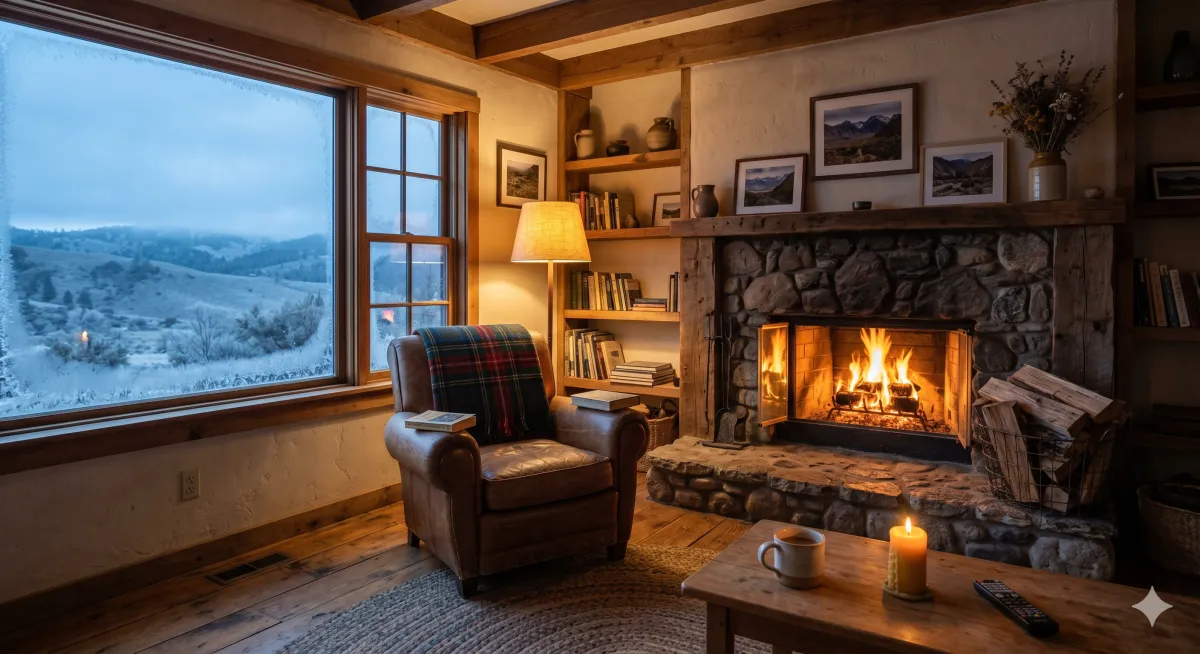
Winter mornings here are crisp. You'll see frost on the grass, maybe on your windshield, and the air has that clean, cold quality you just don't get at the beach. By midday it often warms into something comfortable.
A lot of homes in Alpine have fireplaces or wood stoves, and they actually get used. There's something about a cold evening and a fire going that makes the season feel like a season.
The skies tend to be clear and big out here. And after a storm clears, the mountain views can be stunning, sometimes with a little snow on the higher ridges in the distance.
It's subtle, but it adds up to a place that feels different month to month, instead of one long mild stretch.
The Alpine Climate Tradeoff
Most people don't move to Alpine for the weather alone. They move for the lifestyle that comes with it.
When buyers trade the coast for Alpine, they're usually trading that perfectly moderate coastal climate for some things that matter more to them:
More land and room to breathe
More privacy and distance from neighbors
More space, inside and out
A four-season feel instead of one steady season
Cooler, quieter evenings
The cooler nights are part of the package, not a downside to overcome. For many people, that tradeoff is the whole point.
A Real Relocation Conversation
I worked with a client who was moving up from Ocean Beach. Living near the water had been her lifelong dream, so leaving the coast was a big deal for her. She was nervous about it. What pulled her to Alpine was family. They'd already moved out here, she wanted to be closer to them, and she was craving a slower pace than beach life was giving her.
She made the move anyway, water dream and all.
Here's the funny part. A few years in, she refuses to leave. She barely wants to drive down the hill to shop in El Cajon, let alone head back toward the coast. When I asked if she missed being near the water, she told me she really hasn't. She's settled, she's content, and the slower pace turned out to be exactly what she was after.
What really made the transition worth it for her, though, were the small things. Winter nights around the fireplace roasting marshmallows with her grandkids over. The sense that she has actual seasons now, for the first time. Jasmine blooming in her front yard, a garden out back that changes through the year. That's the stuff she talks about.
That's a more common arc than you'd think. The thing people are nervous about leaving often turns out to matter less than the life they find up here.
What New Residents Should Know About Winter
If you're coming from the coast, a few practical things are worth knowing before your first cold season.
Most homes here have real heating systems, and you'll want to know what yours is and how it's set up. If a property has a fireplace or wood stove, you'll likely want firewood on hand once the cold mornings start.
Frost-sensitive plants can take a hit on the coldest nights, so it's worth knowing which parts of your yard tend to get frost. On rural and semi-rural properties, there are a few extra considerations. If a home is on a well, freezing temperatures can occasionally affect exposed pipes or equipment, so it helps to understand how the system is protected.
None of this is dramatic. It's just the normal rhythm of living somewhere with real seasons, and most people pick it up after one winter.
How the Weather Impacts Homes in Alpine
This is where the climate quietly connects back to the houses themselves, and it's something I pay attention to when I'm walking a property with a buyer.
A few things matter more here than they do on the coast:
Fireplaces and wood stoves, which actually get used and can add to the comfort of a home
Heating systems and how efficient and well-maintained they are
Insulation, especially in older homes that were built when standards were different
Outdoor living spaces, which are wonderful most of the year but feel different in a cold snap
Solar exposure and how the home is oriented
Orientation is a bigger deal than people expect. A home that gets good southern light can feel warmer and brighter through the winter. One tucked into a north-facing slope or a low valley can run colder and hold frost longer in the morning. Two houses a mile apart can have noticeably different microclimates, and that's the kind of thing worth checking before you commit.
I'm not here to tell you one is better than the other. It just helps to know what you're buying so the house fits how you actually want to live.
Is Alpine Too Cold for Most People?
Usually, no.
Most people adapt to Alpine's winters pretty quickly. The cold is real but mild by most standards, and the daytime is often lovely. More often than not, the cooler evenings and seasonal variation become things people end up preferring, not tolerating.
If you genuinely can't stand any chill at all, the coast might suit you better, and that's a fair thing to know about yourself. But for most buyers, the adjustment is small and the payoff is the lifestyle.
Common Climate Misconceptions
A few myths come up over and over, so let's clear them up.
Alpine is always cold. Not true. Summers are warm to hot, and plenty of winter days are mild and sunny. It's the mornings and evenings that cool down.
Alpine gets snow all winter. Not true. Snow is rare and usually brief when it happens at all.
Alpine has the same weather as downtown San Diego. Not true. The elevation and inland location make it cooler at night and a bit more seasonal.
You need mountain survival gear. Definitely not. A good jacket and a working heater cover it. This is still San Diego County.
Frequently Asked Questions
How cold does Alpine get in winter? Overnight lows often reach the 30s, with frost common on clear, cold nights and some properties dipping below freezing.
Does it snow in Alpine, CA? Rarely. The higher elevations can see an occasional light dusting during a cold storm, but it's not a regular event.
Is Alpine colder than San Diego? At night, generally yes. The elevation and inland location lead to cooler evenings and wider temperature swings than the coast.
Does Alpine get frost? Yes, frost is fairly common in winter, especially in lower-lying areas and on clear, still nights.
What month is coldest in Alpine? The coldest stretch typically falls in December and January, though it can vary year to year.
Do homes in Alpine need heating? Most homes here have heating systems and use them during the cooler months. Many also have fireplaces or wood stoves.
Is Alpine weather different from Santee? Yes. Alpine sits higher and farther inland, so it tends to run cooler at night with a more seasonal feel.
What is winter like in Alpine? Crisp mornings, mild afternoons, clear skies, the occasional frost, and a genuine sense of season that you don't get on the coast.
The Bottom Line
Yes, Alpine gets colder than much of San Diego County. The mornings can be chilly, frost is part of winter, and snow turns up on the hills once in a while.
But that's also part of why so many people love living here. The cooler evenings, the seasonal changes, the mountain views after a storm, the small-town feel. It all goes together.
Most people don't move to Alpine looking for perfect weather. They move here looking for a different way of living, and the climate is simply one piece of that bigger decision.
If you're weighing a move out this way and trying to picture what it would actually feel like, that's exactly the kind of thing I like to talk through with people before they decide.
Keep Reading About Alpine
If you're researching a move, these go deeper on the rest of the picture:
What's it really like living in Alpine CA?
Jacob Menath is a real estate agent in Alpine, CA serving San Diego County, helping people make informed, confident decisions when relocating to Alpine and navigating major life transitions.
Menath Real Estate Team | Alpine, CA | Serving San Diego County