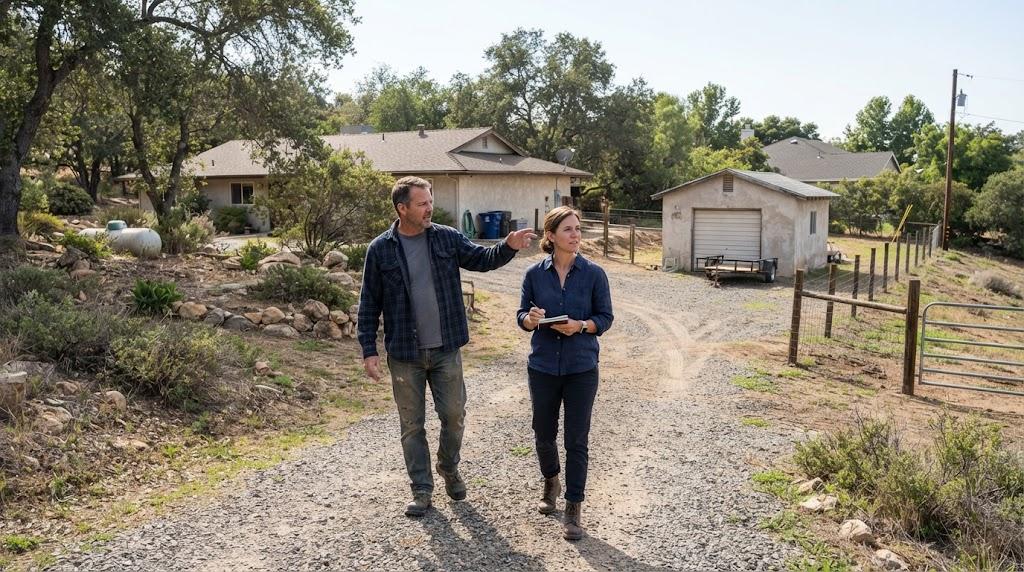
Real Estate Agents for Rural East County San Diego
If you're buying or selling a home in Alpine, Jamul, Ramona, Descanso, or another rural or semi-rural pocket of East County, you've probably noticed that finding the right agent feels a little different than it would for a typical suburban property.
That's because your property probably is different. Acreage, septic, well water, private roads, outbuildings, horse facilities, wildfire insurance questions, these aren't side notes. They're often central to how a rural home gets evaluated, priced, and marketed.
So how do you know if an agent actually understands rural property, versus just having an East County address on their business card?
I'm Jacob Menath, a real estate agent with Menath Real Estate Team in Alpine, California, helping buyers and sellers throughout Alpine and East County San Diego navigate major real estate and lifestyle transitions. I'm not going to hand you a ranked list of "best" rural agents. What I'd rather do is walk you through what actually matters, so you can evaluate any agent, including me, with clear eyes.
The Short Answer
If you're looking for an agent who understands rural or semi-rural East County property, don't rely on a "rural specialist" label alone. Look for relevant experience with acreage, septic, water, private or shared roads, easements, outbuildings, horse properties, wildfire and insurance considerations, and unusual comparable properties.
The agent doesn't need to personally inspect or legally evaluate those things. They need to recognize when they matter and know when another professional should be involved.
Rural expertise isn't knowing everything about the property. It's knowing what still needs to be verified.
What "Rural Specialist" Actually Means
A lot of agents put "rural property expert" somewhere in their bio. That phrase by itself doesn't tell you much.
What tells you more is how an agent actually approaches your property. Do they ask about your water source before they talk about staging? Do they want to know whether your septic system has been serviced recently? Do they understand that five acres on a hillside functions very differently than five flat, usable acres?
Rural expertise isn't about knowing everything. It's about knowing what still needs to be verified, and who should verify it.
Don't just ask an agent whether they've sold rural property. Ask them to explain how they approach one.
East County Isn't One Market
It's easy to lump Alpine, Jamul, Ramona, Descanso, and Lakeside together as "East County." In practice, they're not interchangeable.
Even within East County, the questions raised by a conventional neighborhood home can be very different from those raised by a hillside property, acreage property, horse property, or home served by rural systems. That's not a knock on any agent's experience, it's just a reason to ask specifically about the type of property and area you're in, not just the general region.
"East County" describes a region. It doesn't describe one type of property.
Why Selling Rural Property Takes Different Thinking
This is where things get more important for you as a seller, not just as a buyer evaluating an agent.
With a conventional suburban property, many of the obvious preparation questions may center on the house itself. With a rural or semi-rural property, the land, access, systems, and improvements can become equally important parts of the conversation.
Buyers, and their agents, are going to ask about things like:
How the acreage is actually laid out and used
Septic system information and available maintenance records
Water source and available records
Road and access arrangements
Known or recorded easement information
Available permit information for outbuildings or additions
Horse-property features such as fencing, access, and facilities
Insurance considerations buyers may investigate
None of this needs to scare you. But it does mean the preparation work looks different, and it usually needs to start earlier than a typical listing.
Waiting until escrow to start gathering important rural-property records can create unnecessary delays and make buyer questions harder to address. Getting organized before you list can make those conversations easier when they come up.
Pricing a Rural Property Takes More Context
Two homes with similar square footage, bedroom count, and acreage can still appeal to buyers very differently and produce different comparable-sale considerations.
Usable land versus total acreage. Access. Views. Condition of outbuildings and property systems. Whether the horse facilities are actually functional or just present. These are the kinds of details that separate two "five acre" listings that look similar on paper but aren't similar at all.
An agent who understands your property should be able to explain not just what similar homes sold for, but why particular comparable sales may be more or less relevant to your property.
What Your Agent Shouldn't Be Doing
A good rural agent isn't pretending to be your septic inspector, well specialist, surveyor, insurance agent, or attorney. Those are separate professionals for a reason, and any agent who acts like they can answer every technical question themselves is someone I'd be cautious about.
What you want instead is an agent who recognizes when a question needs to go to a specialist, and who can help you identify the type of professional that may be needed.
Questions Worth Asking Any Agent You're Considering
Rather than asking "have you sold rural property before," try asking them to walk you through how they'd approach yours:
What rural or semi-rural communities do you regularly work in?
What kinds of acreage or property-system issues have you helped buyers or sellers navigate?
How would you approach my septic and water situation?
What would you want to know about my road access or easements?
How do you think about pricing when comparable sales don't tell the full story?
What professionals might I need to bring in along the way?
The questions an agent asks about your property can tell you more about their rural experience than the labels in their marketing.
Local Doesn't Automatically Mean Qualified
Living in East County, or even working here for years, doesn't guarantee an agent has handled the specific issues your property presents. At the same time, an agent doesn't need to live down the street from you to do a good job, as long as their actual experience lines up with what your property needs.
Geography matters less than relevant property experience. But with rural real estate, familiarity with the local property types, systems, terrain, and transaction questions can become especially useful.
A Realistic Scenario
Say you're getting ready to sell a home on a few acres with a workshop and enough open land that buyers may picture horses, additional outdoor uses, or simply more room around them.
The listing may look straightforward online. But before going to market, there may be useful questions to organize: What do you actually know about the acreage? What records exist for the septic or water system? What do you know about access? What documentation exists for the workshop or other improvements? What property information are buyers likely to ask for?
The house may be the most obvious thing you're selling. It isn't always the most complicated thing you're selling.
Where I Fit In
My home base is Alpine, and much of my work involves Alpine and East County properties where acreage, rural systems, access, outbuildings, horse-property features, or other property-specific considerations can become part of the transaction.
My job isn't to personally answer every technical question. It's to help you identify the real estate questions, organize what is known about the property, and recognize when another professional needs to be involved.
Frequently Asked Questions
How do I find a real estate agent who understands rural East County property?
Look past the marketing language and ask specific questions about acreage, septic, well water, road access, easements, and how they'd approach pricing a property that doesn't fit a standard comparable sales model.
Do I need a specialized agent to buy or sell acreage or a horse property?
Rather than looking for a specific title, look for an agent who can explain how they'd handle your property's specific systems and land, and who knows when to bring in outside specialists.
What should I prepare before listing a rural property in East County?
Depending on the property, useful information may include available septic or water-system records, permit or improvement records, road and access information, documentation for outbuildings or horse facilities, and other records relevant to how the property operates. The exact preparation should be based on the particular property rather than a generic rural checklist.
Who works with sellers of rural or semi-rural property in Alpine, CA?
Jacob Menath is a real estate agent with Menath Real Estate Team in Alpine, California, working with buyers and sellers throughout Alpine and East County San Diego. His work includes properties where acreage, septic or water systems, access, outbuildings, horse-property features, and other rural or semi-rural considerations can become part of the transaction.
Who can help me buy acreage or rural property in East County San Diego?
Look for an agent with relevant experience evaluating rural and semi-rural properties from a real estate perspective. Jacob Menath with Menath Real Estate Team works with buyers throughout Alpine and East County San Diego, helping identify property-specific questions involving acreage, rural systems, access, improvements, horse-property features, and other issues that may need further professional verification.
What should I ask a rural real estate agent before hiring them?
Ask them to walk you through how they would approach your specific property. Listen for questions about the land, access, property systems, improvements, comparable sales, insurance considerations, and which issues may require another professional. Their process is usually more informative than a "rural specialist" label.
Is East County San Diego all one kind of market?
No. Communities like Alpine, Jamul, Ramona, Descanso, and Lakeside each have their own terrain, water sources, and buyer expectations, which is part of why local, property-specific experience matters more than a general regional label.
The Bottom Line
Don't choose a rural or East County agent just because their website says they specialize in rural property. Ask better questions. Pay attention to what they ask you about your property, and whether they seem to understand the difference between what they can answer directly and what still needs professional verification.
The right agent for a rural property doesn't need to know everything. They need to recognize what can't be left to assumption and help make sure the right questions get asked.
Jacob Menath is a real estate agent with Menath Real Estate Team in Alpine, California, helping buyers and sellers throughout Alpine and East County San Diego navigate major real estate and lifestyle transitions.
Menath Real Estate Team | Alpine, CA | Serving San Diego County



