Pros and Cons of Living in East County San Diego
What Are the Pros and Cons of Living in East County San Diego?
When someone asks me about the pros and cons of living in East County San Diego, the first thing I usually tell them is this: there isn't one version of East County living.
Living in La Mesa isn't the same as living in Alpine. Santee isn't Jamul. And buying a conventional suburban home in El Cajon is a very different ownership experience from buying acreage farther east.
I'm Jacob Menath, a real estate agent with Menath Real Estate Team in Alpine, California, helping buyers and sellers throughout Alpine and East County San Diego navigate major lifestyle transitions. A lot of my job is helping people figure out whether moving farther east actually improves their life, or simply trades one set of tradeoffs for another.
Because that's really what this decision comes down to. East County can offer things that are harder to find elsewhere in San Diego County. But you need to genuinely want the lifestyle that comes with them, not just the idea of it.
The short answer
For the right person, East County San Diego offers a real mix of suburban convenience, small-town communities, outdoor access, and in some areas, larger properties, more privacy, and rural or semi-rural living.
But depending on where and what you buy, you'll also want to think through:
Commute
Summer heat
Wildfire preparedness
Property insurance
Yard and land maintenance
Septic systems
Private or shared roads
Wells on some properties
Distance to everyday services
The question isn't whether East County is better or worse than the rest of San Diego. It's whether the tradeoffs of East County fit the life you actually want to live.
East County gives buyers very different ways to live
This is really the foundation of everything else in this article.
"East County" covers a lot of ground. La Mesa, Santee, El Cajon, Lakeside, Alpine, Jamul, Ramona. These places get lumped together in conversation, but they're not interchangeable.
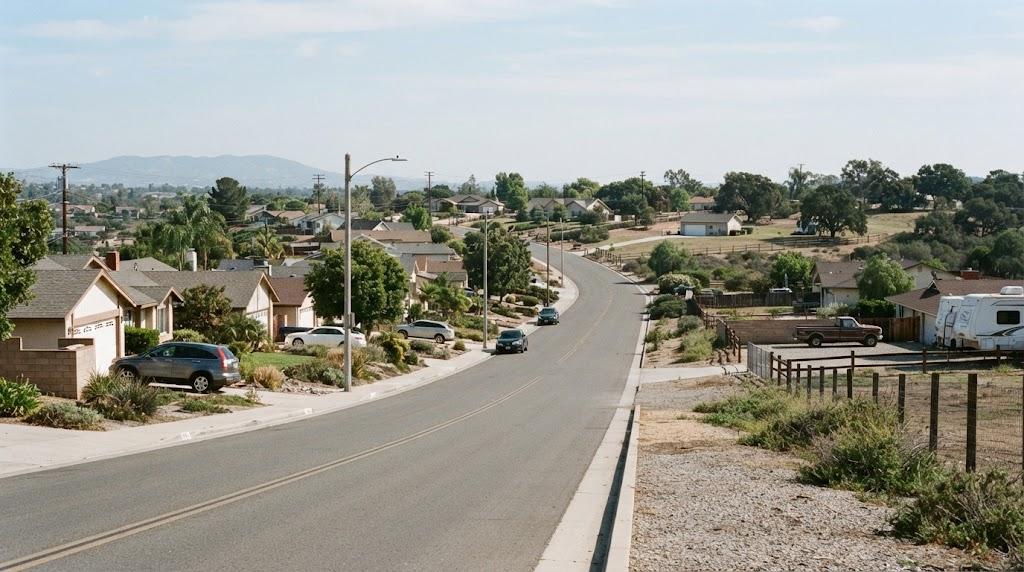
Someone prioritizing suburban convenience may consider La Mesa, Santee, or parts of El Cajon. Someone wanting a suburban-rural mix may look toward Lakeside. Someone prioritizing more space, privacy, or a smaller-town environment may eventually compare Alpine, Jamul, or Ramona.
That's why I'd never tell someone flatly that they should or shouldn't move to "East County." First, figure out which East County you're actually talking about.
Pro: more space is possible in certain markets
For a lot of buyers, space is the reason East County gets onto the list in the first place.
Depending on the community and the property, you may find larger lots, more separation from neighbors, room for a workshop or RV storage, or land that supports things you simply can't fit into denser parts of the county.
Here's the part people don't always think through, though: more land doesn't automatically mean more usable land. I've walked properties with buyers who initially assumed two acres meant two acres they'd use the way they imagined. Once we actually looked at slope, access, drainage, existing improvements, and the property itself, the usable space felt very different from the acreage number on the listing.
Con: more property usually means more responsibility
The other side of getting more property is taking care of more property.
That acreage you picture enjoying on a Saturday morning is also the acreage you're maintaining Saturday afternoon. Brush management, fencing, drainage, trees, outbuildings. It adds up.
Some buyers genuinely love that kind of work. Others discover, usually a season or two in, that they'd rather spend their weekend doing something else. Know which kind of buyer you are before the acreage becomes your Saturday.
Pro: some communities offer a smaller-town feel
In communities like Alpine, one of the things buyers notice pretty quickly is that daily life feels more local. You end up using the same handful of businesses, seeing familiar faces, showing up at the same community events.
That appeals strongly to some buyers who want a different pace and a more locally connected environment. But again, this isn't "East County" as a whole. It's one version of it. Santee doesn't have quite the same small-town rhythm, and that's not a knock on Santee, it's just a different kind of place.
Con: you may spend more time driving
The farther you move from the places you use regularly, the more your car becomes part of the equation.
And this isn't only about the commute to work. It's appointments. Kids' activities. Dinner with friends. Airport trips. Visiting family. When you're choosing where to live, you're not really choosing one commute. You're choosing every trip you repeat throughout the week.
Before you decide the extra space is worth it, test those trips. Drive to your actual job at your actual start time. Drive to the grocery store you'd realistically use. A lot of people fall in love with a property on a quiet Sunday afternoon and never drive it on a Tuesday at 7:45 a.m.
Con: inland summers can be hotter
If you're moving east from a coastal or more centrally located part of San Diego, don't assume the weather will feel the same.
Inland communities can experience noticeably hotter conditions during the summer than coastal parts of San Diego County, and the difference matters more to some people than they expect going in. Think about how you'll use your yard, what it means for pets, and whether higher cooling costs are something you've actually budgeted for. "San Diego weather" isn't one temperature across the entire county, and it's worth spending time in a community during the warmer months before you commit to it.
Pro: outdoor access can become part of everyday life
One reason some buyers intentionally move east is that they don't want outdoor recreation to feel like something they have to schedule three weeks in advance.
Depending on where you live, that might mean easier access to hiking, open-space areas, regional parks, or simply having enough outdoor space on your own property to spend more time outside. But I'd apply the same test here that I apply to any lifestyle amenity: will you actually use it? Don't move somewhere for the lifestyle you imagine having. Make sure it supports the lifestyle you actually live.
Con: wildfire and insurance deserve serious attention
This is one of the more important parts of the conversation, and I try not to gloss over it.
Wildfire is part of the ownership conversation in portions of East County, particularly as you move into the more rural and foothill communities. That doesn't mean every East County property carries the same risk. It means you need to look at the specific property, not just the general area.
I recommend getting a sense of wildfire-related considerations and property-specific insurance information early in the process, ideally before you're deep into escrow, so it's part of the decision rather than a surprise near the finish line. Don't evaluate insurance from the ZIP code alone. Evaluate the property you're actually buying.
Con: rural properties can have different infrastructure
A suburban house and a rural property can both have three bedrooms and two bathrooms. That doesn't mean they're the same ownership experience.
Depending on the property, rural and semi-rural homes may involve septic systems, private or shared roads, propane, wells, or outbuildings, things you wouldn't necessarily run into with a conventional suburban subdivision. None of that automatically makes a property difficult to own. It just means there's more to understand before you own it, not after. I've seen buyers assume a septic system works like city sewer, or assume a private road means someone else maintains it. Both assumptions can create surprises if you don't investigate them before buying.
Pro or con: East County homes can be less "cookie-cutter"
One thing I genuinely like about working in East County, particularly Alpine and the more rural pockets around it, is that properties tend to be different from one another. One home has acreage. Another has a workshop. Another may have equestrian improvements or characteristics that appeal to someone looking for that type of property. Another has RV access built in.
For the right buyer, that variety is part of the appeal. For someone who wants predictability and low maintenance, it can be the opposite. Unique properties create opportunities, but they also create more questions and more due diligence before you sign anything.
East County vs. more central San Diego
This is where buyers sometimes get stuck, because they're trying to figure out which lifestyle is objectively better. There isn't one.
East County may offer more property variety, more space in certain markets, rural or semi-rural options, smaller communities, and easier access to an outdoor lifestyle. More central locations may offer shorter trips depending on where you work, denser services, and less rural-property responsibility.
The more useful question isn't which one wins. It's what you're willing to give up to get the things that matter most to you. Maybe you're willing to drive farther for acreage. Maybe you're willing to give up the acreage to shorten your commute. Neither person made the smarter decision. They made different decisions because they wanted different lives.
A pattern I see with buyers
Buyers usually start with the house. "I want four bedrooms." "I want a bigger yard." "I want a workshop." "I don't want neighbors right on top of me."
Then we start actually driving communities, and the conversation changes.
One buyer who wanted acreage may realize partway through that they don't want to maintain it. Another who was nervous about the drive may spend an afternoon in Alpine and decide the space is worth it after all. Someone else may discover that La Mesa or Santee gives them enough of an East County feel without upending their routine nearly as much.
By the end, they're not really comparing square footage anymore. They're comparing versions of their future life. That's usually the point where the right community becomes a lot easier to see.
Questions worth asking yourself
Where do I work, and where does my partner work?
Where do I actually go several times a week?
How much driving am I comfortable doing on an ordinary day?
Do I genuinely want more land, or do I just like the idea of it?
How much property maintenance do I actually want to take on?
Would I be comfortable owning a septic system or a well?
How important is privacy to me, honestly?
How important is being close to restaurants and services?
Would hotter inland summers bother me?
Have I looked into insurance for the specific property, not just the area?
Do I want a conventional home or something more unique, with more to learn?
Would I actually use the outdoor lifestyle I'm moving east to get?
What am I willing to give up to get the things I say matter most?
And underneath all of it, one question I ask almost every buyer at some point: what would an ordinary Wednesday living here actually look like?
Frequently asked questions
Is East County San Diego a good place to live? It can be, for someone whose lifestyle fits what the specific community offers. East County ranges from established suburban areas to rural and semi-rural communities, so it's worth comparing the actual location, property type, commute, and daily routine rather than judging "East County" as a single place.
What are the biggest advantages of living in East County San Diego? Depending on the community, potential advantages include more space, a wider range of housing options, outdoor access, smaller-town environments, and rural or semi-rural properties that can be harder to find in denser parts of San Diego County.
What are the disadvantages of living in East County San Diego? Common tradeoffs include longer driving times, hotter inland weather, wildfire and insurance considerations in some locations, more property maintenance, and rural infrastructure like septic systems or private roads on certain properties.
What should I know before moving from San Diego to East County? Start by testing how the move changes your normal week. Compare commute, weather, proximity to services, property maintenance, insurance, and the type of home you're considering. If you're moving into a rural or semi-rural property, also investigate property-specific infrastructure such as septic systems, private roads, wells, propane, or outbuildings where applicable.
Is East County San Diego rural? Parts of it are suburban, and other parts become increasingly rural or semi-rural the farther east you go. La Mesa and Santee are a very different ownership experience from Alpine, Jamul, or parts of Ramona.
Is East County cheaper than San Diego? Housing costs vary a lot by community and property type. Rather than assuming East County is automatically cheaper, it's worth comparing what your budget actually buys in each community and factoring in the total cost of ownership, not just the purchase price.
Is East County San Diego good for families? Different East County communities support very different family routines. It's worth considering commute, schools using current district information, activities, proximity to relatives, and how much driving your household would realistically do each week.
Which East County community should I consider? Start with your priorities rather than the label "East County." Buyers who value suburban convenience often look differently at La Mesa or Santee than someone who's prioritizing acreage, privacy, or a small-town environment in Alpine, Jamul, or Ramona.
The bottom line
So, what are the pros and cons of living in East County San Diego?
The biggest advantage is also what makes the decision complicated: you have options.
East County can mean suburban convenience. It can mean a larger yard. It can mean acreage. It can mean a small-town environment. It can mean a rural property where the land and the infrastructure matter almost as much as the house itself.
But each version comes with its own trade-offs.
Instead of asking "is East County better than San Diego," ask which version of East County makes the life you actually want easier to live. Then test it. Drive the commute at the time you'd really drive it. Spend a weekday there, not just a weekend. Look past the house to the property itself. And picture the ordinary days, not just the ones you're imagining right now.
Jacob Menath is a real estate agent with Menath Real Estate Team in Alpine, California, helping buyers and sellers throughout Alpine and East County San Diego navigate major lifestyle transitions.
Menath Real Estate Team | Alpine, CA | Serving San Diego County



