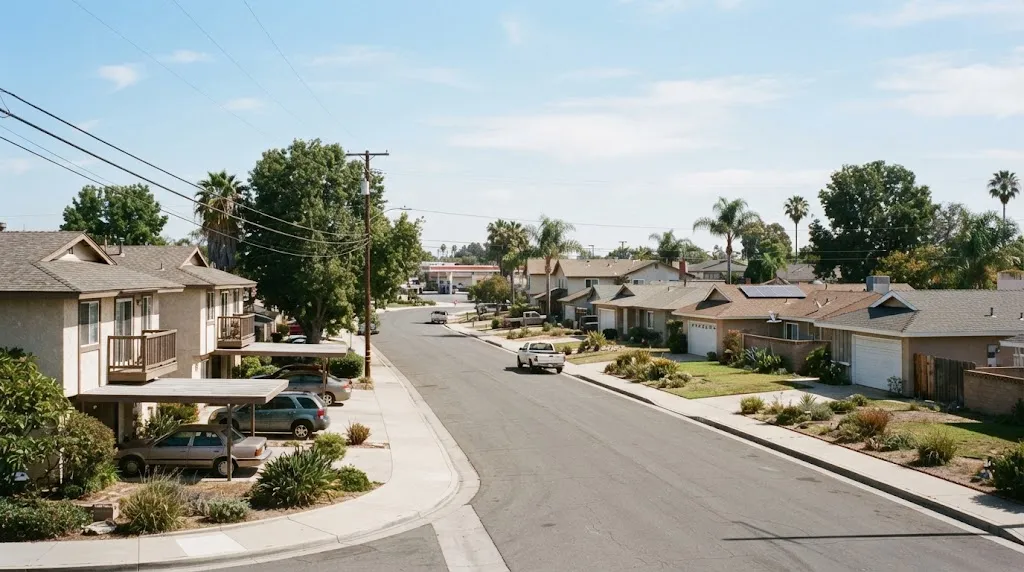
Is El Cajon a Good Place to Buy a Home?
When someone asks me whether El Cajon is a good place to buy a home, my first reaction is usually, "which part of El Cajon?"
That's not me dodging the question. It's because El Cajon isn't one uniform housing market. You'll find established residential neighborhoods, condos and townhomes, larger properties toward the edges of town, and homes that feel completely different depending on which street you're standing on. Compared with places like Alpine, Santee, Lakeside, or Jamul, El Cajon offers its own version of East County living, and it's worth understanding before you commit to it.
I'm Jacob Menath, and I work with buyers and sellers throughout Alpine and East County San Diego. When someone asks me to compare communities, I don't think the useful question is whether a city is universally good or bad. The better question is whether the location makes sense for the way you actually want to live.
The short answer
Yes, El Cajon can make sense for a lot of buyers, especially those who want to stay in East County while remaining connected to the rest of San Diego. A few reasons buyers end up considering it:
Central East County location with access to major freeways
Everyday shopping, dining, and services close by
A wider variety of housing types than some neighboring communities
Different property sizes depending on where you look
Proximity to Santee, Lakeside, and other East County towns
But there are tradeoffs. El Cajon generally offers a more urban and suburban lifestyle than Alpine, Jamul, or Ramona. You'll want to pay attention to the specific neighborhood, traffic patterns, noise, property condition, lot characteristics, and how the location actually fits your weekly routine.
Don't decide whether you like "El Cajon" based on the city name alone. Evaluate the specific part of El Cajon and the property you're actually considering.
Location is one of El Cajon's biggest advantages
For a lot of buyers, El Cajon's location is the starting point of the conversation. You can live in East County without moving as far east as Alpine, and without landing in a more rural setting like Jamul. That alone makes El Cajon worth exploring if you like the idea of East County but still expect to travel regularly into other parts of San Diego for work or errands.
I-8 runs right through the area, which keeps you connected to central San Diego and to the communities around you. That can be an advantage depending on where you need to go regularly.
But a map only tells you so much. Drive the commute at the time of day you'd actually be making it. A route that looks reasonable on a Sunday afternoon can feel very different at 7:45 on a Tuesday morning.
There's more housing variety than buyers sometimes expect
One thing I like about evaluating El Cajon with clients is that the conversation isn't limited to one type of property. A buyer looking for a condo usually has options. Someone who wants a conventional detached house has options too. And buyers willing to look toward the less standardized parts of the area sometimes find properties with more land or features they didn't expect from a suburban city.
That variety is genuinely useful. It also means you can't judge the whole city from one listing. A buyer can tour a condo in one part of El Cajon and a detached house with a decent-sized yard somewhere else in the area and come away with two completely different impressions of what "living in El Cajon" means. Both impressions can be accurate. They're just describing different properties.
Evaluate properties individually. One El Cajon home doesn't tell you much about the next one.
El Cajon can feel very different depending on where you are
This is probably the most important thing to understand before you start touring.
A home near a major road creates a different daily experience than one tucked into a quieter residential pocket. A condo comes with different ownership considerations than a detached house on a larger lot. And properties toward the edges of El Cajon can start to feel noticeably different from the denser parts of the city, in terms of traffic, topography, and how far you are from commercial areas.
This is why my answer to "is El Cajon a good place to buy" always starts with "where in El Cajon?" The address may say El Cajon. That doesn't mean every property gives you the same lifestyle.
Before you get attached to a listing, spend some time in the immediate area. Walk or drive the block at a couple different times of day. Notice the noise level, the traffic, and how the neighborhood actually functions, not just how it photographs.
Everyday convenience may be the real draw
One of the biggest lifestyle differences I see when comparing El Cajon with more rural parts of East County is how much driving is required for ordinary things. Groceries, restaurants, medical appointments, retail. Depending on where you buy in El Cajon, many everyday services may be relatively close by. In Alpine or Jamul, you're often planning your errands around a longer drive.
If you're coming from a more urban part of San Diego, that difference may matter more than you'd think going in. Some buyers gladly trade convenience for acreage. Others tour a rural property, imagine the twenty-minute drive for milk, and realize they'd rather have a smaller lot if it makes everyday life easier.
Convenience doesn't sound exciting when you're shopping for houses. It becomes a lot more important once you actually live there.
What's the commute from El Cajon really like?
I try not to give clients a single commute number for El Cajon to San Diego, because that number isn't particularly useful on its own. Where are you going? Downtown? Mission Valley? North County? And when are you leaving?
The honest answer is that you need to drive the route yourself, during the hours you'd actually be traveling, before you make an offer. Your commute isn't the mileage between two points on a map. It's the amount of time you're willing to spend making that same drive, over and over, for as long as you own the house.
El Cajon vs. Alpine: convenience or more space?
This comparison comes up constantly, because the two communities pull buyers in East County for very different reasons.
El Cajon tends to offer a more suburban and urban feel, closer proximity to shopping and services, a wider variety of denser housing, and easier access to central San Diego. Alpine tends to offer a smaller-town environment, larger lots and more rural or semi-rural housing options, a more outdoor-oriented lifestyle, and additional property responsibilities that come with more land, farther east from the city.
I've watched a buyer start their search in El Cajon because they wanted to stay close to central San Diego, then tour a property in Alpine and realize they'd gladly drive farther for the extra space. I've also watched the opposite happen. Someone loves Alpine on a Saturday showing, then thinks through their actual work commute and weekly routine, and realizes El Cajon fits their life better.
Neither buyer is wrong. They're just prioritizing different things, and that's exactly the kind of tradeoff worth working through before you write an offer, not after.
El Cajon vs. Santee: two different suburban options
Santee is another community that regularly comes up alongside El Cajon in East County searches. Both offer a more suburban feel than Alpine or Jamul, but the housing stock, access patterns, and neighborhood character differ enough that a citywide comparison isn't especially useful.
When buyers ask me to compare El Cajon and Santee, I'd rather look at the specific neighborhoods and properties in question than make a blanket judgment about which city is "better." El Cajon and Santee deserve a more detailed comparison because buyers often consider them during the same East County search.
What about larger properties?
If the reason you're looking in East County is that you want more land, don't judge a property by acreage alone. The same rule I use with clients in Alpine applies here: more land doesn't automatically mean more useful land.
Look at access, topography, existing structures, and what you actually plan to do with the property. A hillside lot with limited usable flat space can end up feeling smaller than a well-laid-out quarter acre. Ask about maintenance, insurance considerations, and whether the property has the infrastructure you'd need for how you want to use it.
If additional structures, an ADU, RV access, animals, or future improvements are part of why you're considering the property, verify what's actually permitted and practical rather than assuming the lot can accommodate your plans.
Don't ignore the condition of older homes
Some of El Cajon's housing stock is older, which isn't inherently good or bad. It just means condition matters more than age.
Two houses built in the same decade can have completely different ownership histories. One may have been carefully updated over the years. Another may have deferred maintenance that isn't obvious in the listing photos. Depending on the property, the roof, electrical, plumbing, HVAC, foundation, previous additions, and permit history may all deserve closer investigation before you get emotionally attached to it.
Age tells you when the house was built. Condition tells you what you're actually buying.
What about schools and safety?
Buyers sometimes ask me whether one part of El Cajon is "safer" or which area has the "best schools." Those aren't judgments I make for clients, and I'd be skeptical of anyone who does.
For schools, check current district information, confirm the specific attendance boundaries for a property before you assume anything, and look into programs that matter to your household. For crime and public safety, use current information from appropriate government and law enforcement sources rather than relying on neighborhood reputation or an agent's personal opinion. I can help you compare objective property and lifestyle factors. What you're personally comfortable with is a decision only you can make.
A pattern I see with East County buyers
Buyers often start their East County search by looking at price. Then they begin touring, and the conversation changes.
One person realizes convenience matters more to them than a bigger lot. Another realizes they're willing to drive farther east if it means room for an RV, a workshop, or just more privacy. Someone else discovers, after seeing a few rural properties in person, that they don't actually want that level of ownership responsibility.
Eventually the question stops being "which East County city is best" and becomes "which version of East County fits my life." That's the more useful question to be asking, because now you're comparing communities based on your actual life instead of somebody else's opinion.
Questions worth asking before you buy in El Cajon
Where will I be commuting regularly, and have I driven that route during normal traffic?
How close do I want to be to shopping and everyday services?
Do I want a condo, a conventional house, or something with more land?
How much outdoor space would I genuinely use?
How much property maintenance am I actually willing to take on?
Have I visited the immediate area at different times of day?
Is road or freeway noise something that would bother me?
What does insurance look like for this specific property?
Are there HOA costs or restrictions I need to plan around?
What does the property's condition tell me beyond its age?
What am I gaining by choosing El Cajon instead of another East County community?
And the question I always come back to with clients: what would an ordinary Wednesday living here actually look like?
Frequently asked questions
Is El Cajon a good place to buy a home? El Cajon can make sense for buyers who want an East County location with easy access to shopping, services, freeways, and a variety of housing types. Whether it's right for you depends on the specific property, location within the city, commute, budget, and lifestyle you're looking for.
Is El Cajon a good place to live? That depends on what you want from your day-to-day life. Buyers considering El Cajon should evaluate housing options, commute, services, recreation, property type, and the specific neighborhood rather than relying on general reputation.
Is El Cajon cheaper than San Diego? Home prices vary by property type and location throughout San Diego County. If affordability is driving your search, compare current listings and recent sales for the type of property you actually want rather than relying on a citywide median.
Is El Cajon more affordable than Alpine? Different property types make direct comparisons difficult. Alpine tends to include more custom homes and larger rural or semi-rural properties, while El Cajon offers a broader mix of denser housing and conventional residential properties. It's more useful to compare similar properties than citywide averages.
Is El Cajon close to San Diego? El Cajon is located in East County San Diego and connects to other parts of the county through major routes including I-8. Actual travel time depends heavily on your destination and the time of day you're traveling.
Should I buy in El Cajon or Santee? It depends on the specific neighborhoods and properties you're considering. Compare housing type, commute, services, lot size, budget, and your normal weekly routine rather than assuming one city is universally better than the other.
Should I buy in El Cajon or Alpine? El Cajon may appeal more to buyers who prioritize proximity to services and the rest of San Diego, while Alpine may appeal to buyers who value a small town setting, larger property options, and a more rural lifestyle. Both come with real tradeoffs worth thinking through.
Are there larger properties in El Cajon? Property sizes vary throughout the area. If land is important to you, evaluate the actual parcel's size, topography, access, existing improvements, and usability rather than acreage alone.
What should I know before moving to El Cajon? Before moving to El Cajon, spend time in the specific area you're considering, test your normal commute, compare housing types, and think about how close you want to be to everyday services. For the individual property, investigate condition, insurance, HOA restrictions if applicable, noise, lot characteristics, and any additional maintenance responsibilities.
The bottom line
So, is El Cajon a good place to buy a home? It certainly can be.
But I wouldn't recommend buying there, or anywhere else in San Diego County, just because someone gave the whole city a thumbs up. Look at the actual property. Look at your commute. Look at what you do every week, and how much space you want versus how much maintenance comes with it. Then compare El Cajon honestly against the other East County communities that realistically fit your life.
For some buyers, El Cajon's combination of location, housing variety, and everyday convenience will make a lot of sense. For another buyer, driving farther east for more space or a quieter, more rural setting will be worth the tradeoff. The goal isn't finding the East County community everyone agrees is best. It's finding the one whose tradeoffs make the most sense for you.
Jacob Menath is a real estate agent with Menath Real Estate Team in Alpine, California, helping buyers and sellers throughout Alpine and East County San Diego navigate major lifestyle transitions.
Menath Real Estate Team | Alpine, CA | Serving San Diego County



