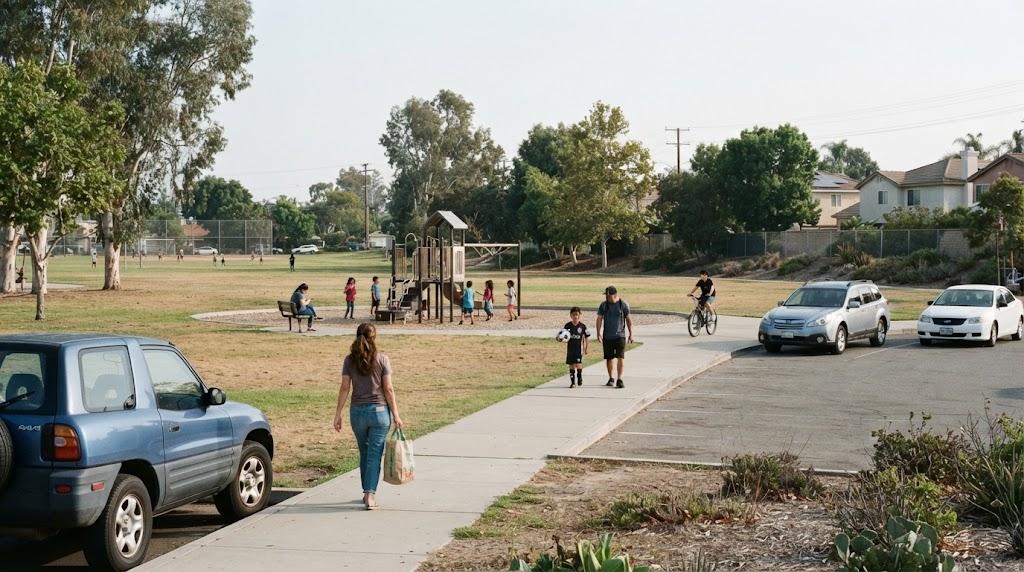
Best Neighborhoods in San Diego for Families
What Is the Best Neighborhood in San Diego for Families?
When families ask me where the best place to live in San Diego is, I usually ask them something first.
"What does a normal week look like for your family?"
That question tells me more than any neighborhood ranking ever could. A family that wants to walk to restaurants and spend weekends near the coast is going to make very different choices than a family that wants a bigger yard, room for animals, or a quieter place where the kids spend more time outdoors.
So here's the direct answer, and I mean this honestly, not as a dodge: there isn't one San Diego neighborhood that's best for every family. Depending on what your household actually needs, you might be looking at Carmel Valley, Poway, Santee, Lakeside, Alpine, Jamul, or Ramona, and each of those places supports a different version of daily life.
I'm using "neighborhoods" broadly here, because buyers asking this question are usually comparing communities throughout San Diego County, not just neighborhoods within the City of San Diego.
Those aren't rankings. They're starting points. The better question isn't "which neighborhood is best for families?" It's "which community actually supports the way our family lives?"
I'm Jacob Menath, and I work with buyers throughout Alpine and East County San Diego. Most of the families I talk with come in focused on the house. Bedrooms, square footage, maybe a pool. But somewhere in the process, the conversation usually shifts toward something less obvious and more important: what they actually want an ordinary week to look like.
Start With Your Family's Routine, Not the Listing Photos
A neighborhood can look perfect during a Saturday afternoon showing and feel completely different when you're doing school drop-offs, commuting to work, getting one kid to practice, and realizing you forgot something at the grocery store.
Picture Wednesday at 5:30 p.m., not just Sunday at noon. That's when location starts to matter.
Before you fall in love with a specific area, it helps to get honest about a few things:
Where do the adults in the household work
Where do relatives live, and how often do you want to see them
What activities are your kids actually involved in
How much driving are you willing to do on a regular basis
Do you want a bigger lot, or would you rather not maintain one
How often do you use restaurants, shopping, and other city amenities
Does outdoor space matter to your family, or is it a nice-to-have
How long do you expect to stay in this home
None of these questions have a universally right answer. They just help narrow down which communities are even worth touring.
If You Want a More Traditional Suburban Environment: Carmel Valley
For some households, convenience drives the decision. They want residential neighborhoods combined with relatively easy access to everyday services and other parts of San Diego. Carmel Valley tends to come up for buyers who value that kind of layout, along with nearby shopping, parks, and regional access.
If schools are part of your decision, I'd encourage you to research them directly rather than relying on an agent's opinion or a general neighborhood reputation. I'll talk more about how I recommend doing that below. What I can tell you is that this is a more traditional suburban community, and if that structure fits how your family wants to live, it's worth a closer look.
If You Want Suburban Living With More Property Variety: Poway
Poway isn't one uniform housing market, and it surprises some buyers how much variation there is within it. Some neighborhoods feel like classic suburban tract housing. Others, especially toward the edges, feel considerably more rural, with larger lots and even some equestrian properties.
If you're drawn to Poway, it's worth touring more than one part of it before deciding it's "the" area. What draws you to one street might not exist two miles away.
If East County Convenience Matters: Santee
Santee often enters the conversation when buyers want East County but still place a high value on suburban convenience. Shopping, recreation, and regional access are close by, and the neighborhoods themselves tend to feel fairly traditional.
For a household with multiple schedules going in different directions every afternoon, that convenience can matter more than people initially expect. If you're also considering Alpine, it's worth reading how Alpine and Santee compare directly, since the daily rhythm of each place is genuinely different.
If You Want a Mix of Suburban and Rural: Lakeside
Lakeside has a strong equestrian heritage and a real mix of housing types, from more standard suburban streets to properties with acreage and horse setups. There's solid access to outdoor recreation, along with enough services nearby that you're not constantly driving into the city for basics.
It's a natural middle ground for families who want some breathing room without going fully rural, and it's often one of the communities I compare directly against Alpine for buyers who are trying to figure out how much space they actually need. If that's the tradeoff you're weighing, Alpine vs. Lakeside walks through it in more detail.
If You Want More Space and a Small Town Feel: Alpine
This is where I spend most of my time, and it's usually the deepest conversation I have with buyers.
Alpine tends to enter the picture when a family starts saying something beyond "we need another bedroom." They want more room outside. Maybe they're thinking about horses. Maybe they need space for an RV. Maybe the kids would genuinely use a bigger property instead of just having a bigger backyard to mow.
Or maybe it's simpler than that. They want a quieter home environment while staying connected to the rest of San Diego County.
Alpine offers a small-town atmosphere, larger lots than you'll typically find closer to the coast, and an outdoor lifestyle that shows up in things like youth sports and activities for kids and teens, 4-H and FFA involvement for some families, hiking access, and a fairly active community calendar. I-8 access keeps you connected without feeling stuck out there.
Because I work extensively in Alpine and East County, I also spend a lot of time helping buyers understand the differences between owning a conventional suburban home and a rural or semi-rural property. Those aren't the same kind of ownership, even when the price points overlap.
But I'd be doing you a disservice if I didn't mention the trade-offs honestly.
Depending on where you buy in Alpine, daily life can involve more driving than you're used to, especially for activities that aren't local. Rural and semi-rural properties often come with considerations that buyers coming from more urban or suburban areas haven't had to think about before: septic systems instead of sewer connections, private or shared roads, ongoing acreage maintenance, wildfire preparedness, and insurance that can be more complicated to secure or more expensive than what you're used to.
More space only improves your life if you actually want the responsibilities that come with it. I've worked with families who found that was exactly what they wanted. I've also worked with families who toured a five-acre property and realized halfway through that they had no interest in maintaining it.
Both outcomes are fine. The point is figuring that out before you're in escrow, not after. If you want a deeper look at what that decision involves, I've written more specifically about what to know before moving to Alpine and what the schools are like in Alpine.
If Privacy Matters More Than Convenience: Jamul
Jamul tends to appeal to buyers who want larger parcels, more custom properties, and genuine privacy. The tradeoff is more rural roads and more driving for pretty much everything.
I wouldn't frame Jamul as better or worse for kids than anywhere else on this list. It really comes down to priorities. For some households, privacy and having more space at home outweigh being close to restaurants, shopping, and activities. For others, the additional driving becomes the deciding factor once they start testing their actual weekday routine, which is exactly why I encourage buyers to compare Alpine and Jamul directly before deciding between them.
If Your Family Wants Country Living: Ramona
Ramona leans further into ranch and equestrian properties, agricultural character, and genuine rural living, with more acreage and more maintenance than most of the other communities on this list.
It's worth separating two things that sound similar but aren't: wanting a bigger yard, and wanting country living. They're not the same request, and they don't lead to the same neighborhoods. If Ramona is on your list because you want real acreage and a rural lifestyle, that's a great reason to look there, and Alpine vs. Ramona is a good next read. If it's on your list mainly because you want more grass for the kids to run around on, there may be other communities that get you there with less driving.
What About Schools?
Schools come up in almost every family move I work on, and I want to be straightforward about this one.
I'm not going to tell you which school or district is "best," because that's not something a real estate agent should be deciding for you. What I'd encourage instead is doing your own research directly. Look at official district information. Confirm current attendance boundaries, since they can shift. Visit campuses in person if you can. Talk with school staff about the specific programs that matter to your child.
If your child has particular academic, athletic, arts, special education, or extracurricular needs, look into those specifically rather than relying on general reputation. The right educational environment for one student isn't automatically the right one for another, even within the same family.
For families specifically looking at Alpine, I've put together a closer look at what raising a teenager in Alpine tends to look like, which covers some of these questions in more depth.
Don't Underestimate Transportation
Families often think mainly about the parent's commute when they're comparing neighborhoods. But once kids are in the picture, you're rarely just planning around one drive.
There's school. Sports. Friends. Music or dance lessons. Part-time jobs once kids get older. Medical appointments. Regular shopping trips. If you've got a teenager who drives, that adds another layer entirely.
When you have kids, you're not choosing one commute. You're choosing several. It's worth mapping out roughly what a typical week of driving would look like in each community you're considering, not just the commute to work.
And don't forget grandparents or other relatives. If they're part of your weekly routine, their location can matter just as much as where you work.
More House Isn't Always the Better Decision
A bigger home farther inland can offer more bedrooms, a larger lot, and more privacy. It can also mean more driving, more maintenance, potentially higher insurance costs depending on the property, and more day-to-day dependence on a vehicle.
Smaller housing closer to your regular destinations can make everyday life noticeably easier, even if the square footage is less impressive on paper.
Neither approach is right or wrong. What I'd encourage is comparing the whole lifestyle each option creates, not just the price per square foot. If you're still working through the broader question of where to buy, what are the best neighborhoods in San Diego to buy a home is a good place to start before narrowing things down further.
A Pattern I See With Families
Families usually start with the house. Four bedrooms. A certain square footage. A yard, maybe a pool. That's a completely reasonable starting point.
But once we actually start touring, the conversation tends to change. One parent starts thinking harder about the commute. Someone realizes just how often they're already driving to sports practices, and starts wondering if they want to add more time to that. The kids bring up something the parents hadn't really considered. Or a family walks a property with real acreage and one of two things happens: either it clicks immediately, and they know that's exactly what they've been looking for, or they realize fairly quickly there's no way they actually want to maintain all of it.
By the end, most families aren't really choosing between houses anymore. They're choosing what they want family life to look like day to day. The house just ends up being the container for that decision.
Questions Worth Asking Before You Choose a Community
Where will each adult be commuting from
How much driving is already part of your week
Which activities matter most to your kids right now
How much outdoor space would you genuinely use
Do you want walkability, or would you rather have privacy
How important is being close to extended family
How much property are you actually willing to maintain
What educational options do you need to research on your own
How long do you expect to stay in this home
What do you want an ordinary Wednesday here to feel like
Don't just picture the house. Picture the calendar. That's usually where the answer starts to come into focus.
Frequently Asked Questions
What is the best neighborhood in San Diego for families?
There isn't one community that's best for every family. The right fit depends on factors like budget, commute, housing needs, daily activities, desired property size, and the lifestyle your household actually wants.
Where should families live in East County San Diego?
Santee, Lakeside, Alpine, Jamul, and Ramona each offer a different combination of suburban convenience, space, privacy, and rural living. It's worth comparing those tradeoffs against your own routine rather than picking based on reputation alone.
Where can I find larger homes and lots in San Diego County?
Buyers looking for more space often explore inland communities like Alpine, Jamul, Ramona, Lakeside, and portions of Poway. Available inventory and property types vary quite a bit, even within the same community.
How do I choose between San Diego and East County for my family?
Start with your normal weekly routine. If being closer to central San Diego, work, restaurants, and other destinations matters most, staying farther west may make sense. If you're willing to drive more in exchange for additional space, privacy, or a more rural lifestyle, communities in East County may be worth exploring. The right answer depends on which tradeoffs actually fit your household.
Is Alpine a good place to raise a family?
Alpine offers a small town setting, outdoor recreation, larger property options, youth activities, and a more rural lifestyle than many San Diego communities. Whether that's a good fit for your family depends on your commute tolerance, the activities your kids are involved in, and how you feel about the extra driving and property maintenance that can come with it. That's why I recommend looking at Alpine as a lifestyle decision rather than simply asking whether it's a "good place for families."
What should parents research about schools before moving?
Confirm current attendance boundaries and check official district and school resources directly. Visit campuses in person when you can, and look into programs that matter specifically to your kids rather than relying only on general rankings or someone else's opinion.
Should families choose a larger house farther from San Diego?
It really depends on what the extra space gives you, and what you're giving up to get it. It's worth comparing commute time, maintenance, driving, property costs, and how much your household would genuinely use the additional space before deciding.
Should we visit communities before buying?
Yes. Try to visit during a normal weekday, not just a weekend showing. Drive the routes you'd actually use, run a few errands, check out the local parks or recreation options, and get a feel for the community outside of an open house.
The Bottom Line
So, what is the best neighborhood in San Diego for families?
There isn't one answer I'd give every household, and I'd be skeptical of anyone who claims there is. One family wants suburban convenience. Another wants to be near the coast. Someone else wants a bigger yard. And another family may happily drive farther if it means having several acres, room for horses, more privacy, or a quieter small-town lifestyle in Alpine or elsewhere in East County.
Don't choose based solely on which community shows up highest on somebody's "best places for families" list. Start with your own life. Where do you actually go? What do your kids really do during a normal week? How much driving are you comfortable with? What would you genuinely use at home?
Then spend real time in the communities you're considering, and picture an ordinary week there, not just a Sunday afternoon showing.
The best place for your family isn't necessarily the place with the best reputation. It's the place whose day-to-day lifestyle actually makes sense for your household.
Jacob Menath is a real estate agent with Menath Real Estate Team in Alpine, California, helping buyers and sellers throughout Alpine and East County San Diego navigate major lifestyle transitions.
Menath Real Estate Team | Alpine, CA | Serving San Diego County



