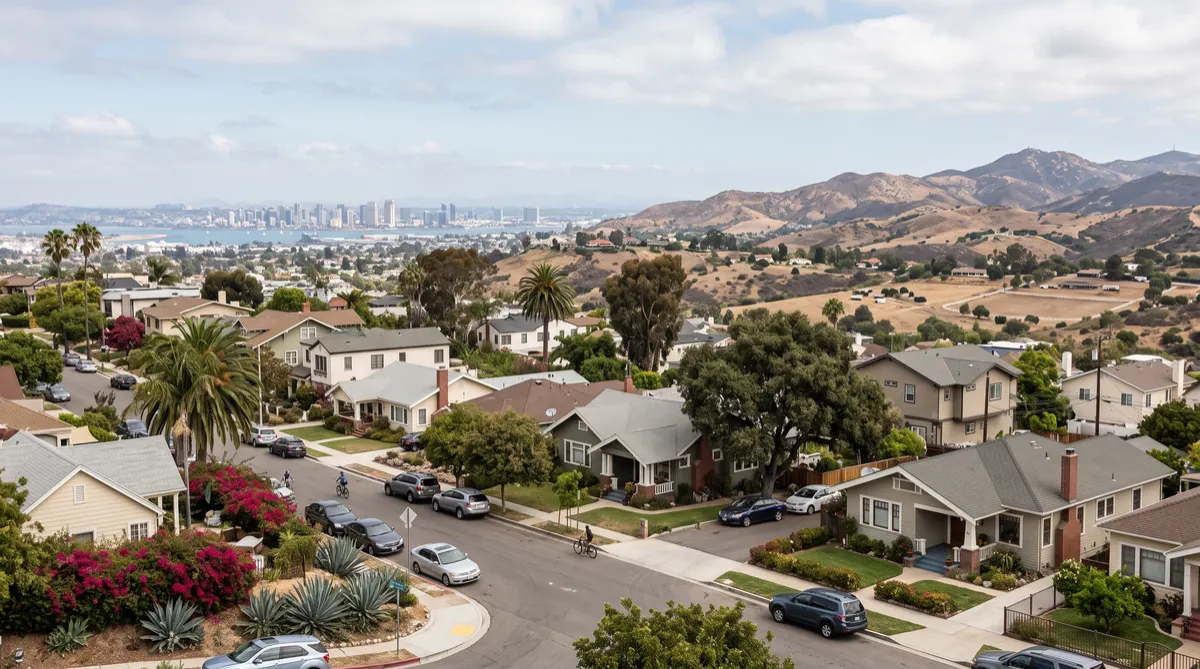
What Are the Best Neighborhoods in San Diego to Buy a Home?
What Are the Best Neighborhoods in San Diego to Buy a Home?
By Jacob Menath
When buyers ask me what the best neighborhoods in San Diego are, my first response is usually another question:
Best for what?
Because the buyer who wants to walk to coffee shops and restaurants is looking for something completely different from the buyer who wants a half acre, room for an RV, horses, or simply more privacy.
San Diego is unusual that way.
Within the same county, you can live near the beach, in a walkable urban neighborhood, in a traditional suburb, or on several acres where your closest neighbor may barely be visible.
I'm Jacob Menath, and I help buyers and sellers throughout Alpine and East County. Over the years, I've found that buyers are usually happiest once they stop trying to find the "best" neighborhood and start figuring out which community actually fits the life they want to live.
For simplicity, I'm using "neighborhoods" broadly here to include several cities and communities throughout San Diego County that buyers commonly compare.
So rather than ranking them, let's look at what makes each one different.
The Short Answer
There isn't one best neighborhood in San Diego for every home buyer.
Different communities make sense for different priorities. A few examples:
Coastal lifestyle: La Jolla and other coastal communities
Walkability and restaurants: North Park and similar urban neighborhoods
Traditional suburban living: Carmel Valley, Poway
East County convenience: Santee
A rural and suburban balance: Lakeside
Small-town living and more space: Alpine
Privacy and acreage: Jamul
Ranch and country living: Ramona
These aren't the only options in the county, and they're not a ranking. They're examples of how much the San Diego lifestyle can change depending on where you buy.
Start With Lifestyle, Not a Ranking
Buyers usually start their search with something like "best neighborhoods in San Diego" or "where should I buy a home in San Diego." That's a reasonable place to start typing, but a ranking rarely accounts for the things that actually determine whether someone enjoys living somewhere.
Commute.
Budget.
Lot size.
Walkability.
Privacy.
How much property you actually want to maintain.
How often you'll use the beach versus how often you'll picture yourself using it.
I've found that the "best" neighborhood usually becomes much easier to identify once a buyer can describe what they want an ordinary Tuesday to look like. Not a vacation weekend. A regular Tuesday, after work, running errands, getting home.
That question tends to cut through a lot of noise.
If You Want Coastal Living: La Jolla
For buyers whose picture of San Diego involves being close to the ocean, La Jolla naturally enters the conversation.
The appeal is straightforward: coastal scenery, beaches, restaurants, and a lifestyle closely connected to the water.
For some buyers, being near the ocean isn't simply an amenity. It's the reason they want to live in San Diego in the first place. If that's you, paying a premium for a coastal location may make more sense than getting significantly more property farther inland.
Beyond whether the numbers comfortably work, the important question is whether you'll actually use the lifestyle you're paying a premium to have.
If You Want Walkability and an Urban Feel: North Park
North Park offers a very different version of San Diego.
Restaurants, coffee shops, nightlife, and neighborhood businesses are a much bigger part of daily life there. Depending on where you live, you may be able to handle quite a bit without getting in the car.
North Park and Alpine almost represent opposite answers to the same question: what do you want outside your front door?
One buyer wants restaurants and activity nearby. Another wants space and quiet. Neither answer is better. They're just different starting points.
If You Want a Traditional Suburban Lifestyle: Carmel Valley
Carmel Valley often appeals to buyers looking for a more conventional suburban environment, with relatively convenient access to employment centers, shopping, and other parts of central and northern San Diego.
Some buyers aren't looking for acreage or a small-town atmosphere. They simply want everyday life to be relatively straightforward, and communities with this kind of layout tend to enter the conversation for that reason.
If schools are a factor in your decision, that's worth researching directly through the district rather than relying on a general reputation. More on that in the FAQ below.
If You Want Suburban Convenience With More Variety: Poway
Poway can be interesting for buyers who want suburban convenience but would still like more breathing room than they'd find in many denser San Diego neighborhoods.
Property types vary considerably here, and that's worth understanding before you assume anything about the city as a whole. One part of Poway can feel distinctly suburban, while another can feel surprisingly rural, with larger lots and equestrian properties.
That variety is part of the appeal, but it also means driving the community matters more than reading a city name on a listing.
If Convenience Matters Most in East County: Santee
Santee tends to make sense for buyers who want to be in East County without giving up much suburban convenience.
Shopping, restaurants, parks, and everyday services are relatively easy to reach, and the location works well for a lot of commuters.
The tradeoff is straightforward. You're generally getting a more suburban environment, with smaller lots and closer neighbors than you'd typically find farther east.
Santee often comes up when buyers want East County but aren't ready to trade suburban convenience for a more rural lifestyle.
If You Want Rural Character Without Going as Far East: Lakeside
Lakeside sits in an interesting middle ground.
It has deep equestrian and rural roots, along with suburban neighborhoods and relatively convenient access to services.
That combination is why I often see it appeal to buyers who like the idea of more space but aren't sure they're ready to go fully rural. Depending on the neighborhood, Lakeside can feel surprisingly different from one property to the next, so this is another community where touring matters more than assuming.
If You Want Small-Town Living and More Space: Alpine
This is where the conversation often changes for buyers, and it's the part of the county I know best.
Buyers who come out here are usually looking for something beyond another bedroom. They start talking about room for an RV, horses, a workshop, gardening, backyard gatherings, or simply more breathing room between them and the next house.
Alpine combines that rural character with a recognizable small-town center and Interstate 8 access, which is one reason buyers sometimes cross-shop it against Santee, Lakeside, Jamul, and Ramona.
Because I work extensively with buyers and sellers in Alpine and East County, this is also where I can speak most specifically about the differences between suburban and rural property ownership.
Depending on the property, buyers may also encounter features that aren't as common closer to San Diego's urban core: septic systems, private roads, larger parcels to maintain, and wildfire risk, defensible-space considerations, and property-insurance availability that are worth understanding before you're deep into escrow, not after.
None of that is automatically a negative. It's simply part of what comes with choosing a different kind of property, and it's worth going in with clear eyes rather than assuming a rural property works exactly like a suburban one.
If Privacy Is the Priority: Jamul
Jamul tends to come up when buyers start using words like privacy, views, and acreage.
Custom homes, larger parcels, hillsides, and quieter roads shape much of the area's character. It's less centered around a traditional town core than Alpine, and everyday errands can require more planning.
Jamul tends to enter the conversation when buyers stop talking about being close to amenities and start talking about privacy instead. For the right buyer, having fewer conveniences immediately nearby isn't a drawback. It's part of what they're looking for.
If You Want Ranch or Country Living: Ramona
Ramona takes the rural lifestyle another step further.
Ranches, horse properties, agricultural uses, vineyards, and larger parcels are a meaningful part of the area's identity.
Buyers who gravitate toward Ramona often aren't simply looking for a bigger yard. They're intentionally looking for country living, and that's an important distinction. Acreage can provide real freedom, but it also creates ongoing maintenance and changes how you approach everyday errands and driving.
What About Home Prices?
I'll keep this general, because prices shift and a specific number today can be stale in a few months.
One mistake I see buyers make is comparing median prices across communities without comparing what those prices actually buy. A home near the coast, a suburban home in Santee, and a five acre property in Alpine may all exist within the same county, but they're fundamentally different products. Lot size, property type, condition, and whether you're looking at a condo versus a detached home all change the comparison.
Price matters. What you're actually getting for that price matters just as much, and the only reliable way to know is to look at current listings when you're genuinely ready to buy, not at a countywide average from a headline. If you want a closer look at timing, I've written separately about whether now is a good time to buy in San Diego.
A Pattern I See With Buyers
Most buyers start with numbers.
Three bedrooms.
Two bathrooms.
A certain price range.
Maybe a minimum lot size.
Then we start touring homes.
Somewhere around the third or fourth community, the conversation usually changes. They start talking about their commute. Where they'll drink coffee on Saturday morning. Whether they'll really maintain two acres. How often they actually go to the beach. Whether they want neighbors close enough to wave to or far enough away that they barely see them.
At that point, they're no longer comparing houses.
They're comparing lives.
That's usually when the right community starts becoming much easier to recognize.
Questions Worth Asking Before Choosing a Neighborhood
Before you narrow your search, I'd ask yourself:
Where will I be driving most often?
How much commute time am I genuinely comfortable with?
How important is walkability?
How often would I realistically use the beach?
Do I want restaurants and shopping nearby, or would I rather have privacy at home?
How much property do I actually want to maintain?
Would I use acreage, or do I just like the idea of it?
What do I want an ordinary Tuesday evening to feel like?
What am I willing to give up to get the things that matter most?
The goal isn't finding a neighborhood without tradeoffs. It's finding the tradeoffs you're actually comfortable living with.
Frequently Asked Questions
What is the best neighborhood in San Diego to buy a home? There isn't one neighborhood that's best for every buyer. The right choice depends on your budget, commute, property needs, and preferred lifestyle.
Where should I buy in San Diego if I want more land? Buyers looking for larger properties often explore communities farther inland, including Alpine, Jamul, Lakeside, Ramona, and certain parts of Poway. Availability varies considerably by neighborhood and price range.
Where should I live in San Diego if I want walkability? Urban communities such as North Park may appeal to buyers who prioritize restaurants, coffee shops, neighborhood businesses, and getting around without driving as much.
Where should I buy if I want a quieter lifestyle? Buyers prioritizing privacy and more open space often explore communities such as Alpine, Jamul, and Ramona.
Where should I buy in San Diego if I want a small-town feel? Buyers looking for a smaller-community atmosphere often explore places farther from the urban core. Alpine is one example, combining a recognizable town center with larger properties, outdoor recreation, and a more rural setting.
How do I choose between San Diego and East County? Start with your daily routine. If walkability, coastal access, or being close to urban amenities matters most, communities closer to central San Diego may make more sense. If you're willing to drive farther in exchange for more space, privacy, or a rural lifestyle, East County may be worth exploring.
What are the best East County communities near San Diego? Alpine, Santee, Lakeside, Jamul, and Ramona offer very different versions of East County living. The right fit depends on whether you value convenience, acreage, privacy, commute time, or small-town character.
Is East County cheaper than coastal San Diego? I wouldn't assume that. Prices vary by property type, community, lot size, condition, and current market conditions. What East County often provides is access to property types and larger parcels that are difficult to find closer to the coast.
Should I choose where to live based on school ratings? Research schools directly through the official district, visit campuses if you can, and evaluate what actually fits your household. I'd avoid relying on a general neighborhood reputation or a real estate agent's personal ranking for this one.
Should I visit neighborhoods before making an offer? Yes, and try to visit at different times of day if you can. Drive your actual commute, run an errand, eat somewhere local, and spend time there without looking at houses. An ordinary weekday hour in a community tells you more about daily life than a beautiful listing ever will.
The Bottom Line
So, what are the best neighborhoods in San Diego to buy a home?
I don't think a top ten ranking gives buyers a very useful answer. San Diego offers too many different lifestyles for that.
For one buyer, the right answer means being close to the coast. Another wants to walk to restaurants. Another values suburban convenience. And another would happily drive farther every day if it meant coming home to several acres, horses, a workshop, or simply more quiet.
The question I'd focus on isn't "what's the best neighborhood."
It's "which community makes the life I want easier to live."
Spend time in the communities you're considering. Drive your commute. Run errands. Visit on a weekday. Picture an ordinary Tuesday instead of an exciting Saturday.
That's usually when the answer starts becoming a lot clearer.
In my experience, the buyers who are happiest long term usually aren't the ones who found the community that looked best on a list. They're the ones who found the place that made their everyday life feel right.
Jacob Menath is a real estate agent in Alpine, CA serving San Diego County, helping homeowners make informed, confident decisions when selling their home and navigating major life transitions.
Menath Real Estate Team | Alpine, CA | Serving San Diego County



