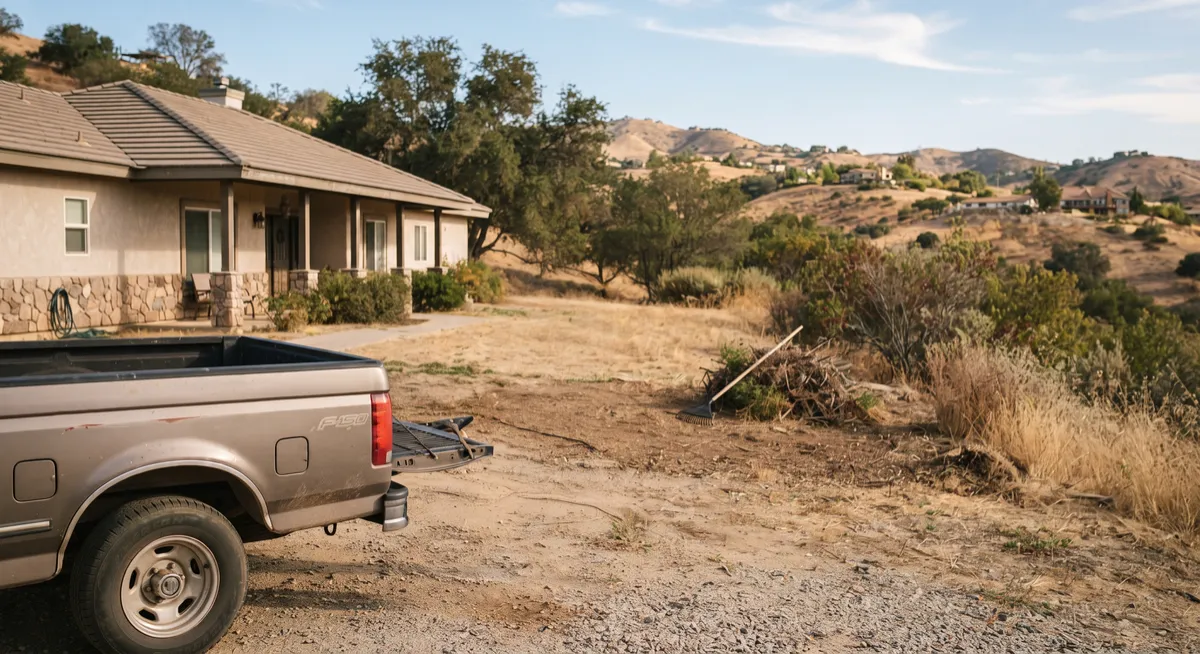
Hidden Costs of Rural Property Ownership in East County San Diego
By: Jacob Menath
When buyers picture rural property in Alpine or East County San Diego, they usually picture what they're gaining.
More land.
More privacy.
Room for a workshop.
Space for horses.
Maybe a longer driveway and fewer neighbors.
Those can be exactly the right reasons to buy rural property. I'm Jacob Menath, a real estate agent with Menath Real Estate Team in Alpine, California, helping buyers and sellers throughout Alpine and East County San Diego navigate major lifestyle transitions. But there's another side of the equation worth understanding before you own it, not after.
One of the questions I'd want any rural-property buyer to ask isn't simply "can I afford this house?" It's "what am I going to be responsible for maintaining once I own everything that comes with it?"
Because sometimes the hidden cost isn't one expensive repair. It's discovering that you bought yourself several new jobs.
The short answer
Rural properties aren't automatically more expensive to own. But they can come with costs and responsibilities that buyers coming from conventional neighborhoods simply haven't had to manage before.
Depending on the property, those may include maintaining acreage, vegetation, private roads, septic systems, water infrastructure, propane, fencing, gates, drainage, and outbuildings.
And some of those costs aren't purely financial. They cost time.
The purchase price tells you what it costs to acquire the property. It doesn't tell you what the property will ask from you every year after that.
This isn't really about surprise repairs. This is about the ongoing responsibilities that come standard with rural ownership, whether or not anything ever breaks.
More land means more property to maintain
A larger parcel can give you privacy, space, views, and flexibility. It also gives you more ground to take care of.
Depending on the property, that might mean managing vegetation, trees, and weeds, keeping up with fencing, staying ahead of drainage, maintaining roads or driveways, tending to animal areas, and handling general cleanup or erosion issues as the terrain changes with the seasons.
That doesn't make acreage a negative. It means acreage isn't passive.
How much responsibility depends less on the acreage number itself and more on the terrain, improvements, vegetation, access, and how you intend to use the property.
More land gives you more possibilities. It can also give you more responsibilities.
Sometimes the hidden cost is your time
This is one of the easiest ownership costs to underestimate.
Not every ownership cost shows up as an invoice. Maybe you decide to maintain the property yourself. That can reduce what you pay someone else. But now you're spending Saturdays trimming, clearing, repairing fencing, working on the driveway, or dealing with whatever the land needs that week.
That's why I think buyers should ask themselves a simple question before they write an offer: do I want the land, or do I want the lifestyle that comes with maintaining the land? Those aren't always the same thing.
Sometimes you don't pay for rural-property maintenance with money. You pay for it with weekends.
Know which kind of buyer you are before the acreage becomes your Saturday.
Private roads and long driveways don't maintain themselves
A long driveway can feel like privacy when you're touring the property. Once you own it, it may also become something you're responsible for maintaining.
The same goes for private or shared roads, which come up often once you're outside the more established parts of Alpine and East County.
Before buying, it's worth understanding whether the road is public, private, or shared, who currently maintains it, whether there's a maintenance agreement in place, how costs get handled among neighbors, what condition it's actually in, and what responsibility transfers to you as the new owner.
The physical condition of the road and your responsibility for maintaining it are two separate questions.
The road you drive every day can become part of your housing expense even though it isn't part of the house.
Septic is different from sewer, not worse than sewer
A septic system isn't automatically a problem. It's simply a different ownership responsibility than being connected to a conventional sewer system, which is what most buyers coming from suburban San Diego are used to.
Depending on the property and system, ownership can involve evaluations, pumping or servicing when appropriate, ongoing maintenance, and eventually repair or replacement of individual components.
Don't budget for some imaginary "average septic system." Every system is different, and the only one that matters is the one on the property you're actually buying.
Different infrastructure doesn't necessarily mean worse infrastructure. It means different responsibilities.
Your water source may come with its own responsibilities
Some rural properties have water arrangements that look very different from what a buyer is used to in a conventional neighborhood.
If a property relies on a well or another private water system, it's worth understanding the specific components involved and what maintaining them actually requires.
Don't stop at "it has water." Ask what you'll own and maintain in order to keep that water system functioning for your intended use.
The utility you don't receive a traditional monthly bill for may still carry an ownership cost. It just shows up differently.
Propane changes the way you think about a utility bill
If a property uses propane for certain appliances or systems, it's worth understanding the full arrangement before you close.
Find out what actually runs on propane, whether the tank is owned or leased, who supplies it, how service typically gets arranged, and what responsibilities come along with the setup.
The point isn't that propane is automatically more or less expensive than what you're used to. It's that the ownership experience can be genuinely different from simply receiving a natural-gas bill every month.
Different utilities create different ownership routines, and it's worth knowing that going in.
Vegetation and trees can become an ongoing expense
Trees and mature vegetation can be part of what makes an Alpine property beautiful. They're also part of the property.
Depending on the parcel, vegetation management may become an ongoing responsibility involving your own labor, hired help, equipment, or some combination of all three.
This also connects to wildfire considerations, which should be evaluated property by property rather than assumed based on the general area.
The amount of vegetation you're comfortable maintaining may also depend on whether you want mostly privacy and open space, animal areas, usable yard space, or something else entirely.
Sometimes the feature that gives you privacy is also the feature you have to maintain.
Wildfire risk is worth understanding on its own terms too.
Fencing and gates add up
A buyer sees fencing and thinks, great, that's already done.
Maybe. But the better question is what condition it's in, and how much of it you're going to be responsible for.
On a larger parcel, a relatively small repair repeated across a lot of fencing can turn into a very different project than it would on a quarter-acre lot. The same goes for gates and other property improvements that came with the sale.
This matters even more if horses are part of the plan, since fencing condition tends to move from "nice to have" to "has to work" pretty quickly.
Existing improvements can save you work. They can also give you more things to maintain.
If horses are part of the plan, Can You Buy Horse Property in Alpine, CA? covers the fencing and improvement questions in more depth.
Drainage can become a maintenance responsibility
Drainage isn't only something to investigate before buying. Depending on the property, existing drainage features may need ongoing attention long after escrow closes.
The point here isn't to assume every rural property has drainage problems. It's to understand what systems or features exist on the specific parcel you're considering, and what maintaining them actually involves over time.
Don't just ask how the property handles water. Ask what you'll be responsible for maintaining, and what ongoing attention those features may require.
Outbuildings give you more space and more systems to own
Workshops, barns, sheds, garages, and other outbuildings can be a major reason someone chooses rural property in the first place.
But every additional structure potentially brings another roof, another exterior, its own electrical system, doors, gates, foundation or slab, drainage considerations, and its own maintenance schedule.
That doesn't mean fewer buildings are better. It means buyers should go in understanding exactly what they're taking responsibility for, structure by structure.
More improvements can create more utility. They can also create more things to maintain.
Insurance can change the ownership math
Insurance is one expense I'd look into early rather than treat as an afterthought, especially given how much conditions can vary from one property to the next in this part of the county.
Availability and pricing can be property-specific, particularly when you're comparing homes with different locations, construction, access, and surrounding conditions.
I'm not the person who determines insurance eligibility, risk, or premiums. Get actual, property-specific information from a qualified insurance professional before you build your ownership budget around an assumption.
Don't build your insurance budget around what someone else pays on a different property. Get information for the actual property you're considering.
Internet and utilities can affect more than convenience
If you're moving from a more urban part of San Diego, don't assume every utility works exactly the way you're used to.
Internet availability can vary by address, not just by town. Other utilities may involve different infrastructure or service arrangements than what you had before.
For someone who works remotely, runs a business from home, or simply relies on solid connectivity, this isn't a minor lifestyle detail. It's worth checking before you fall in love with the property.
"Available in Alpine" and "available at this house" aren't always the same answer.
You may end up buying equipment you never needed before
This is the part that surprises people the most.
Depending on the property and what you choose to maintain yourself, you may find yourself needing tools or equipment that never made sense when you lived on a conventional suburban lot.
I'm not suggesting every acreage buyer needs a garage full of equipment. The point is simpler than that: how you plan to maintain the property affects what owning it actually costs you.
DIY maintenance isn't free. Sometimes you're trading contractor bills for equipment, time, and your own labor.
That doesn't mean you need to own every piece of equipment yourself. It means your maintenance plan, whether that's DIY, hired out, or a mix of both, belongs in the ownership calculation.
Deferred maintenance can compound across a rural property
One neglected item is usually manageable on its own. But rural properties can have more systems and improvements to evaluate in the first place.
A house plus fencing plus a driveway plus drainage plus vegetation plus an outbuilding can create a very different picture if several of those areas have been deferred at once.
One repair is a project. Five neglected systems can become a plan, and it helps to know that going in rather than finding it out one system at a time after you move in.
Purchase price and cost of ownership are different questions
This is where I'd bring everything together.
A rural home can fit your purchase budget and still create an ownership experience you don't actually want. That doesn't mean you shouldn't buy it. It means the decision shouldn't stop at "can I make the payment?"
Also ask whether you're comfortable owning the property you're going to be responsible for once you make that payment.
The question isn't only whether you can afford to buy the property. It's whether you're comfortable owning it.
Not every hidden cost is a reason not to buy
I don't want this article to make rural property sound like one long maintenance bill.
For the right buyer, the tradeoff can be completely worth it. The privacy. The land. The workshop. The horses. The room between you and the neighbor. The ability to use your property differently than you could anywhere closer in.
Those benefits may be exactly why you're moving to Alpine or rural East County in the first place.
The goal isn't to eliminate responsibility. It's to know what you're signing up for before you own it.
A cost stops being quite so hidden once you've identified it before you buy.
A common pattern with rural buyers
A buyer usually starts by asking, "can I afford this property?"
Then we start working through everything that actually comes with it.
Eventually the better question becomes, "do I want to own everything this property requires me to own?" That's a different question entirely.
Because you aren't only buying the house. You may also be buying the road, the fencing, the vegetation, the septic system, the outbuildings, the drainage features, and the responsibility for maintaining the land around all of it.
The house is the obvious thing you're buying. The responsibilities around it are easier to overlook.
Questions worth asking yourself
What am I responsible for maintaining beyond the house?
Is the road public, private, or shared, and who pays for its upkeep?
What wastewater system does the property use?
What is the property's water source, and what do I own to keep it running?
Does the property use propane, and what's the tank arrangement?
How much fencing and how many gates am I taking responsibility for?
What outbuildings or additional structures come with the property?
What vegetation or tree maintenance may be involved?
What drainage features exist, and what do they need from me?
What equipment might I need if I maintain the property myself?
What will I hire someone else to maintain?
Have I gotten actual, property-specific insurance information?
What recurring responsibilities haven't existed in my current home?
Which costs are potential repairs, and which are just normal recurring ownership?
How much of my own time am I honestly willing to spend on this property?
Which responsibilities will I handle myself, and which will I pay someone else to handle?
What feature of this property could create the biggest recurring responsibility for me personally?
The big question underneath all of them: am I buying a property that fits both my financial budget and my maintenance budget? And remember, that second budget includes time.
Frequently asked questions
What costs should I ask about before buying a rural home? Start with the specific property rather than a generic rural-home budget. Ask about private or shared roads, septic, water infrastructure, propane, fencing, vegetation, drainage, outbuildings, insurance, utilities, and anything else you'll be responsible for maintaining beyond the house itself. Then separate potential repair expenses from normal recurring ownership responsibilities.
What costs should I consider before buying acreage in Alpine? It depends on the parcel, but acreage buyers in Alpine may need to look into responsibilities involving vegetation, access, fencing, septic or other wastewater infrastructure, water systems, propane, drainage, outbuildings, insurance, utilities, and general land maintenance. Not every property has every one of these costs, which is why the actual parcel matters more than a generic estimate.
Is rural property more expensive to maintain? Not necessarily. It depends on the specific property. A larger parcel with private access, fencing, vegetation, outbuildings, septic, or private water infrastructure may involve responsibilities that a conventional suburban home simply doesn't have.
What is the biggest hidden cost of owning acreage? There isn't one universal answer. For one property it might be access or vegetation. For another it might be fencing, water infrastructure, septic, an outbuilding, or deferred maintenance. That's why the specific property matters more than a generic rural-property estimate.
How much should I budget for rural-property maintenance? There isn't one percentage or dollar figure that works for every rural property. Your budget should reflect the actual systems, acreage, improvements, condition, and responsibilities of the specific property you're considering.
Are septic systems expensive to maintain? A septic system has different maintenance responsibilities than a conventional sewer connection, but actual costs depend on the specific system, its condition, and the components involved. Understand the system you're buying rather than relying on a generic estimate.
Are private roads expensive to maintain? They can create an ownership expense, but the responsibility varies significantly by property. Find out whether the road is public, private, or shared, who maintains it, what agreements exist, and what responsibility transfers with the sale.
Does owning acreage take a lot of time? It can, depending on the property and how much work you choose to do yourself. Larger parcels may involve vegetation, fencing, roads, drainage, trees, outbuildings, and animal areas that simply don't exist on a smaller conventional lot.
Is rural property worth the extra maintenance? For the right buyer, absolutely. It can offer privacy, land, flexibility, space for hobbies or animals, and a lifestyle that's difficult to replicate in a conventional neighborhood. The real question is whether those benefits are worth the responsibilities to you.
The bottom line
The hidden costs of rural property ownership aren't always dramatic.
Sometimes they're a septic system. A private road. Fencing. Vegetation. An outbuilding. A water system.
Sometimes they're much simpler than that. Sometimes it's your Saturday.
That's why I wouldn't evaluate an Alpine or East County property based only on the purchase price and monthly payment. Understand everything you're taking responsibility for. Then ask whether those responsibilities fit the life you're actually trying to create.
Because the goal isn't to find rural property that costs nothing to maintain. It's to buy a property whose responsibilities you understand, and actually want.
Jacob Menath is a real estate agent with Menath Real Estate Team in Alpine, California, helping buyers and sellers throughout Alpine and East County San Diego navigate major lifestyle transitions.
Menath Real Estate Team | Alpine, CA | Serving San Diego County

Jacob Menath
Jacob Menath is a real estate agent in Alpine, CA serving San Diego County, helping homeowners buy and sell with clarity and confidence. He specializes in guiding sellers through pricing, preparation, and timing decisions, and works with downsizers, move-up buyers, and VA clients navigating major life transitions.



Have questions?
Menath Real Estate Team
Jacob & Kristin Menath, REALTORS®
2710 Alpine Blvd Ste K PMB 10106
Alpine, CA 91901
www.menathrealestate.com
CA DRE #01742516 | CA DRE #01522683