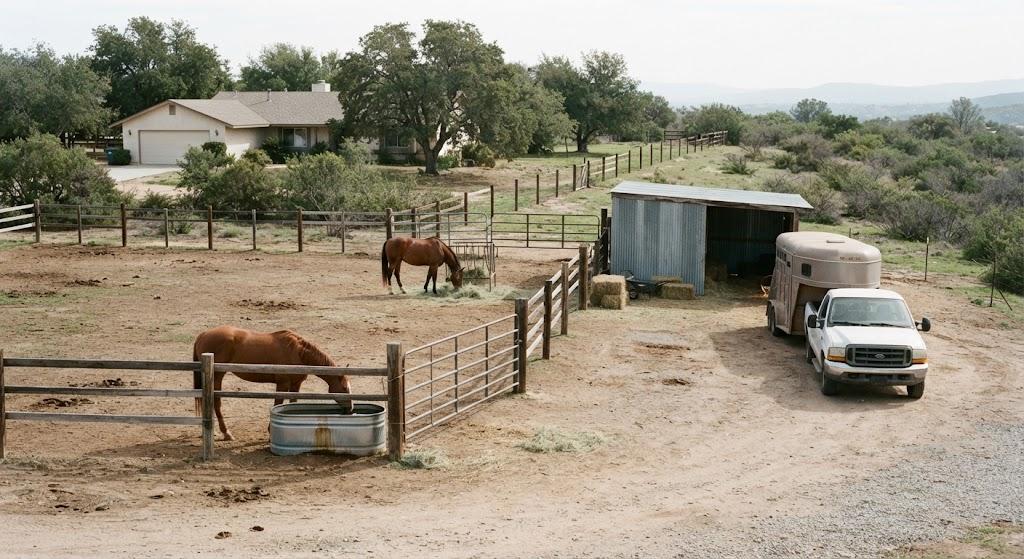
Can You Buy Horse Property in Alpine, CA?
Yes, you can find properties in Alpine that may work well for horses.
But there's an important difference between "this house has acreage" and "this property actually works for my horses." Those two things get treated as the same question a lot, and they aren't.
I'm Jacob Menath, a real estate agent with Menath Real Estate Team in Alpine, California, helping buyers and sellers throughout Alpine and East County San Diego navigate major lifestyle transitions. Horse property is one of those categories where I think buyers need to look past the number of acres in the listing before they get attached to a place.
Five acres can sound perfect on paper. But what if most of it is too steep to use? What if getting a trailer in and out is awkward? What if the barn or arena you got excited about doesn't have the history, or the permits, you assumed it had?
So the real question isn't "can I buy horse property in Alpine." It's closer to this:
Does this particular property work for the way I actually plan to keep and use my horses?
The short answer
Alpine's rural and semi-rural housing stock includes larger parcels, and some of them already have equestrian-oriented improvements like barns, corrals, or arenas. So yes, horse property exists here.
What I wouldn't do is treat the phrase "horse property" as some kind of official guarantee. Most of the time it's descriptive marketing language, nothing more. Whether a specific property actually works for your horses depends on that parcel's zoning, its usable acreage, its water, its access, and the condition of whatever improvements are already on it.
A listing can call something horse property. Your due diligence is what determines whether it's your horse property.
Start with zoning, not the barn
It's easy to walk a property, see a corral or a barn, and assume horses are allowed there. I wouldn't make that assumption, and I'd encourage you not to either.
San Diego County's zoning rules actually draw a distinction here. There's private horsekeeping, which is your own horses for your own use, and there's a horse stable use, which comes into play once other people's horses or the public are involved, such as boarding or lessons. Private horsekeeping is allowed on most County properties without a separate permit, but the details still depend on that parcel's zoning and applicable animal regulations. That's why I wouldn't decide whether a property works for horses based only on acreage or what a previous owner did there.
Before your purchase depends on keeping horses, or on adding an arena, shelter, or fencing, verify the zoning and applicable requirements for that specific parcel with San Diego County Planning & Development Services. The County also has a Property Summary Report where you can look up zoning information tied to a parcel's APN, which is a good starting point. But if your purchase hinges on a particular horse use or future improvement, I'd still want that confirmed directly with the County before writing an offer.
Existing use and permitted future use aren't always the same question. I'd rather a buyer find that out before closing than after.
Acreage and usable acreage are two different things
A listing might say two acres, five acres, ten acres. That number is useful, but it doesn't tell you whether the land actually works for horses.
You still need to understand the slope, the drainage, the access, what's already built on the property, and how much of that acreage is realistically usable for what you have in mind. A five-acre parcel can sound substantial on paper, but slope, configuration, access, and existing improvements can make the amount of practically usable land very different from the number in the listing. The County itself draws this same distinction when it comes to horse-related permitting, separating total acreage from what actually counts as usable area.
More land doesn't automatically mean more usable land. It just means more land.
Think about how you actually keep horses
Two buyers looking for "horse property" can need completely different things from a property. Someone with one or two horses may need fairly simple facilities. Someone thinking about multiple horses, an arena, trailer storage, and turnout space needs something else entirely.
That's why I don't usually start a conversation with "how many acres do you need." I'd rather start with "what does a normal week with your horses actually look like." Then we can evaluate properties against that, instead of against a number.
Buy for the equestrian life you actually live, not the picture of horse property you had in your head before you started looking.
Trailer access can matter more than buyers expect
You can have plenty of land and still have awkward access. When you're touring a property in Alpine, don't just check whether your car pulls into the driveway comfortably.
If a trailer is part of your routine, look at the road approach, the driveway configuration, any gates, and whether there's enough room to actually turn a rig around. Think about whether you can enter, turn, park, load, and leave without creating a routine headache. Think through where loading and unloading would realistically happen on a normal day, not just where it happens on the day you're touring the property with nothing attached to your truck.
A great horse setup isn't much use if getting your trailer in and out becomes the hardest part of owning it.
Water deserves its own conversation
Some Alpine properties are on public water. Others have different arrangements. If your plans depend on a certain water supply or usage level, look into the property's actual water situation rather than assuming the acreage automatically comes with the infrastructure you need.
Ask what the water source is, how it's delivered to the areas where you'd actually need it, and what infrastructure is already there versus what you'd have to add. "The property has water" and "the property has the water setup I need" aren't necessarily the same statement.
Don't assume the barn or arena is exactly what it looks like
Existing equestrian improvements can make a property a lot more appealing. A barn, an arena, a tack room, cross-fencing. But before you put a dollar value on any of it in your head, take the time to understand what you're actually looking at.
If a barn, arena, shelter, tack room, or other improvement matters to your purchase, understand what actually exists, what available records show about it, and whether your intended future use is actually allowed, not just whether the structure is already standing there. I'd rather you ask a few extra questions during escrow than pay extra for an assumption you never verified.
Fencing needs more than a quick walk-through
Fencing can look fine from the driveway and tell a very different story once you actually walk the perimeter. If fencing matters to how you plan to use the property, check its condition, its configuration, the gates, and where the terrain might make repairs harder down the line.
One more thing worth remembering from rural property in general: a fence tells you where someone put a fence. It doesn't necessarily establish the property's legal boundary. If a specific boundary line matters to your decision, that's worth confirming through the appropriate channel rather than relying on what's visible on the ground.
Pay attention to drainage and terrain
Horse property isn't just about how the land looks on a dry, sunny afternoon. Terrain and drainage affect how you'll actually be able to use different parts of the parcel once the seasons change.
Walk the land. Look at the slope. Pay attention to visible drainage features, low areas, erosion, or anything else that raises a question about how portions of the property may behave during wet weather. If that matters to your intended use, investigate it with the appropriate professional before you're locked into the purchase.
A dry-day showing doesn't tell you everything about how the land behaves once real weather shows up.
Private roads and access may be part of the deal
Some rural Alpine properties are reached by private or shared roads. If that's the case for a property you're considering, don't stop at "can I get to it." Find out who maintains the road, whether there's a maintenance agreement in place, and what responsibilities come along with ownership.
Physical access and responsibility for maintaining that access are two different questions, and I think buyers benefit from knowing the answer to both before they're the ones holding the responsibility.
Wildfire and insurance still matter
Horse property doesn't exist separately from the other realities of owning rural land in Alpine. If you're considering acreage out here, I'd look into insurance availability early in the process instead of assuming every property will have identical options.
If you're keeping horses or other animals on the property, emergency planning may also need to account for them.
I'm not the one who determines a property's wildfire risk or tells you which policy to carry. That's a conversation to have directly with an insurance professional, based on the specific property, not just its zip code.
See [Is Alpine, CA Fire Prone?] for more on this topic.
Existing horse improvements can be useful, if they fit your needs
It's easy to get excited when a property already has the things you thought you wanted. A barn. An arena. Cross-fencing. Trailer parking.
A setup like that may be a major benefit to the right buyer. But those improvements only work for you if they match the way you actually keep horses. Someone else's ideal setup isn't automatically yours. I'd rather you walk away from a beautiful arena you'll never use than pay a premium for it.
Understand the maintenance before you fall for the acreage
Owning horse property usually means maintaining more than the house. Depending on the parcel, that can include fencing, gates, vegetation, roads or driveways, drainage, outbuildings, water infrastructure, and larger portions of the land itself.
That doesn't make horse property a bad idea. It means the ownership experience is different from a standard suburban home, and it's worth going in with clear eyes about that. Sometimes the real question isn't whether you can afford the acreage. It's whether you actually want the responsibilities that come with it.
Don't let the view distract you from the property
Horse properties are easy to romanticize. You're standing there looking at open acreage, maybe the mountains in the background, a barn off in the distance. It's natural to start picturing the life before you've actually finished evaluating the land underneath it.
That's usually the moment I try to shift the conversation from "can you picture yourself here" to "does this property actually support what you're picturing." The lifestyle is the reason you're looking in the first place. The property still has to be able to deliver it.
A pattern worth mentioning
A common version of this search starts with a buyer telling me they want at least five acres. We start touring properties, and somewhere along the way the better question usually surfaces on its own: how much usable land do you actually need.
That tends to turn into a very different search. A smaller, well-configured parcel can sometimes work better than a larger one where a good chunk of the acreage never ends up serving your intended use.
Don't shop for an acreage number. Shop for a property that works.
Questions worth asking yourself
How many horses do I plan to keep?
What does my normal routine with them actually require?
How much usable land do I need, not just how many total acres?
Is my intended use allowed on this specific parcel?
Does the existing setup work for me, or would I be rebuilding it?
What is the property's water source, and how does it reach the areas I need?
Can I comfortably get a trailer onto and around the property?
What condition are the fences and gates in?
Do I actually understand the property's boundaries?
What structures am I assigning value to, and have I verified them?
How does drainage affect the areas I plan to use most?
Is access public, private, or shared, and what comes with that?
Have I looked into property-specific insurance availability?
Am I planning only private horsekeeping, or do I intend to board, train, teach, hold events, or conduct another activity involving other people's horses?
Am I buying land I'll actually use, or acreage I just like the idea of owning?
The big question underneath all of it: does this property support the way you actually plan to live with your horses?
Frequently asked questions
Can you buy horse property in Alpine, CA? Yes. Alpine has rural and semi-rural properties, including larger parcels and some with existing equestrian improvements. Whether a specific property works for horses depends on the parcel itself, its zoning, its usable land, its access, and its improvements.
Can you keep horses on residential property in Alpine? Potentially, depending on the property's zoning and applicable regulations. Don't assume acreage alone means a particular equestrian use is permitted. Verify the current rules for that specific parcel with the appropriate San Diego County department.
How many acres do you need for horses in Alpine? There isn't one number that answers this for every buyer. Zoning and regulations matter, but so do usable acreage, terrain, water, access, and how you actually plan to use the property.
Is five acres enough for horse property? It may be for one buyer and not enough, or more than needed, for another. Total acreage alone doesn't tell you how much of it is usable or whether the property's layout and infrastructure support your plans.
Can I buy horse property with a VA loan? Potentially. A property's rural or equestrian character doesn't automatically determine whether VA financing applies. Borrower eligibility, lender requirements, the appraisal, and the property itself all factor in.
Are horse properties more expensive to maintain? Not automatically, but larger parcels with fencing, private access, outbuildings, and water infrastructure can carry responsibilities a conventional suburban home doesn't have.
Should I buy a property that already has horse facilities? That depends on whether those facilities actually fit your intended use, and what you verify about them. Don't assign value to a barn, arena, or fencing based only on how it reads in the listing.
Does San Diego County allow horsekeeping on residential property? San Diego County allows private horsekeeping on many properties, but the rules depend on the specific parcel's zoning and applicable animal regulations. The County also distinguishes private horsekeeping from horse-stable activities involving horses that aren't owned by the property's owner or occupants. Verify the rules for the specific parcel before making your purchase depend on a particular use.
Can I board other people's horses on my Alpine property? Potentially, but don't assume the rules are the same as keeping your own horses. San Diego County treats boarding, riding lessons, and more intensive equestrian activities as a horse-stable use, which can carry different zoning or permit requirements than private horsekeeping. Verify your intended use for the specific property with San Diego County Planning & Development Services before you count on it.
The bottom line
Yes, you can buy horse property in Alpine, California. But don't stop at the words "horse property" in the listing.
Understand the zoning. Understand the usable land. Understand the water. Look closely at access and fencing. Verify the existing improvements instead of assuming them. Think through drainage, maintenance, and insurance before you're emotionally attached to the place.
Because you're not really shopping for a certain number of acres. You're looking for a property that supports the life you actually want to live with your horses. And that's always going to be a property-specific question, not a listing-wide one.
Jacob Menath is a real estate agent in Alpine, CA serving San Diego County, helping homeowners make informed, confident decisions when buying their home and navigating major life transitions.
Menath Real Estate Team | Alpine, CA | Serving San Diego County



