
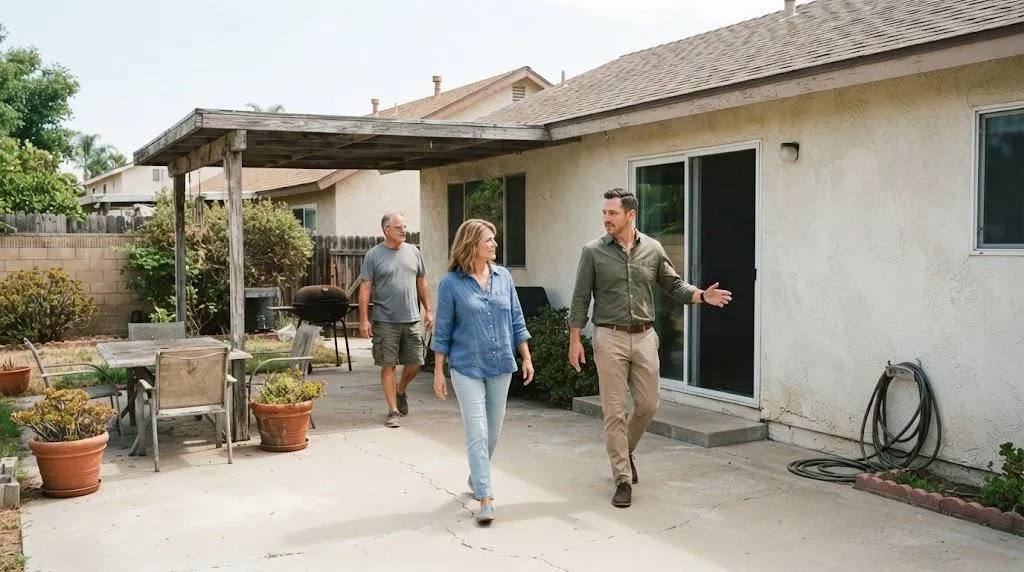
How to Use Home Equity to Buy Your Next San Diego Home
How Homeowners Use Equity to Buy Their Next Home in San Diego
By Jacob Menath
Real Estate Agent in Alpine, CA | Menath Real Estate Team
Helping San Diego buyers make smart long-term real estate decisions
In This Guide
What home equity actually is
How equity builds over time
How move-up buyers use equity strategically
Why first homes create future flexibility
Common ways buyers access equity
What homeowners often misunderstand
Risks buyers should think about
Why timing and planning matter
Introduction
A lot of homeowners in San Diego look at larger homes, better neighborhoods, or properties with more space and quietly ask themselves the same question:
How are people actually affording this?
It's a fair question. Prices here have been stretched for years, and from the outside it can look like move-up buyers are pulling money out of thin air. But once you've sat across the table from enough of them, the pattern becomes pretty clear. Most aren't starting from zero.
They're using equity from a previous home, appreciation over time, principal paydown, and the stability that comes from being in the market for a while. Their first home, even if it felt modest at the time, ended up being the thing that made the next move possible.
That's how most move-up buyers in San Diego actually get there. Not through one perfect decision or a sudden windfall. Through a series of reasonable decisions over time that slowly built flexibility.
How Do Homeowners Use Equity to Buy Their Next Home?
Homeowners typically use the equity in their current property to help fund the down payment on the next home, cover closing costs, support bridge financing during the transition, pay for renovations before selling, or move into a different type of property altogether.
In San Diego, where prices have generally climbed over long holding periods, equity often becomes the bridge between the home you bought five or ten years ago and the home you actually want next. Appreciation, principal paydown, and time in the property all add up.
That's the short answer. The longer answer is worth understanding, because the way you use equity matters as much as the fact that you have it.
In Simple Terms
Most move-up buyers are not purchasing their next home entirely from savings.
They're often using:
equity from a previous home
appreciation over time
principal paydown
and long-term ownership
to help fund the next purchase.
That's one of the biggest ways homeowners gradually improve their financial position over the years.
What Home Equity Actually Is
Home equity is the difference between what your home is worth and what you still owe on the mortgage.
If your home is worth $900,000 and you owe $400,000, you have roughly $500,000 in equity on paper. That number isn't all spendable. Selling costs, taxes, and other expenses eat into the usable portion. But the basic math is that simple.
Equity grows two ways. The property value can rise, which is appreciation. And the loan balance drops as you make payments, which is principal paydown. Most long-term homeowners benefit from both happening at the same time, often without thinking much about it.
Equity Usually Builds Slowly
Most homeowners who built meaningful equity did not do it quickly. They did it gradually through ownership over time.
The first few years can feel underwhelming. Mortgage payments early on are mostly interest, and appreciation in any one year can be modest. But after seven, ten, or fifteen years of steady ownership, the picture often looks very different. Compounding does its work quietly in the background.
I've worked with homeowners who were almost surprised by how much equity had accumulated when we finally ran the numbers. They weren't watching it closely. They were just living their lives in their home, and the position kept improving.
Why First Homes Often Create Future Options
A lot of homeowners are living in version three or four of their housing journey, not version one.
That's worth saying clearly, because it pushes back on the idea that everyone's dream home has to be their first purchase. Most people who eventually land in a larger or better-located home didn't start there. They started in something smaller. A condo. A townhome. An older home that needed work. An entry-level property in a more affordable East County area like Lakeside, Santee, or El Cajon.
The first home is often the foothold, not the finish line.
Most Move-Up Buyers Started Smaller
When I talk with first-time buyers who feel discouraged about the home they can afford right now, I try to remind them that their first home isn't the only home they'll ever own. It's the starting point. The home that lets equity begin to build. The home that puts them in a position to move up later, if they want to.
The compromises that come with a first purchase often feel heavier in the moment than they look in hindsight. A few years in, that "starter" home is doing its job. And when the time comes to move, the equity it produced is usually a meaningful piece of the next purchase.
Common Ways Homeowners Use Equity
There are several main ways move-up buyers actually put their equity to work. None of them are right for everyone, and the best path depends on your finances, your timing, and what you're trying to accomplish.
The most common approaches:
Selling and rolling the equity into the next purchase. This is the cleanest path for most homeowners. You sell, walk away with the net proceeds, and apply that money toward the down payment on the next home.
Using a larger down payment to reduce the new monthly payment. Equity from the previous home often allows for a stronger down payment than the buyer could otherwise put together, which can soften the impact of a higher purchase price.
HELOCs, or home equity lines of credit. These let homeowners borrow against their equity without selling. Sometimes useful for renovations or as a down payment bridge, though they add a second monthly obligation.
Bridge financing. Short-term loans that allow buyers to purchase the next home before the current one sells. Useful in specific situations, but they involve cost and risk.
Cash-out refinancing. Replacing the existing mortgage with a larger one and taking the difference in cash. Resets the loan, so it deserves careful thought, especially if the current mortgage carries a low interest rate.
Renovating before listing. Sometimes a strategic improvement to the current home increases its sale value enough to justify the spend. Sometimes it doesn't. Worth getting an honest opinion before going down that road.
Keeping the first home as a rental. Some homeowners hold the original property and buy the next one with savings or a new loan, becoming small landlords in the process. This works well for some people and creates a real headache for others.
There's no single right answer here. Each option has tradeoffs, and the right strategy usually depends on the specific homeowner, their timeline, and the kind of transition they're trying to make.
How Homeowners Commonly Use Equity
Most Common Uses:
down payment on the next home
lowering the new monthly payment
bridge financing during transitions
strategic renovations before selling
creating future flexibility
What Smart Buyers Usually Avoid:
draining all reserves
overextending on debt
emotional upgrading
assuming appreciation is guaranteed
Why Equity Changes the Affordability Conversation
A buyer trying to purchase a second home is often solving a very different financial equation than a first-time buyer.
The first-time buyer is usually working with savings, gift funds, and whatever income their lender will approve. Their down payment is often the bottleneck.
The move-up buyer has a different starting point. They may be bringing significant equity to the table, which means a larger down payment, a smaller loan, and sometimes more flexibility on which homes they can realistically pursue. The monthly payment math still has to work, but the down payment piece is usually less of a barrier.
That's why two buyers with similar incomes can end up in very different homes. It's not always about who earns more. Often it's about who's been in the market longer.
Ownership Often Creates Momentum Over Time
There's a kind of momentum that tends to build with long-term ownership. The equity position improves. The financial picture stabilizes. The credit profile usually strengthens. Selling and buying become more familiar.
I worked with homeowners in Lakeside a few years back who originally bought a modest starter home because it was what comfortably fit their budget at the time. Nothing fancy. A reasonable home in a reasonable neighborhood. Years later, the equity from that property, combined with steady appreciation in East County, gave them the flexibility to move into a larger home with more space for their growing family. At the start, that next step would have felt completely out of reach. By the time they were ready, the math wasn't just possible. It was comfortable.
None of this guarantees future success, and the market doesn't move in a straight line. But over enough years, ownership tends to create options that didn't exist at the beginning. That's part of what makes the first purchase such an important step, even when it feels modest.
How Do Homeowners Actually Afford Bigger Homes in San Diego?
The honest answer is that most of them didn't start by affording a bigger home. They started with a smaller one, and let time and ownership do part of the work.
A homeowner who bought in East County eight or ten years ago is often sitting on meaningful equity today. That equity can become the down payment for a larger property, a home in a different area, or a different lifestyle altogether. Their income may have grown too. Their financial habits may have matured. Their family situation may have shifted. All of that combines.
The buyers who seem to be jumping into larger homes usually aren't jumping. They're stepping up from a position they built over the years.
What Homeowners Often Get Wrong About Equity
Equity creates opportunity, but it doesn't eliminate financial risk.
This is the part of the conversation that gets skipped too often. When people see a strong equity position on paper, the tendency is to assume the move-up purchase is basically a done deal. It usually isn't that simple.
A few of the most common mistakes:
Assuming appreciation will continue at the same pace. It might. It might not. Long-term trends in San Diego have generally favored owners who hold, but short-term swings happen, and no one can promise what the next few years will look like.
Overestimating what the home will actually sell for. Online valuation tools are estimates. Real market value depends on condition, location, comparable sales, and what buyers are willing to pay in a given week.
Forgetting selling costs. Commissions, escrow fees, transfer taxes, repairs, and concessions all reduce the equity check at closing. The number you net is meaningfully smaller than the number you see on paper.
Stacking too much debt against equity. Borrowing against the current home, then borrowing more for the next purchase, can pile up obligations in ways that look fine on a spreadsheet but feel uncomfortable in real life.
Stretching too aggressively. Just because a lender will approve a payment doesn't mean it's a payment that works for your life.
Emotional upgrading. Falling in love with a home that doesn't fit the realistic budget is one of the most expensive mistakes a move-up buyer can make.
Bigger Payments Still Matter
A move-up purchase only helps long term if the new payment remains workable month after month.
That sounds obvious, and yet it gets missed all the time. The down payment math works. The approval letter says yes. The new home feels like the right next step. And then property taxes, insurance, higher utility costs, maintenance, and lifestyle expenses combine into something that quietly strains the household every month.
In East County, taxes and insurance can vary quite a bit depending on the area, the property type, and increasingly the wildfire risk profile. Insurance costs on rural and foothill properties have shifted noticeably over the last few years, and that's worth factoring in early when you're running numbers on a potential move-up purchase, especially in places like Alpine, Jamul, or other semi-rural pockets of San Diego County.
Sustainable payments matter more than impressive ones.
Why Timing and Planning Matter
Most move-up transitions are part financial decision and part logistical puzzle.
Selling and buying close together is one of the more complicated sequences in real estate. You're juggling two timelines, two sets of contingencies, two inspection windows, two appraisals, and often two lenders. The financial pieces interact in ways that can surprise even experienced homeowners.
There are a few main approaches:
Sell first, then buy. Cleanest financially. You know exactly what you have to work with. The downside is that you may need temporary housing in between, or a rent-back arrangement with the buyer of your current home.
Buy first, then sell. Less disruptive in terms of moving, but financially more demanding. You may need bridge financing or strong reserves to carry both properties briefly.
Simultaneous closings. Possible, sometimes ideal, but timing has to align across two transactions. It can work beautifully or it can get stressful fast.
The Transition Strategy Matters
The right transition strategy depends on the homeowner's finances, the local market conditions, the type of home they're moving into, and how much risk they're willing to absorb.
A homeowner with strong reserves and a flexible timeline has more options than a homeowner trying to use every dollar of equity for the down payment. Both can succeed. They just need different plans.
Lender coordination becomes important here too. Move-up transactions involve a lot of moving pieces, and a lender who understands what you're trying to do can structure things in ways that make the transition smoother. A lender who treats it as a standard purchase can create unnecessary friction.
Why Local Market Dynamics Matter in San Diego
San Diego's long-term ownership dynamics often make equity progression especially meaningful over extended time periods.
The reasons are mostly structural. Limited land. Coastal pricing pressure. Steady demand from military, biotech, healthcare, and other sectors. Continued growth in East County communities like Alpine, Lakeside, Santee, El Cajon, La Mesa, and Jamul. Constraints on new supply in many neighborhoods.
None of that guarantees future appreciation. Markets move in cycles, and even strong long-term markets have softer years. But for homeowners who hold property for ten or fifteen years, the math has historically tended to work in their favor.
That's worth understanding when you're thinking about whether to sell, when to sell, and how to use the equity you've built. The longer view often tells a different story than the short-term headlines.
What Smart Move-Up Buyers Focus On
The homeowners who navigate move-up transitions well tend to focus on a similar set of things:
Sustainable monthly payments, not just the maximum approval amount
Long-term affordability across taxes, insurance, and maintenance
Realistic timelines for the transition
Future flexibility in case life changes
Reserves that don't get drained at closing
Strategic use of equity, not maximum use of equity
Location fundamentals that hold up over time
Manageable logistics during the move
Instead of focusing only on:
Maximizing the approval amount
Emotional upgrading without budget discipline
Short-term market predictions
Buying the biggest possible house right now
The first list tends to age well. The second list tends to create stress later.
Common Move-Up Buyer Mistakes
If you're thinking about a move-up purchase, these are the patterns worth watching for:
Assuming appreciation is guaranteed
Overestimating usable equity before running real numbers
Ignoring selling costs in the planning math
Stretching too aggressively on the new payment
Moving up emotionally instead of strategically
Draining reserves to make the deal work
Poor transition timing between the two transactions
Focusing only on purchase price instead of monthly sustainability
None of these are unusual mistakes. They're common because they're easy to make. Knowing about them in advance is most of the protection.
Real Estate Wealth Usually Builds Gradually
A lot of homeowners who built meaningful flexibility through real estate did it through multiple reasonable decisions over time, not one perfect purchase.
That's the part that's hard to see when you're standing at the beginning of the journey. The first home feels small. The payments feel heavy. The progress feels slow.
And then years pass. The loan balance drops. The property value drifts upward. What felt like a modest starting point quietly becomes the foundation for the next step.
Real estate tends to reward patience more than cleverness. The homeowners who do best aren't usually the ones who timed the market perfectly. They're the ones who bought something reasonable, held it long enough for equity to do its work, and then made thoughtful decisions about what to do next.
Frequently Asked Questions
How do homeowners use equity to buy another home? Most commonly, they sell their current home and apply the net proceeds toward the down payment, closing costs, and reserves for the next purchase. Some use HELOCs, cash-out refinancing, or bridge financing depending on their situation and timing.
Can equity help with a down payment? Yes. For many move-up buyers, the equity from their previous home becomes the primary source of the down payment on the next one. It often allows for a stronger down payment than they could otherwise put together.
What is a HELOC? A home equity line of credit is a revolving loan secured by your home. It lets you borrow against your equity without selling the property. It can be useful in certain situations, though it adds a monthly obligation and typically carries a variable interest rate.
Should homeowners sell first or buy first? There's no universal answer. Selling first is usually cleaner financially but may require temporary housing. Buying first is more convenient logistically but requires stronger reserves or bridge financing. The right choice depends on your specific situation, the market conditions, and how much risk you want to absorb.
How much equity do homeowners usually need to move up? It depends on the price difference between the current and next home, the loan structure, and the down payment goal. Many move-up buyers aim for at least 20 percent down on the new home after factoring in selling costs, but the right number varies by situation.
Is cash-out refinancing risky? It can be, depending on how the cash is used and how it affects the new payment. Replacing a low-rate mortgage with a larger, higher-rate one has real long-term cost implications, so it's worth careful thought before going that direction.
How does equity build over time? Two main ways. The property value rises over time, which is appreciation. And the loan balance decreases as you make payments, which is principal paydown. Both work in the background during long-term ownership.
Thinking About a Move-Up Purchase?
If you're trying to figure out how much equity you may actually have, whether moving up realistically makes sense for your situation, how to structure the transition wisely, or how to think strategically about long-term ownership, those are exactly the conversations Jacob and Kristin Menath have with San Diego homeowners every week.
The goal isn't to push anyone into a move. It's to help you see the full picture clearly, including the parts that are easy to miss when you're standing too close to the decision.
About Jacob and Kristin Menath
Jacob and Kristin Menath are real estate professionals based in Alpine, CA serving buyers and homeowners throughout San Diego County, including East County communities like Alpine, Lakeside, Santee, El Cajon, Jamul, and La Mesa.
They work with first-time buyers, move-up buyers, downsizing homeowners, and families making long-term ownership decisions. Their approach focuses on practical guidance, thoughtful strategy, and helping clients make confident real estate decisions that support their future over the long term.
Jacob Menath is a real estate agent in Alpine, CA serving San Diego County, helping homeowners make informed, confident decisions when selling their home and navigating major life transitions.
Menath Real Estate Team | Alpine, CA | Serving San Diego County



Have questions?
Menath Real Estate Team
Jacob & Kristin Menath, REALTORS®
2710 Alpine Blvd Ste K PMB 10106
Alpine, CA 91901
www.menathrealestate.com
CA DRE #01742516 | CA DRE #01522683