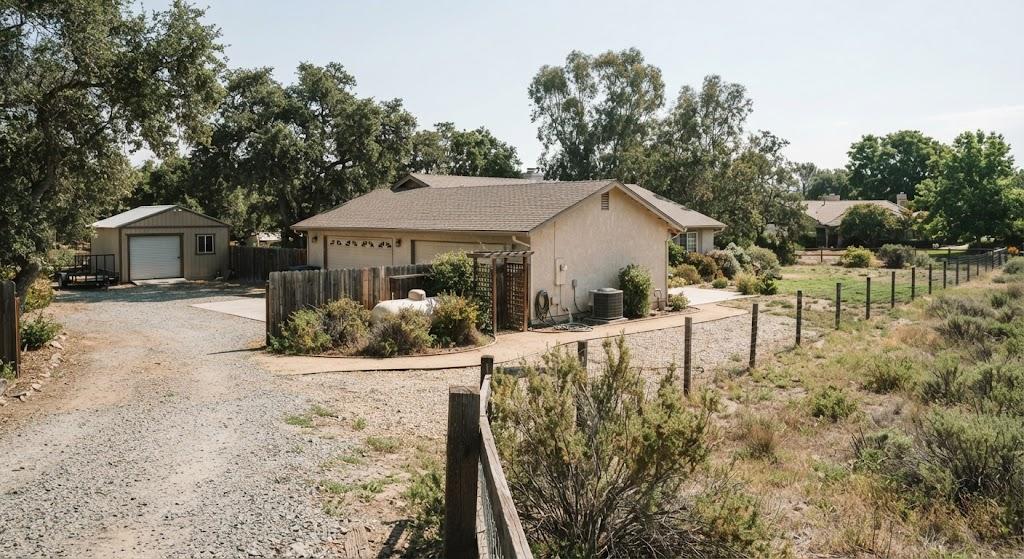
What to Know Before Buying a Home in Alpine, CA
What Should I Know Before Buying a Home in Alpine, CA?
When buyers start looking at homes in Alpine, one of the first things I want them to understand is this: you may be buying more than a house.
You're potentially buying land. A septic system. A private or shared road. Outbuildings. Slopes. Trees and vegetation. Maybe a well. Maybe propane. And a property that doesn't look anything like the one sitting half a mile away.
I'm Jacob Menath, a real estate agent with Menath Real Estate Team in Alpine, California, helping buyers and sellers throughout Alpine and East County San Diego navigate major lifestyle transitions. Because Alpine is the market I work in most, I spend a lot of time helping buyers understand the difference between loving a property here and understanding what it actually means to own it.
Those are two different things.
The short answer
Alpine appeals to buyers who want more space, more privacy, outdoor living, and a smaller-town feel while staying connected to San Diego. But buying here can involve considerations you won't run into with a conventional suburban home.
Depending on the property, that might mean wildfire and insurance factors, a septic system, a well, propane, a private or shared road, acreage that isn't all usable, slopes and drainage, outbuildings, ongoing maintenance, address-specific internet availability, or permit history worth understanding before you close.
None of that automatically makes a home difficult to own. It just means you need to understand what you're buying before you own it. That's really the whole idea behind this article.
Alpine properties can be very different from one another
One mistake I see buyers make is assuming that because they've toured three homes in Alpine, they understand Alpine real estate.
You might walk a conventional residential property in the morning and acreage with a workshop and a private road that same afternoon. The next house may have completely different terrain, utilities, improvements, or upkeep involved. That variety is part of what makes Alpine appealing in the first place. It's also why broad assumptions don't hold up well here.
In Alpine, you're evaluating the property, not the ZIP code.
More land doesn't automatically mean more usable land
This is one I bring up early with almost every buyer looking at anything with acreage.
A listing might say one acre, two acres, or considerably more. That's useful information, but it doesn't tell you what living there will actually be like. What's the slope, access, drainage, and configuration like? Where are the existing improvements sitting? Does the layout actually work for what you want to do with it?
Lot size tells you how much land exists. It doesn't tell you how useful that land will be to you.
If you're buying with a specific use in mind, whether that's equestrian use, gardening, additional improvements, or simply usable outdoor space, verify that the property supports your intended use rather than assuming acreage alone makes it possible.
Understand the septic system
Some Alpine homes run on septic rather than connecting to sewer service. If you've never owned a home with septic, I wouldn't treat it as something mysterious, but I also wouldn't treat it exactly like sewer either.
It's worth understanding the system tied to that specific property: its location, the records available, and the appropriate property-specific inspections or evaluations. A septic system isn't automatically a problem. An assumption about a septic system can be.
A private road deserves its own questions
A road can look perfectly ordinary when you pull up to a property and still raise questions you wouldn't have with a public street. Who owns it? Who's actually using it? How does maintenance get handled, and by whom? Are there recorded agreements or easements in place? What's the physical condition like right now?
Don't assume "private road" tells you who maintains it. That's a separate question, and it's worth an answer before you're the one relying on it every day.
Wells and propane may be part of the property
Some Alpine properties involve infrastructure that buyers coming from more suburban parts of San Diego haven't dealt with before. That could mean a private well, or propane instead of natural gas.
Neither should scare you off on its own. But if either is part of the property you're considering, it's worth understanding how the system works, its current condition, what records exist, and what ownership actually involves before you close. Different infrastructure doesn't mean worse infrastructure. It means different due diligence.
Wildfire and insurance should come up early
Wildfire preparedness is part of the ownership conversation in Alpine. That doesn't mean every property here carries identical risk. It means the specific home and its surroundings are worth looking into on their own terms, including defensible space, vegetation, and access.
I wouldn't wait until the end of a transaction to start thinking about insurance. Getting property-specific insurance information from an insurance professional early in the process can give you a more complete picture while you still have room to make decisions. Fall in love with the property, but understand the insurance situation before you're financially committed to the idea of owning it.
Drive the commute yourself
If you're heading toward San Diego regularly, don't make this decision from mileage alone. Drive the route at the time you'd actually be leaving. Then think past the commute to work. Where are the kids going? Where are your regular appointments? Where does the rest of your family live? How often are you actually headed toward central San Diego in a normal week?
You're not choosing one commute. You're choosing every trip you'll repeat throughout the week.
Experience Alpine during hot weather
If you're coming from coastal San Diego, Alpine's inland summers can be an adjustment. I wouldn't evaluate that from average temperatures alone. Look at the actual house. How does it handle afternoon sun? Is there real shade anywhere on the property? What's the cooling situation like? How will you actually use the outdoor space once it's warm?
You're not buying Alpine's average temperature. You're buying a house, and the way that house handles Alpine's climate.
Internet and utilities are worth verifying at the address
If you work from home, stream a lot, run a business, or just want reliable high-speed internet, don't assume every property has the same options. It's worth verifying service at the specific address you're considering, not just the general area. The same logic applies to other utilities.
"Available in Alpine" and "available at this house" aren't always the same question.
Outbuildings and improvements need to be understood, not assumed
A workshop or an extra structure might be one of the reasons you're drawn to a particular property. If that feature meaningfully affects what you're willing to pay, it's worth understanding what you're actually looking at. What is it? How's it being used now? What records exist for it? If you have a specific intended use, have you verified that use rather than assuming the structure supports it?
Don't pay extra for an assumption about an improvement you haven't verified.
More property means more maintenance
Space feels great when you're standing in the backyard imagining what you'll do with it. Ownership feels a little different six months later when that same space needs attention.
Some buyers genuinely enjoy maintaining property, whether that's brush clearance, fencing, driveways, or landscaping. Others realize partway through that they'd rather have a smaller lot and more free time. Know which kind of buyer you are before the acreage becomes your Saturday.
Unique properties can be harder to compare
In a conventional subdivision, you often have several nearby homes that look and function fairly similarly. Alpine doesn't always work that way.
A custom home on acreage with a workshop, unusual improvements, or a highly specific lot can be genuinely difficult to compare against another property. That doesn't automatically mean it's worth more or less. It means valuation may require more context than simply pulling a handful of loosely similar nearby sales.
The more unique the property, the more important it becomes to understand what buyers are actually valuing.
Don't buy the Alpine lifestyle you only imagine having
Alpine photographs well. Land, views, outdoor space, privacy, maybe room for a project you've always wanted to take on.
But before you buy, it's worth being honest with yourself about whether you'll actually live the lifestyle you're paying for. Do you really want acreage, or does it just sound appealing? Will you maintain it? Will you actually use the outdoor space? Are you comfortable with the longer drive? Do you want the responsibility that comes with a more rural property?
Don't buy five acres because you love the idea of five acres. Buy it because five acres makes your actual life better.
A pattern I see with buyers
Buyers often arrive in Alpine focused on what they're gaining. More space. More privacy. A bigger yard. A workshop. Some distance from the neighbors.
Then we start walking properties, and the questions get more specific. How usable is the land, really? What's the road situation? What does insurance look like for this particular house? How much maintenance does this create? What's the commute actually like on a Tuesday morning?
Eventually they're not asking "do I like Alpine?" anymore. They're asking, "do I want to own this particular version of Alpine?"
That's the better question. Buying here isn't just choosing a town. You're choosing a property, and the lifestyle that comes attached to it.
Questions worth asking yourself
Why am I considering Alpine in the first place?
Do I genuinely want more land, or does it just sound good?
How much of that land will I actually use?
Am I comfortable maintaining a larger property?
What's the water source, and does the home have septic?
Is the road public, private, or shared, and who maintains it?
Are there outbuildings or improvements I need to understand better?
Have I looked into relevant permit history?
What does insurance look like for this specific property?
How does the home handle Alpine's summer weather?
Is reliable internet actually available at this address?
Have I driven my real commute at my real times?
How often will I actually be heading into other parts of San Diego?
Does the land work for what I intend to do with it?
What responsibilities come with the features I'm most excited about?
If I eventually sell this property, what features will the next buyer need to understand?
Am I choosing Alpine for the life I actually live, or the one I imagine living?
And the big one: what would an ordinary Wednesday owning this property actually look like?
Frequently asked questions
Is Alpine, CA a good place to buy a home? It can be for buyers who value the lifestyle and property options Alpine offers. Whether it's the right fit depends on your commute, the type of property you want, your tolerance for maintenance, your budget, and your comfort level with rural or semi-rural ownership.
Is buying a home in Alpine different from buying elsewhere in San Diego? It can be. Depending on the property, Alpine buyers may run into larger parcels, septic systems, private roads, wells, propane, outbuildings, wildfire considerations, and unique improvements that call for more property-specific investigation than a conventional suburban purchase.
Do homes in Alpine have septic systems? Some do. Sewer and septic setups are property-specific, so it's worth verifying the system tied to the home you're considering rather than assuming every Alpine property is the same.
Do homes in Alpine use wells? Some properties do. Water source should be verified for the specific property, along with whatever inspection makes sense for that system.
Is wildfire a concern when buying in Alpine? Wildfire preparedness is a meaningful part of the ownership conversation in Alpine, but exposure varies by property. It's worth looking into the specific location, its surroundings, defensible space, and insurance options before you're too far into the process.
Is Alpine too far from San Diego? That really depends on your routine. Rather than relying on mileage or someone else's commute time, drive the routes you'll actually use, at the times you'll actually use them.
Is acreage in Alpine difficult to maintain? It depends on the property and your own expectations. Larger parcels can involve vegetation, fencing, drainage, roads, landscaping, and trees. It's worth thinking through what you'll actually need to maintain rather than judging by acreage alone.
What should I inspect when buying a home in Alpine? The appropriate inspections depend on the specific property. In addition to the home itself, buyers may need to investigate property-specific features such as septic systems, wells, private roads, outbuildings, drainage, or other improvements where applicable. The important thing is not to assume every Alpine property requires the same due diligence.
What should I know before buying acreage in Alpine? Start by looking beyond the acreage number. Consider how the land is configured, its slope and access, existing improvements, maintenance requirements, and whether it supports the specific uses you have in mind. More acreage doesn't automatically mean more usable property.
The bottom line
So, what should you know before buying a home in Alpine? Don't evaluate only the house. Understand the property.
The land. The access. The infrastructure. The insurance. The improvements. The maintenance. The commute. The lifestyle.
None of that has to make buying in Alpine complicated. It just means Alpine rewards buyers who ask good questions before making assumptions.
Don't buy acreage because acreage sounds good. Don't assume a workshop can be used exactly how you picture it. Don't assume a private road means someone else maintains it. Don't assume internet service is identical at every address. And don't decide Alpine is right for you based only on one perfect Saturday afternoon.
Ask yourself: do I understand what owning this particular property will actually require from me? If the answer is yes, and you genuinely want the lifestyle that comes with it, you're asking the right questions.
Jacob Menath is a real estate agent with Menath Real Estate Team in Alpine, California, helping buyers and sellers throughout Alpine and East County San Diego navigate major lifestyle transitions.
Menath Real Estate Team | Alpine, CA | Serving San Diego County



