How Should You Stage a Home to Sell Faster in Alpine, CA?
How Should You Stage a Home to Sell Faster in Alpine, CA?
By Jacob Menath
A lot of homeowners hear the word "staging" and picture something expensive. A designer walking through with a clipboard. Rented furniture nobody actually sits on. A house that looks like a catalog and nothing like the place you've lived in for the last fifteen years.
Most of the time, that's not what staging is. And around here, it's almost never what makes the difference.
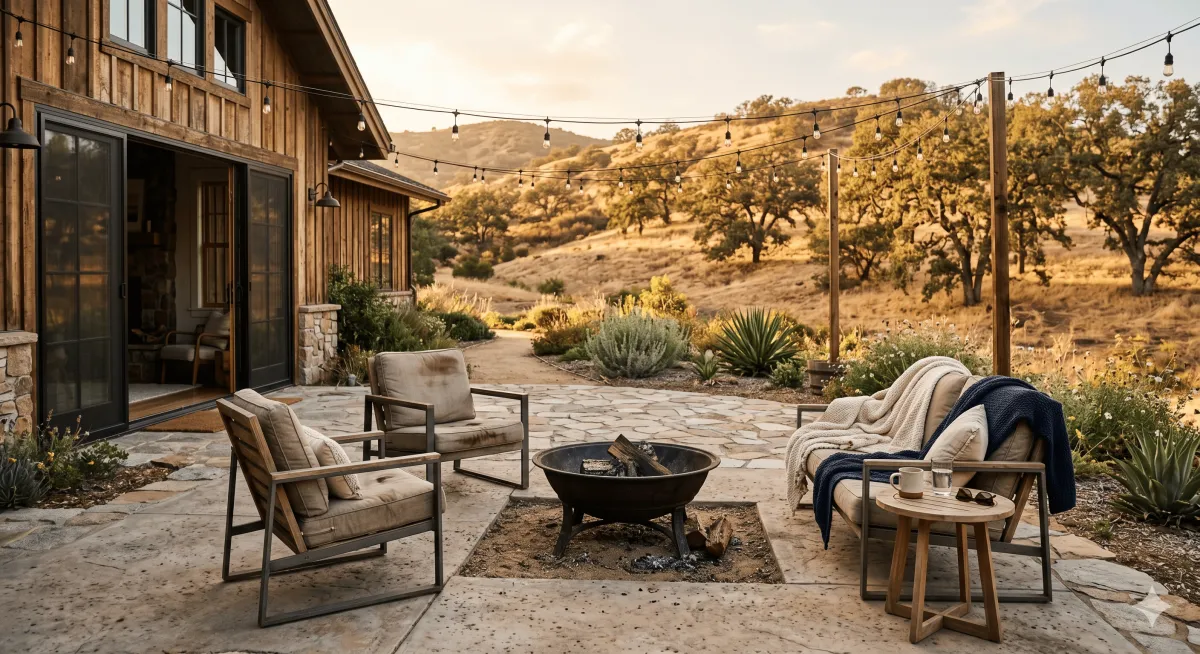
Staging isn't decorating. It's helping a buyer stand in your living room, or out on your back patio looking at the hills, and picture their own life happening there. That's the whole job. When it works, a buyer stops measuring your house against a list and starts imagining theirs.
That matters more in Alpine than it does in a lot of places. People don't drive out here for a particular paint color. They come for space, privacy, views, a shop, room for the horses, a place to park the RV, a slower pace at the end of the day. Good staging just makes those things easy to see and easy to feel. I'm Jacob Menath with Menath Real Estate Team in Alpine, California, and I help homeowners throughout Alpine and East County San Diego prepare, market, and sell their homes while navigating major life transitions. So most of what follows comes from sitting at kitchen tables having this exact conversation.
Quick Answer: How Should You Stage a Home to Sell Faster in Alpine?
Focus on helping buyers picture the lifestyle they're moving here for.
For most Alpine homes, that means:
Decluttering and depersonalizing
Highlighting outdoor living spaces
Organizing garages, workshops, and RV storage areas
Showcasing usable land and views
Giving every room a clear purpose
Removing distractions that pull attention away from the property's strengths
The goal isn't decorating. The goal is helping buyers clearly see themselves living there.
Does staging help homes sell faster in Alpine?
Often, yes, though it works a little differently here than it does closer to the coast.
Staging helps because it does a few specific things. It helps a buyer connect emotionally instead of just analyzing. It makes rooms read as larger and more usable. It cuts down on the small distractions that pull a buyer's attention away from what's actually good about your property. And it keeps the focus on your home's real strengths.
In Alpine, that last part usually reaches well past the living room. The staging that moves the needle here often happens outside the house entirely: the patio, the view, the shop, the barn, the usable acreage. Buyers want to picture the lifestyle, and a lot of that lifestyle isn't indoors.
So when people ask whether staging is worth it, my honest answer is that the goal isn't a prettier house. The goal is a buyer who can see themselves living the life they came to Alpine for.
Why staging actually works
Buyers like to think they're being logical. Square footage, bedroom count, lot size, the numbers on the listing. And those things matter.
But that's not usually what decides it.
When someone walks through your home, the questions running in the back of their mind are quieter and more personal. Can I see myself here? Does this feel comfortable? Does this fit the kind of life I'm trying to build?
Most buyers don't buy based on features alone. They buy based on how a property makes them feel. Staging is just the practice of helping that feeling show up faster and more clearly, so a buyer isn't fighting through clutter or confusion to find it.
The biggest mistake sellers make: staging for yourself
Here's the one I see most often, and it's an easy trap to fall into.
You stage the home the way you like it. Your taste, your collections, your photos, the room set up the way it's always worked for your family. That makes complete sense. It's your house. You love it.
The problem is that a buyer isn't shopping for your life. They're trying to find room for theirs.
When a home is packed with personal decor, heavily customized rooms, or spaces where it's hard to tell what's even supposed to happen there, the buyer spends their energy decoding your life instead of imagining their own. That's the opposite of what you want during a showing.
Clutter does the same thing in a quieter way. It shrinks rooms, hides good features, and makes a place feel smaller and busier than it is. You stop seeing it after a while because you live in it. A buyer sees nothing but.
The fix isn't expensive. It's mostly editing. Less of you in the house, so there's more room for them.
Think like an Alpine buyer
This is the part worth slowing down on, because it changes how you prepare everything else.
A good number of buyers looking in Alpine are coming from somewhere more built up. Places like Santee, La Mesa, Chula Vista, or closer to the coast. They've usually had enough of tight lots, shared walls, and neighbors close enough to hand a cup of sugar through the window.
What they're often after is straightforward: more space, more privacy, some land, a workshop, maybe horse property, and a quieter pace with real outdoor living. They've already decided they want a different setup. By the time they're driving the back roads out here, they're not casually browsing.
People don't move to Alpine because they want a staged living room. They move to Alpine because they want a different way of living. Whether buyers are looking near Palo Verde Ranch, Japatul Valley, Harbison Canyon, or closer to Alpine Boulevard, they're usually looking for more than just a house.
Your job, and mine, is to make that vision easy to see. If a buyer can stand on your property and immediately picture morning coffee on the deck, the trailer parked by the shop, the kids and the dog with actual room to run, you've done the real work of staging. The throw pillows are a footnote.
What to focus on first
You don't have to perfect every square foot. A handful of spaces carry most of the weight.
The living room. This is about gathering and comfort. You want it to read as a place people relax together. Keep the furniture arrangement simple and open so the room feels its full size, and clear out anything that makes it feel like a storage spot.
The kitchen. Buyers are looking for function and cleanliness here, not a showroom. Clear the counters down to a few useful things, make sure everything is genuinely clean, and let the space look like it works. You're going for "I could cook here," not "nobody is allowed to touch anything."
The primary bedroom. Aim for calm. This is the one room where the goal is a quiet retreat at the end of the day. Neutral, tidy, restful. Pull back the personal items and let it breathe.
The outdoor living areas. In Alpine this is not an afterthought, and honestly it sometimes matters more than a formal dining room ever will. Patios, decks, fire pits, the spots with the best view, anywhere you'd actually sit and eat outside. Clean it up, set it up like it's used, and point a buyer's eye toward whatever your property does best. If your view is the selling point, make sure nothing is blocking it.
Don't forget the garage, the shop, and the workshop
Most staging advice skips right over these. For Alpine buyers, that's a missed opportunity.
A shop, a big garage, RV storage, equipment storage, room for projects and hobbies. For a lot of people moving out here, that space is part of why they're moving at all. It might be the single feature that closes the deal.
So don't let those areas sit as a dumping ground that a buyer has to squint past. Clear them out enough that the space itself is visible. Sweep the floor. Organize what's left. Let a buyer walk in and immediately understand how big it is and what they could do with it. You're showing them the room and the possibility, not just where the lawnmower lives.
Staging horse property and acreage
If you've got land, fencing, a barn, a tack room, pastures, or usable acreage, this is its own kind of preparation, and it's local in a way that generic advice never covers.
Walk your property the way a buyer would. Are the access roads clear and easy to drive? Is the fencing in reasonable shape, or at least obviously functional? Can someone tell where the usable land is versus what's just brush? Is the barn organized enough that its purpose is plain?
You're not staging a house here. You're staging a lifestyle. A buyer looking at horse property is picturing their animals, their routine, their daily use of the land. The clearer and more functional you make that picture, the more strongly it tends to land.
A real example
A while back I worked with a homeowner who was selling under a lot of pressure, the financial kind and the emotional kind at the same time. She'd been in the house for years and had accumulated a lot over that stretch. When she looked around at everything that would need to be sorted, packed, or dealt with before the place could go on the market, the whole thing felt like too much. She was overwhelmed before we'd even built a plan.
There was another layer to it. She had health concerns that made her cautious about what got brought into the home, so the usual approach of trucking in rented furniture and decor wasn't something she was comfortable with. Traditional staging was off the table. And honestly, that was fine. It wasn't what this house needed anyway.
So instead of pushing a standard solution, Kristin and I worked alongside her to build a plan that fit her actual situation. We helped her sort through belongings, a little at a time so it didn't turn into its own crisis. We took carloads to donation centers. We helped haul off the things that simply needed to go. None of that is glamorous work, but it lifted the weight off her shoulders, and that mattered more in the moment than any decor could.
The turning point came from something Kristin does really well. She has a knack for walking into a home and immediately seeing it through a buyer's eyes, which is a different thing than how the person living there sees it.
When you live somewhere, you stop noticing it. The chair that's been in that corner for a decade is just where the chair goes. The crowded dresser is normal. You've stopped seeing your own house. A buyer notices all of it in about four seconds.
So Kristin read the rooms the way a buyer would. Where do the eyes go first when you step in? What pulls attention for the wrong reasons? Which furniture arrangements were quietly making rooms feel smaller than they actually were? Which spaces needed to open up and feel more usable?
From there it was small, deliberate moves. Rearranging furniture so rooms could breathe and the floor read bigger. Clearing off dressers and surfaces. Folding towels and simplifying the bathrooms down to something clean and calm. A few light touches where they helped: a plant here, a rug to ground a room, a little decor to give a space a clear purpose. Nothing heavy, nothing that crossed the line on her health concerns. Just enough that each room finally made sense at a glance.
None of it was about decorating. The point was to clear the distractions out of the way so buyers could focus on what was actually good about the home.
And the part that stuck with me had nothing to do with the furniture. As we worked through it, she started to relax. What had felt impossible at the start became manageable once it was broken into steps and she wasn't carrying it alone. By the time the home was ready, she wasn't dreading buyers walking through anymore. She felt good about what they'd see. That shift, from overwhelmed to confident, was as important as anything we did to the house itself.
Because that's what this work often turns out to be. You think you're preparing a property. A lot of the time you're really helping someone through a hard transition.
When the home hit the market, it showed well. The presentation felt intentional rather than staged for show, and buyers connected with it. It sold at full price, though that was never the headline for me. The part I remember is that she was genuinely happy with how it went, and that the house got to put its best foot forward without pretending to be something it wasn't.
If there's a lesson in it, it's this. Good staging isn't about expensive furniture. It's about helping buyers see the home clearly. Sometimes that means professional staging. Sometimes it means thoughtful preparation, decluttering, smart furniture placement, and an understanding of how buyers actually move through and experience a space. The best staging decisions usually come from looking at a property through a buyer's eyes instead of a homeowner's.
Which is the whole theme, when you get down to it. Most sellers focus on the house. Buyers are focused on how it feels and whether they can picture themselves living there.
What not to spend money on
This connects to a bigger point about preparing a home: staging should reveal value, not manufacture it.
A few places where sellers tend to overspend:
Renting expensive furniture that doesn't fit the property. A sleek city sofa in a rugged Alpine home just looks borrowed, because it is. It can actually work against you by making the space feel staged in the bad sense.
Major renovations done purely to stage. If you're tearing into a kitchen the week before listing just for showings, stop and talk it through with someone first. That's a different decision with a much bigger price tag, and it doesn't always come back to you.
Luxury decor that feels disconnected from the home. Buyers notice when the dressing doesn't match the house. It reads as a costume, not an improvement.
Spend on the things that help a buyer see what's already there. Cleaning, decluttering, organizing, presentation. That money tends to work harder than the flashy stuff.
Does professional staging make sense?
Sometimes yes, sometimes no. I won't give you a blanket answer, because it honestly depends on the property.
It tends to make more sense at higher price points, where presentation expectations are higher, and on vacant homes, where empty rooms can feel cold and hard for a buyer to read. An empty house often shows worse than people expect, because there's no sense of scale or purpose to anchor to.
It tends to matter less when you're still living in the home and it already shows well with some editing, or when the property's strengths are mostly outside the house anyway.
There's also a middle path a lot of people forget about. You don't have to choose between full professional staging and nothing. Partial staging, where you bring in a few pieces for the rooms that need them, can do a lot. So can a one-time staging consultation, where someone walks through and tells you exactly what to move, remove, or rearrange, and then you do the work yourself. That's often the best value for an occupied home.
How Alpine buyers really evaluate a home
If you take one thing from this, take this: most sellers focus on the house. Buyers are often focused on something bigger.
When a buyer evaluates a property out here, finishes are only part of it. They're weighing privacy. The views. Whether the land is actually usable or just looks like acreage on paper. Outdoor living. Workshop potential. Room for the whole family to gather. And underneath all of it, the question of whether this place fits the life they're trying to build.
A home with average countertops and an incredible, private, usable lot will often beat a beautifully finished home crammed onto a small parcel with neighbors on top of it. Not always, but often, because the buyer came out here for the lot and the lifestyle in the first place.
Stage with that in mind and you're playing to what your property is, instead of apologizing for what it isn't.
Common staging mistakes to avoid
A quick rundown of the ones I see most:
Leaving rooms without a purpose. A room a buyer can't categorize is a room they discount. Give every space an obvious job.
Ignoring the outdoor areas. In Alpine this might be your best asset. Don't let it look neglected.
Overpersonalizing. Too much of you crowds out room for them.
Forgetting the garage and workshop. For many buyers here, these are features, not storage. Treat them that way.
Trying to impress instead of clarify. The goal isn't to wow anyone. It's to make the property easy to understand and easy to picture living in.
An Alpine home staging checklist
Something practical to work from:
Declutter every room
Remove excess personal items
Deep clean, inside and out
Improve curb appeal at the entrance
Stage the outdoor living spaces
Clear and organize the garage and shop
Highlight your best views
Make usable acreage easy to see
Give every room a clear purpose
Focus on lifestyle, not decoration
Frequently asked questions
Does staging really help a home sell faster? It often helps, because it lets buyers connect emotionally and see the property's strengths without distraction. Results vary by home and market, but making a place easy to picture living in is rarely a wasted effort.
Should I stage my home if I still live there? Yes, and it mostly means editing rather than adding. Declutter, depersonalize, deep clean, and make sure each room has a clear purpose. A staging consultation can guide what to move without the cost of full staging.
Is professional staging worth it? Sometimes. It tends to help most with vacant homes and higher price points. For occupied homes that already show well, partial staging or a consultation is often a better value.
Should I hire a professional stager before selling my home in Alpine? Sometimes yes, sometimes no. Many occupied homes benefit more from decluttering, furniture rearrangement, and a staging consultation than from full professional staging. It depends on the price point, whether the home is vacant or lived in, and where the property's real strengths are.
What rooms should I stage first? The living room, kitchen, and primary bedroom carry a lot of weight indoors. In Alpine, add your outdoor living areas to that list, since they often matter just as much.
Should I stage a vacant house? It's worth considering. Empty rooms can feel cold and make it hard for buyers to judge scale or function. Even light furnishing in key rooms can help a buyer read the space.
How do you stage acreage or horse property? Make the land's usability obvious. Clear access roads, tidy fencing, an organized barn and tack room, and a clear sense of which land is usable. You're presenting a lifestyle, not just a structure.
Do garages and workshops matter when selling in Alpine? Often a great deal. For many buyers moving here, shop space, RV storage, and room for projects are part of the appeal. Clear them out so the space and its potential are easy to see.
What's the biggest staging mistake sellers make? Staging for themselves instead of the buyer. Too much personal decor, too much clutter, and rooms set up for the seller's life rather than presented for someone new to imagine theirs.
The bottom line
The goal of staging isn't decorating. It's helping buyers picture themselves living there.
In Alpine, that usually means showing far more than the house itself. Space. Privacy. Views. Outdoor living. A shop or a barn. Usable land. A different pace of life.
The homes that stand out tend to be the ones that make it easy for a buyer to picture the life they came to Alpine for. You don't manufacture that with rented furniture. You reveal it by clearing the way and pointing attention at what's already good.
If you're thinking about selling and you're not sure where your property's real strengths are, that's exactly the kind of thing worth walking through with someone who knows the area before you spend a dollar.
Jacob Menath is a real estate agent with Menath Real Estate Team in Alpine, California, helping homeowners throughout Alpine and East County San Diego prepare, market, and sell homes while navigating major life transitions.
Menath Real Estate Team | Alpine, CA | Serving San Diego County