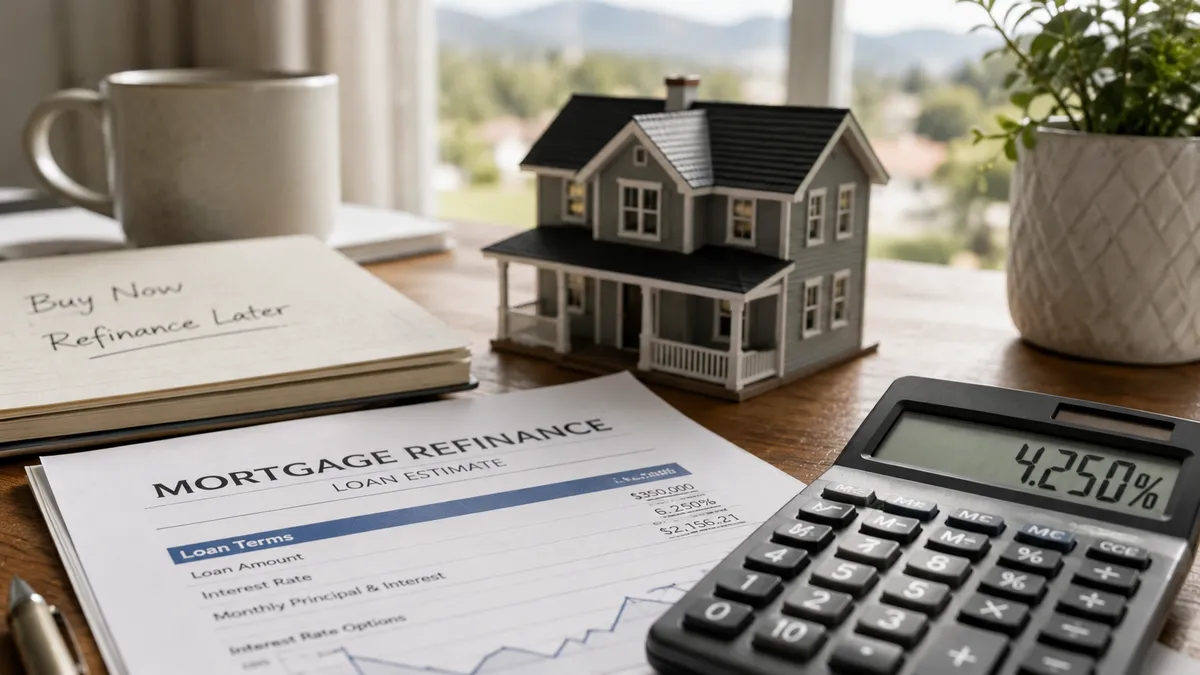
Is It Better to Buy Now and Refinance Later in San Diego?
Is It Better to Buy Now and Refinance Later in San Diego?
By Jacob Menath
In This Guide
What "buy now and refinance later" actually means
When refinancing later can make sense
Why sustainable payments still matter most
What buyers misunderstand about interest rates
Why waiting carries tradeoffs too
How refinancing actually works
When refinancing may NOT help
What smart buyers focus on instead
A lot of buyers in San Diego feel stuck right now.
They look at today's interest rates and start running through the same loop in their head. Maybe I should wait. What if rates drop next year? What if I buy now and regret it? Should I just plan to refinance eventually?
Then someone online says, "Just buy now and refinance later." It sounds simple, and it gets repeated everywhere. The problem is that the advice usually shows up without much explanation behind it.
Refinancing later can genuinely help in the right situation. But it only works well when the payment already makes sense today, when the buyer plans to stay long enough, and when the home still fits long-term goals even if rates take a while to move.
The better question isn't whether you can refinance later. It's whether the home still works if you can't.
Is It Better to Buy Now and Refinance Later?
Sometimes, yes.
Buying now and refinancing later can make sense when the current payment is sustainable, when you plan to stay in the home for several years, when ownership still improves your long-term flexibility, and when a future refinance would simply improve an already workable situation.
But buying mostly because you hope rates will drop later can turn into a problem if the payment already feels uncomfortable, if your finances are stretched thin, or if the refinance opportunity you were counting on doesn't show up the way you expected.
In Simple Terms
Buying now and refinancing later can make sense when:
The current payment is already sustainable
The buyer plans to stay several years
Ownership still improves long-term flexibility
And refinancing would simply improve an already workable situation
It becomes risky when:
The payment already feels uncomfortable
The plan depends entirely on lower future rates
Or the buyer has very little financial breathing room
The most important question isn't: "Can I refinance later?"
It's: "Does this home still work if rates stay higher longer than expected?"
That single question changes how most buyers think about the decision.
What Does Refinancing Actually Mean?
Refinancing is essentially replacing your current loan with a new one under different terms. You're not getting rid of the mortgage. You're swapping it for a better version when the timing works.
People refinance for a handful of reasons:
Lower interest rate
Lower monthly payment
Removing PMI once they have enough equity (more on whether PMI is worth it here)
Switching loan types (for example, ARM to fixed)
Pulling some equity out for a specific purpose
Adjusting the loan term to fit a new stage of life
When someone says "I'll just refinance later," that's usually what they're imagining. A future moment where rates have dropped, the payment improves, and the original loan becomes more comfortable.
That can absolutely happen. But it isn't automatic, and it isn't a plan by itself.
Why Buyers Feel Stuck Right Now
A lot of buyers today aren't necessarily scared of ownership. They're scared of making the wrong timing decision.
Rates feel uncomfortable. Affordability has shifted. Payments are bigger than they were a few years ago. And social media has turned every housing conversation into a debate about whether you should buy, wait, panic, or refinance into the sunset.
It creates a kind of paralysis. Buyers start measuring their decision against a market that doesn't exist anymore (the low-rate years) instead of the one in front of them.
No market feels perfectly comfortable while you're living through it.
When rates were low, buyers were stressed about bidding wars, waived contingencies, and homes selling in three days for fifty thousand over asking. Now rates are higher and the competition has cooled, but payments feel heavier. Every market creates a different kind of discomfort. There usually isn't a "clean" moment to buy.
The buyers who do well long term are usually the ones who stop trying to time the market perfectly and start asking whether the numbers work for their situation today.
Should Buyers Wait for Lower Interest Rates in San Diego?
Not necessarily.
Waiting can work if your situation genuinely isn't ready, but waiting for rates alone tends to be one of the weaker reasons to delay. Rates move on their own schedule, prices and inventory move on their own schedule, and qualifying standards can shift between now and the moment you finally feel ready.
The buyers who do well usually don't focus on the calendar. They focus on whether the home, the payment, and the long-term plan fit together. If those three things line up, today is workable. If they don't, lower rates later probably won't fix the underlying problem. (More on why waiting for the perfect market usually backfires.)
When Buying Now and Refinancing Later Can Make Sense
There are real situations where this strategy works.
If your income is stable, your payment is sustainable today, and you're planning to stay in the home for several years, a future refinance can be a nice bonus if rates improve. You buy a home you can already afford comfortably, you settle in, and if the opportunity to refinance shows up two or three years down the road, you take it.
That's the version of this strategy that actually works.
The version that gets buyers in trouble is when refinancing becomes the only reason the math works. When the payment feels tight today, and the entire plan depends on rates dropping by a specific amount within a specific window, that's no longer a plan. That's a hope.
Refinancing works best as a bonus, not as the entire strategy.
Buyers Still Need a Comfortable Payment Today
Before anyone starts thinking about a future refinance, the payment today has to make sense.
That means real financial breathing room. Reserves in the bank. Room for property taxes, insurance, and maintenance. Room for the unexpected stuff that comes with owning a home, especially out here in East County where well systems, septic systems, propane, and longer commutes can add layers most buyers don't think about until they own the house.
A refinance should improve a manageable situation. It shouldn't have to rescue an unmanageable one.
I've worked with buyers who could have technically stretched for a larger home assuming they'd refinance later, but instead chose a payment that already felt manageable on day one. When rates eventually shifted, refinancing became a helpful bonus instead of something they desperately needed. That's almost always the better position to be in.
Why Waiting Also Carries Tradeoffs
Waiting isn't a neutral financial decision. It feels safe because you're not doing anything, but the market keeps moving whether you participate or not.
Rents tend to rise. Prices can shift in either direction. Inventory changes. Insurance costs evolve, which is a real issue in parts of San Diego County right now, especially in foothill and rural areas where wildfire risk affects availability and pricing.
If you wait two years and prices climb, lower rates may not actually save you money. The lower payment from a better rate can get cancelled out by a higher purchase price, a bigger down payment requirement, or stricter qualifying standards.
Buying Now vs Waiting: Both Have Tradeoffs
Buying Now Waiting
Higher current rates Potentially lower future rates
Less buyer competition More competition if rates drop
More negotiation opportunities Possible higher prices later
Earlier ownership timeline Delayed equity growth
Refinance flexibility later More time to save
The goal isn't predicting the market perfectly.
The goal is making a sustainable decision that fits your situation long term.
Lower Rates Often Bring More Competition
There's another piece people forget. When rates drop, more buyers come back into the market. That usually means more competition, more bidding, less negotiating power, and emotional decision-making creeping back in.
The buyers who shopped during higher-rate periods often had more room to negotiate, more time to inspect, more flexibility on terms, and fewer competing offers.
Lower rates don't automatically make ownership easier. They just shift where the pressure shows up.
What Buyers Often Misunderstand About Refinancing
This is where the "marry the house, date the rate" idea gets oversimplified.
Refinancing isn't free, and it isn't guaranteed.
A refinance has real closing costs. It usually requires an appraisal. You typically have to qualify again based on your credit, income, and debt at that future moment. The home has to appraise at a value that supports the new loan. And rates have to actually drop enough to make the math work after costs.
Refinancing is an opportunity that may become available later. It's not a guarantee buyers should build their entire plan around.
Buyers Still Need to Qualify Later
A lot of buyers don't realize this part. Future refinancing depends on future qualification.
If your income changes, if you take on new debt, if your credit drops, or if lending standards tighten, the refinance you were counting on might not be available the way you imagined. Property values matter too. If the home doesn't appraise where it needs to, the refi can stall.
None of this is meant to scare anyone away from refinancing. It just means it shouldn't be treated as a button you can press whenever you want. (Related: real estate advice San Diego buyers should ignore.)
Why Sustainable Ownership Still Matters Most
A home only helps you long term if you can comfortably hold onto it long term.
That's the part the internet conversation usually skips.
Job changes happen. Life changes happen. Insurance premiums move. Property taxes adjust. A roof needs replacing. A water heater goes out at the worst possible time. Out in Alpine, Jamul, or anywhere with acreage, you can add brush clearing, well maintenance, road upkeep, and septic costs to that list.
The homeowners who do well over time aren't usually the ones who stretched as far as possible and counted on a refinance to save them. They're the ones who bought something they could carry comfortably, built reserves, and let time do the rest. (More on thinking like a long-term homeowner instead of a short-term buyer.)
Stretching Too Aggressively Creates Risk
Buying right at the edge of what you qualify for is one of the most common ways people end up stressed in their own home.
When the payment leaves no margin, every surprise feels like a crisis. A short period of reduced income, an unexpected repair, or an insurance increase can turn what should be a stable situation into a constant low-grade worry.
That's the part of homeownership the spreadsheets don't capture.
What Smart Buyers Usually Focus On Instead
The buyers I've seen do this well tend to focus on the same handful of things:
A monthly payment they can comfortably sustain
Long-term affordability, including taxes, insurance, and maintenance
A realistic plan to stay in the home long enough for ownership to work
Reserves and breathing room, not just qualifying numbers
Flexibility if life changes
A home that fits how they actually live, not just one that fits the market moment
What they usually don't spend much energy on:
Trying to predict rates perfectly
Reacting to social media commentary
Building a plan that only works if rates cooperate
Treating refinancing as a guarantee
Letting urgency or fear drive the decision
It's a quieter approach. It's also the one that tends to age well. (Related: why your first home in San Diego probably shouldn't be your forever home.)
When Buying May NOT Make Sense Yet
There are also situations where waiting genuinely is the right call.
If your income isn't stable, if your reserves are thin, if you're carrying a lot of high-interest debt, if you don't plan to stay in the area for at least several years, or if you're being emotionally pushed into buying before you feel ready, those are real reasons to slow down.
Buying before you're financially prepared can create more stress than stability. There's no prize for buying earlier than you should.
A good agent should be willing to tell you that. Not every conversation about buying needs to end with a purchase.
Why Long-Term Ownership Usually Matters More Than Timing
Most of the financially healthy homeowners I've worked with didn't time the market.
They bought homes they could comfortably afford, stayed put, paid down the loan over time, refinanced when it genuinely made sense, and let ownership do its slow work in the background.
They weren't trying to win a market. They were trying to build a stable life.
Rates will keep moving. Prices will keep moving. What you can actually control is whether the home you buy is one you can comfortably hold onto long enough for the rest to sort itself out.
Frequently Asked Questions
Is it smart to buy now and refinance later? It can be, when the payment is already sustainable, you plan to stay several years, and a future refinance would simply improve an already workable situation. It becomes risky when refinancing is the only reason the math works.
How does refinancing work? You replace your existing loan with a new one under different terms, usually to lower the rate, lower the payment, remove PMI, or change the loan type. It involves closing costs, an appraisal, and qualifying again based on your situation at that time.
Should buyers wait for lower rates? Sometimes, but waiting isn't a neutral decision. Prices, rents, inventory, and qualifying standards can all shift. Lower rates also tend to bring more competition, which can offset the benefit of a lower payment.
Can refinancing lower monthly payments? It can, if rates drop enough to outweigh closing costs and the home appraises at a value that supports the new loan. There's no guarantee, which is why it shouldn't be the foundation of the original buying decision.
What are the risks of refinancing later? Rates may not drop as expected, closing costs eat into savings, the home may not appraise high enough, and your future financial situation has to support qualifying again.
Do buyers need to qualify again to refinance? Yes. Credit, income, debt, and home value all factor in, and lending standards can change between when you buy and when you refinance.
Is waiting for lower rates risky? It can be. Prices may rise, qualifying standards may tighten, and competition usually increases when rates drop. Waiting has its own set of tradeoffs, even though it feels passive.
Thinking Through Your Own Situation
If you're trying to figure out whether buying now realistically makes sense for you, how refinancing actually works, what kind of payment feels sustainable for your situation, or how to think long term about an ownership decision, those are exactly the conversations worth having before you make a move.
Jacob and Kristin Menath help San Diego buyers think through those decisions clearly, realistically, and without pressure.
Jacob Menath is a real estate agent in Alpine, CA serving San Diego County, helping homeowners make informed, confident decisions when selling their home and navigating major life transitions.
Menath Real Estate Team | Alpine, CA | Serving San Diego County



