Are Alpine CA Schools Good for Teenagers?
Are Alpine Schools Good for Teenagers? It Depends on More Than the School
When parents ask whether Alpine schools are "good" for teenagers, I don't think they're really asking about test scores. They're usually asking something much bigger: will my teenager be happy here?
That's a more useful conversation, and it's the one I try to have with every family weighing a move to Alpine.
There isn't a simple yes or no answer, and I'm not going to pretend there is. Every teenager is different. Some kids do best in a smaller community where they know a lot of their classmates. Others want a bigger campus with more specialized programs to choose from. Some are counting down the days until they can be outside hiking or riding horses. Others care more about whether their friend group, their team, or their music program comes with them.
So instead of trying to rate or rank schools, which I'm not in a position to do anyway, I want to walk through what everyday life actually looks like for a lot of teenagers in Alpine, and the questions I encourage families to sit with before they commit to a move.
I'm Jacob Menath. I work with buyers and sellers throughout Alpine and East County, and a good chunk of my job is helping families think through transitions like this one. Where your teenager goes to school is part of that decision, but it's rarely the whole story.
The Short Answer
For most families, Alpine offers a mix of public, charter, private, and homeschool options. It has a smaller, close-knit community feel compared to a lot of San Diego suburbs. There's strong access to youth sports and community organizations, plenty of outdoor recreation, and for many students, a meaningful drive to get to and from school each day.
Whether that adds up to a good fit depends less on the school itself and more on your teenager's personality, their interests, and what your family is hoping this move accomplishes.
One thing I've learned over the years is that teenagers don't experience a move the same way adults do. Parents often focus on schools and neighborhoods. Teenagers tend to focus on friendships, routines, activities, and whether they can picture themselves belonging. That's why I think it's important to look at the whole experience, not just the school itself.
What Daily Life Actually Looks Like
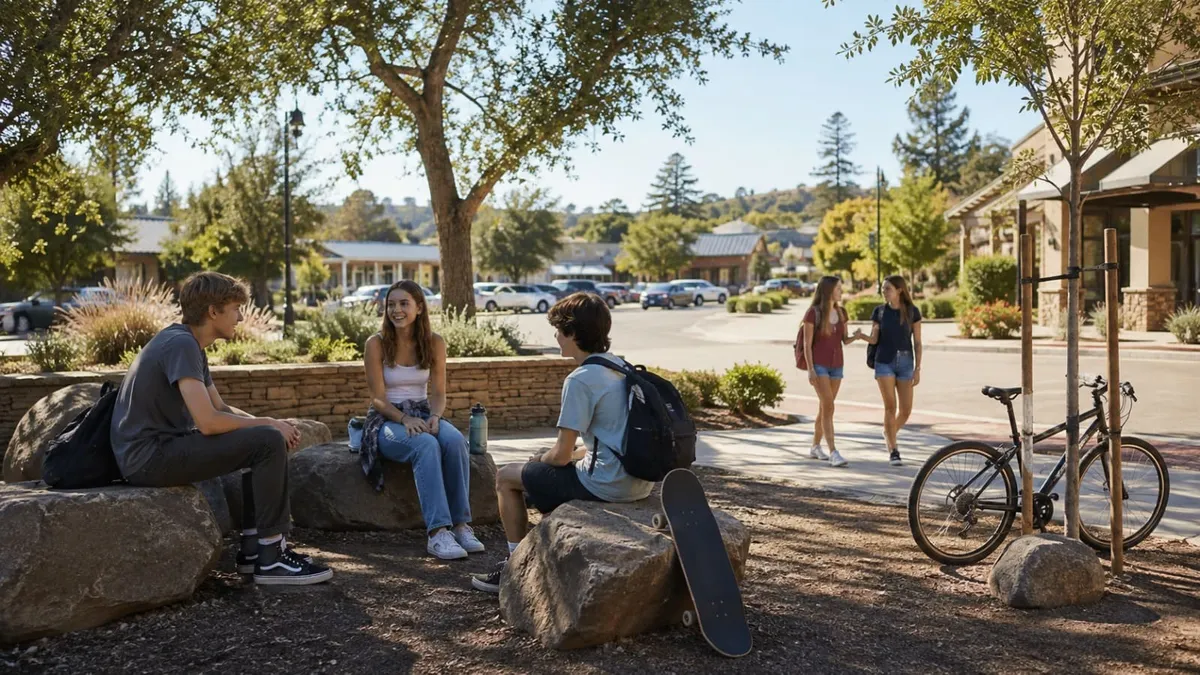
If you're picturing what a typical week looks like for a teenager in Alpine, it usually involves some combination of a longer commute, time spent at practice or rehearsal, and a fair amount of driving in between. Friend groups tend to form around activities as much as around school itself. Outdoor time, whether that's hiking, riding, or just being outside, tends to play a bigger role here than it does in more urban parts of the county.
None of that is automatically good or bad. It's just different from what a lot of relocating families are used to, and it's worth picturing honestly before you sign anything.
Educational Options Worth Knowing About
Alpine families generally have a few paths to consider. Grossmont Union serves much of the area for public high school. Liberty Charter is a popular option for families wanting something different from a traditional public school setting. There are also private school options for those who want them, along with a homeschooling community that's more active here than people often expect.
I've written more detailed breakdowns of the schools and high school options in Alpine separately, since that's a deeper conversation than I can do justice to here. If you're trying to compare specific programs, those articles are a better place to start.
Where Teenagers Actually Spend Their Time
This is the part families sometimes underestimate. School is only one piece of a teenager's life, and in Alpine, a lot of that life happens outside the classroom.
Sports are a big one, both school based and community leagues. 4-H and FFA have a real presence here in a way they don't in more urban areas, which makes sense given how many properties around Alpine have room for animals and land. Horseback riding is common. So is hiking, given how much open space surrounds the town. Youth groups through local churches, volunteer opportunities, and community events round things out.
I want to be careful not to oversell this. Not every teenager is going to gravitate toward 4-H or trail riding, and that's fine. The point isn't that these activities are right for everyone. It's that they exist here in a way that gives kids real options beyond what happens during the school day.
Transportation Shapes More Than Families Expect
One thing I see catch relocating families off guard is how much driving becomes part of daily life. Practices, friend's houses, part time jobs, school itself if your teenager isn't old enough to drive yet. It adds up.
For families moving from a denser part of the county where everything was a short walk or a quick rideshare away, this is a real adjustment, not just a minor inconvenience. I'd rather you hear that from me now than discover it three months after closing.
That's especially true during sports seasons. Practices, games, and other activities may not always be close to home, so transportation becomes part of the weekly rhythm for many Alpine families.
If your teenager is close to driving age, that changes the calculation somewhat, since independence becomes part of the picture sooner. If they're a few years out, you're looking at a more hands on period where you're doing a lot of the shuttling yourself.
A Family I Worked With
A few years back I helped a family move to Alpine who were nervous about how their teenage daughter would handle leaving a more urban part of San Diego. She'd grown up close to friends, close to her school, close to everything.
When I checked in with them a year later, the mom told me the hardest adjustment wasn't academic at all. Her daughter did fine in her new school. What took longer was learning a different daily rhythm, more driving, fewer spontaneous hangouts, a slower pace overall.
What helped wasn't the school itself. It was finding her footing through a club sport she joined that fall, and a small group of friends she met through it. By the spring, the family said it felt like home.
Interestingly, they almost never talked about the school anymore. They talked about the friendships she'd built.
I share that story because it captures something I see often. Teenagers usually adjust through relationships and routines, not through the school's reputation or test scores.
Questions Worth Sitting With Before You Move
Before families commit to Alpine, I usually encourage them to think through a handful of questions together as a family, not just as parents making a decision for their kids.
What does your teenager actually enjoy doing outside of school? How much daily driving are you genuinely comfortable taking on, or comfortable having your teenager take on once they're old enough to drive? What kind of community does your child tend to thrive in, smaller and familiar, or larger and more varied? Would a slower paced town feel exciting to your teenager, or would it feel limiting? And realistically, how long do you expect to stay here? A two year stop and a permanent move call for different levels of patience during the adjustment period.
There's no right answer to any of these. They're just worth talking through honestly before the moving truck shows up.
Why I Won't Tell You One School Is Better
I get asked fairly often to just rank the schools or tell a family which one is "the best." I'm not going to do that, and it's not just caution on my part.
Every student is different, and what works well for one kid can be the wrong fit for another. As a real estate professional, I also don't rank schools because families define a "good" school in very different ways, and I encourage everyone to review official information and visit schools themselves.
What I can do is point you toward visiting campuses yourself, reviewing official school resources, and talking directly with school staff who can speak to specific programs. That's a better source of truth than anything I could offer secondhand.
A Few Common Questions
What high school do Alpine teenagers attend? Most students in the area attend schools within the Grossmont Union High School District, though charter, private, and homeschool paths are also available depending on the family.
Is Alpine a good place to raise teenagers? Many families enjoy living in Alpine, but whether it's the right fit depends on your teenager's personality, interests, and what your family is looking for in a community.
What activities are available for teens in Alpine? Sports, 4-H, FFA, horseback riding, hiking, youth groups, volunteer opportunities, and community events are all common.
Do Alpine teenagers have a long commute? Many do, especially compared to more urban parts of San Diego County. It's worth driving the route yourself before deciding.
Are there sports and extracurricular activities available? Yes, both through schools and community organizations.
Can students attend charter or private schools instead? Yes. Liberty Charter and several private school options exist alongside the public school district.
Should I visit schools before buying a home here? I'd strongly encourage it. A campus visit tells you things a website or a conversation with me never could.
Where can I find official school information? Each school district and individual school site publishes current information, and I'm happy to point you toward those resources directly.
How can I tell if Alpine is the right fit for my teenager? Spend a day here before making a decision. Drive the commute, visit a school campus if possible, explore the parks and local businesses, and picture what a typical weekday and weekend would look like. That often tells families far more than reading reviews online.
The Bottom Line
Growing up in Alpine is shaped by a lot more than which school a teenager attends. It's shaped by the community around them, the routines your family settles into, the activities they get pulled into, and whether the overall pace of life fits who they are.
That's why I always encourage families to visit the schools, spend time in the community, drive the actual commute, and picture an honest week of daily life here before making a decision. It tells you more than any ranking or rating ever could.
In my experience, the families who feel best about their move are the ones who spend less time searching for the "perfect" school and more time asking whether the overall lifestyle fits the people they love most.
Jacob Menath is a real estate agent with Menath Real Estate Team in Alpine, California, helping buyers and sellers throughout Alpine and East County San Diego navigate major lifestyle transitions.



