
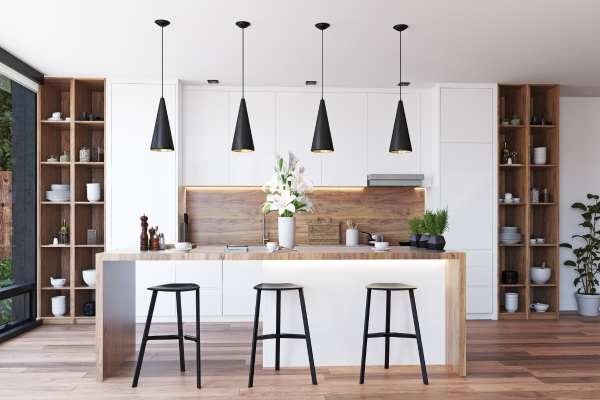
What Actually Adds $100,000 to Your Home’s Value in San Diego (And What Doesn’t)
What Actually Adds $100,000 to Your Home’s Value in San Diego (And What Doesn’t)
By Jacob Menath
If you're thinking about selling, you've probably asked yourself some version of this question: Should I do anything to the house first?
Maybe you're wondering if a kitchen remodel is worth it. Or if new flooring will help. Or if you should just list it as-is and see what happens.
Here's the honest answer: some things genuinely move the needle. Others cost you money and time without returning a dime. Knowing the difference is what separates a confident seller from a stressed one.
Let me walk you through it.
First, Let's Reset the Expectation
There's no single magic upgrade that automatically adds $100,000 to any home. A lot of sellers go looking for that one big upgrade because it feels productive. But in most cases, that mindset is what leads to overspending and disappointing returns.
But there are combinations of decisions — pricing, presentation, and preparation — that together can move your final sale price by that much or more compared to selling without a strategy.
The biggest gains almost never come from renovation alone. They come from understanding what buyers in your market are actually paying for.
In Alpine and East County San Diego, that looks a little different than it does in coastal markets. Buyers here tend to prioritize usable space, lot size, condition, and storage. They're practical. They're not always wowed by trendy finishes — but they absolutely notice when something feels tired, neglected, or incomplete.
So the question isn't just "what adds value?" It's "what adds value here, for your home, to these buyers?"
What Actually Moves the Number
1. Condition First — Always
Buyers pay a premium for homes that feel well cared for. And they heavily discount homes that feel like they've been let go.
Before any upgrade, walk through your home the way a buyer would. Look at the little things that have been easy to ignore: the caulk around the tub, the sticky drawer, the light switch that's been loose for three years.
Deferred maintenance sends a message. Buyers wonder what else was ignored if the visible stuff wasn't addressed. That doubt becomes a lower offer, or a longer list of repair requests in escrow.
Fixing the basics — a fresh coat of paint in a neutral color, clean grout, repaired drywall, working fixtures — often returns more per dollar spent than any remodel.
Rough return: High. Small dollars in, noticeable bump in perceived value.
2. Kitchens — But Only If Done Right
Updated kitchens matter. But a full gut renovation almost never pays for itself when you're selling.
What actually helps:
New cabinet hardware (surprisingly impactful, very cheap)
Refinished or painted cabinets if they're dark or dated
Updated countertops (mid-range quartz, not premium marble)
Modern light fixture over the island or table
What typically doesn't pay off:
Tearing out functional cabinets just to go custom
High-end appliances buyers might not even keep
Full remodels in an already-dated home where you're chasing trends
The real risk: You spend $40,000 on a kitchen remodel, but the neighborhood comps cap out — buyers won't pay above the ceiling just because your backsplash is beautiful.
Rough return: Moderate. Selective updates yes. Full overhaul — proceed carefully.
3. Bathrooms — The Fastest Win
Primary bathrooms and guest bathrooms carry a lot of weight with buyers. A bathroom that feels clean and updated can genuinely move the needle.
You don't need to move walls or retile everything. Simple updates:
New vanity and mirror
Modern faucets and fixtures
Fresh caulk and grout (or tile paint if you're not replacing)
Good lighting
A $3,000–$8,000 bathroom refresh can feel like a $20,000+ upgrade to someone walking through for the first time.
Rough return: Strong, especially in mid-range East County homes.
4. Curb Appeal — The First Decision
Buyers decide how they feel about a home before they step inside. Curb appeal doesn't just help photos — it sets the emotional tone for the entire showing.
Fresh paint on the front door. Clean landscaping. Pressure-washed driveway. Updated house numbers and exterior light fixture. These things cost $500–$2,000 and can make a $600,000 home feel like a $650,000 home before the buyer even unlocks the door.
If your home sits on a larger lot (common in Alpine), clean fencing, trimmed trees, and a tidy yard matter even more. Buyers in this area often pay for the land as much as the house.
Rough return: Very high per dollar spent.
5. Flooring — Remove the Objection
Carpet in the main living areas is polarizing. Some buyers won't touch it. Others ask for an allowance. Either way, it becomes a negotiating point.
Replacing main-floor carpet with LVP (luxury vinyl plank) or refinishing hardwood removes that objection entirely. It also photographs well and helps buyers picture themselves living there.
You don't need to do the whole house. Focus on the main living areas — entry, living room, hallways.
Rough return: Moderate to strong, especially if current flooring is worn or dated.
What Doesn't Add $100,000
Just to be clear:
Pools — They add value in some markets, but in many East County neighborhoods they add cost to operate and actually limit your buyer pool.
Over-personalized renovations — Your taste and the buyer's taste aren't always the same. Bold colors, unusual layouts, or very specific design choices can work against you.
Smart home systems — Nice feature, rarely reflected in the sale price.
Additions done without permits — Can actually subtract value or kill a deal in escrow.
The Mistake Most Sellers Make
They either over-invest or under-invest.
Over-investment: Spending $80,000 on renovations on a home that caps out at a certain price point. The neighborhood limits what buyers will pay — no matter how beautiful the house is.
Under-investment: Listing as-is when a few targeted updates would have returned 3x their cost. Buyers discount heavily for homes that feel like work.
The sweet spot is strategic preparation — not renovation for renovation's sake, but specific, focused work that removes buyer objections and supports your list price.
This is where having someone walk the home with you before you spend a dollar matters. Not every house needs the same thing.
A Quick Scenario
Let's say you have a home in Alpine worth roughly $750,000 in its current condition. You're thinking about selling in the next six months.
Paint inside and out: $8,000
LVP flooring in main living areas: $6,000
Bathroom updates (two baths): $9,000
Curb appeal and landscaping: $2,500
Staging: $2,500
Total invested: ~$28,000
If done well, that same home may now feel like an $800,000–$820,000 home to buyers. The net gain after prep costs? Potentially $40,000–$60,000 or more — and a faster, cleaner sale with fewer repair requests.
That's not a guarantee. But it's a realistic outcome when preparation matches the market.
So What Should You Actually Do?
Walk the house as a buyer would. What feels dated, worn, or unfinished?
Get a professional opinion before you spend anything. A good agent should be able to tell you exactly what will and won't return value in your neighborhood.
Focus on condition first, cosmetics second, major renovations third (and rarely).
Think about your timeline. If you're selling in 90 days, a full kitchen remodel isn't realistic. Targeted updates are.
Selling a home is rarely just a financial decision. For a lot of families — especially those downsizing after the kids are gone, or moving up into their next chapter — it's a major life moment. The goal isn't just to get the highest price. It's to make a smart, confident decision you feel good about.
Jacob Menath is a real estate agent in Alpine, CA serving San Diego County, helping homeowners make informed, confident decisions when selling their home and navigating major life transitions. If you're thinking about selling and want a clear-eyed look at what your home could sell for — and what (if anything) is worth doing first — reach out. No pressure, no pitch. Just a real conversation.

Jacob Menath & Kristin Menath | San Diego - eXp Realty of Southern California, Inc. CA DRE# 02187306
San Diego, CA 92131
Should you require assistance in navigating our website or searching for real estate, please contact our offices at
619-391-0220.
License # CA DRE# 01522683 # 01742516
Changing the way San Diego does real estate!


