
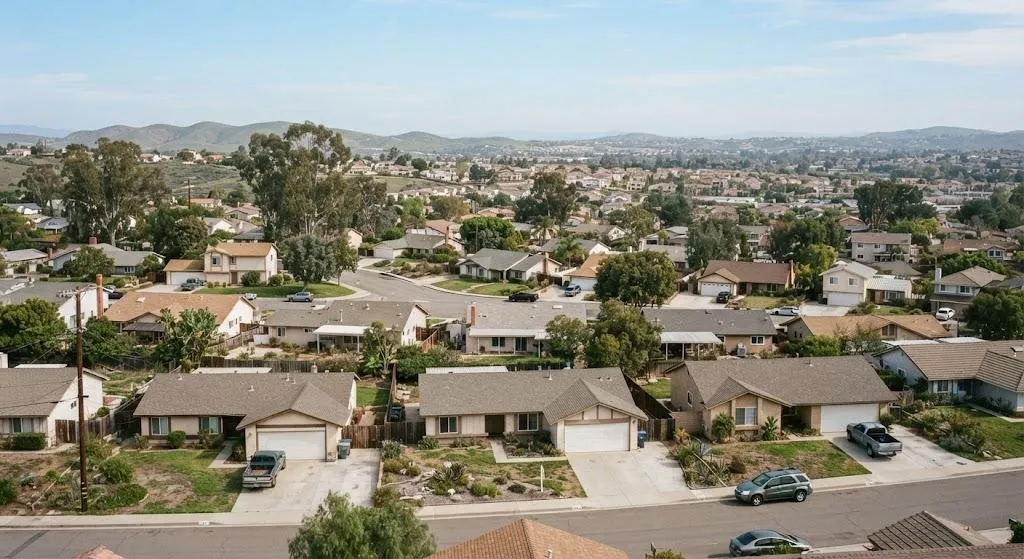
Affordable Home Buying in East County San Diego
How East County Buyers Are Finding More Affordable Entry Points Into San Diego Real Estate
By Jacob Menath, Real Estate Agent in Alpine, CA | Menath Real Estate Team Helping San Diego buyers make smart long-term real estate decisions
In This Guide
Why buyers are moving east
What East County offers that other areas often don't
How affordability changes across San Diego County
Why buyers adjust expectations over time
What tradeoffs East County buyers should understand
Which East County areas attract different buyers
Why detached homes still matter to many buyers
How buyers think strategically about long-term ownership
A lot of buyers in San Diego eventually hit the same moment.
They realize the version of homeownership they originally pictured might not match what today's prices actually allow. The detached coastal home. The big backyard a few minutes from the beach. The turnkey property in the neighborhood they had in mind for years.
For many buyers, those homes now sit well outside what feels financially sustainable.
That's usually when East County starts entering the conversation. And for plenty of buyers I've worked with, moving east isn't about giving up. It's about finding a more realistic ownership path that still supports the bigger picture.
Why Are So Many Buyers Moving to East County San Diego?
Most buyers look east because the math works better. East County often offers:
Lower entry prices than coastal areas
More detached homes
Larger lots
More flexibility per dollar
ADU potential on some properties
Semi-rural lifestyle options
More sustainable monthly payments
It's not without tradeoffs. East County usually involves longer commutes, hotter summers, wildfire insurance considerations, and less coastal proximity. But for buyers focused on long-term ownership, those tradeoffs often feel manageable compared to stretching beyond what the budget really supports.
That's the honest version of why this conversation keeps happening.
In Simple Terms
Many buyers are looking toward East County because it often offers:
Lower entry prices than coastal areas
More detached homes
Larger lots
More flexibility per dollar
More sustainable monthly payments
The tradeoff is usually:
Longer commutes
Hotter summers
Wildfire insurance considerations
Different ownership responsibilities in rural areas
For many buyers, East County becomes the more realistic path into long-term San Diego homeownership.
Why Coastal Affordability Feels So Difficult
Before getting into East County itself, it helps to name what buyers are actually up against closer to the coast.
A lot of buyers aren't failing financially. They're trying to buy into one of the most supply-constrained housing markets in the country. Coastal and central San Diego carry real premiums, and the inventory of detached homes in those areas has been thin for years.
Detached Coastal Homes Have Become Extremely Competitive
When something does come up near the coast in a desirable neighborhood, it often draws a deep pool of buyers, including people with higher household incomes, larger down payments, or cash positions. That tends to push pricing up and create emotional bidding situations that move quickly.
If you've been watching coastal listings and feeling discouraged, you're not imagining it. The competition is real, and the math is tight.
Why Buyers Start Looking East
Once buyers spend a few months searching closer to the coast, something usually shifts. The pressure of pushing the budget further and further starts to feel less appealing than the idea of finding a home that fits more comfortably from day one.
East County often gives buyers more room to build a sustainable ownership strategy. Lower entry prices open the door to detached homes, larger lots, and properties with more long-term flexibility. For move-up buyers, it can mean upgrading without doubling the payment. For first-time buyers, it can mean getting into ownership at all instead of waiting another two or three years.
More Buyers Are Prioritizing Sustainability Over Prestige
There's been a real shift in how buyers talk about their goals. Monthly affordability, financial breathing room, and long-term livability are showing up earlier in conversations than they used to. The pressure to live in the most recognizable ZIP code has softened for a lot of people.
A sustainable home usually matters more long term than an impressive address.
I've worked with buyers who originally focused entirely on coastal neighborhoods before realizing the monthly payment would leave almost no financial breathing room. Once they started exploring areas like Santee or Lakeside, they found ownership options that fit their long-term goals much more comfortably. The home wasn't the one they originally pictured, but the financial picture made the next ten years feel possible instead of stressful.
That kind of reframe happens more often than people expect.
What East County Often Offers Buyers
Here's what shows up most often when buyers start looking at East County properties:
Detached homes at lower entry prices
Larger lots
ADU potential on some properties
More parking and storage
Semi-rural properties with land
Quieter neighborhoods
More ownership flexibility
Foothill and mountain lifestyle options
This doesn't mean every East County property is a deal. Prices have moved a lot out here over the years too, and some areas command real premiums of their own. But across the broader region, buyers usually get more usable space per dollar than they would closer to the coast.
Different East County Areas Solve Different Problems
East County isn't one market. It's a collection of communities that each behave differently. Knowing which area actually fits your situation matters more than chasing whatever happens to be the most affordable on a given week.
Santee
Santee often appeals to first-time buyers, commuters, and families looking for a more suburban structure. You'll find newer developments, parks and schools, and reasonable freeway access. Detached homes in Santee tend to feel more like traditional suburban living than the rest of East County.
Lakeside
Lakeside tends to draw buyers who want more land, a rural lifestyle, or interest in horse properties. The housing stock is mixed, with a lot of older homes alongside semi-rural parcels. If you're comfortable with a property that may need updating and you want foothill character, Lakeside is often a good fit.
Alpine
Alpine is where I'm based, and it attracts buyers who want privacy, acreage, mountain views, or a quieter pace. Many homes sit on larger parcels, and you'll see a lot of custom construction. Commutes are longer, and wildfire insurance is a factor that needs to be looked at carefully on every property.
El Cajon
El Cajon offers some of the widest price ranges in East County. It tends to appeal to buyers prioritizing affordability, multi-generational households, or anyone who wants central East County access. Neighborhoods vary a lot, so it's worth spending time understanding which pockets fit your needs.
La Mesa
La Mesa sits closer in and has a different feel from the rest of East County. Mature neighborhoods, older homes, a strong sense of community, and some walkable areas. Buyers who want East County affordability without going too far east often gravitate here.
Jamul
Jamul is for acreage buyers, custom-home buyers, and homeowners who want real privacy. The terrain is rural, many properties run on septic and wells, and drive times are longer than they look on a map. It's a different kind of ownership, and it suits a specific kind of buyer.
Which East County Areas Often Fit Different Buyers?
Area
Often Appeals To
Santee
First-time buyers, commuters, suburban lifestyles
Lakeside
Buyers wanting land, foothill character, rural feel
Alpine
Privacy, acreage, mountain views, custom homes
El Cajon
Affordability, central East County access
La Mesa
Closer-in neighborhoods, charm, walkability
Jamul
Acreage, privacy, rural custom-home living
What Tradeoffs Buyers Need to Understand
East County often creates more flexibility per dollar, but it also asks buyers to think differently about ownership. Going in without understanding the tradeoffs is where most regret comes from.
Things worth thinking through:
Commute times during peak hours
Wildfire insurance availability and cost
Hotter summer temperatures inland
Septic systems on some properties
Private wells in more rural areas
Rural infrastructure and road access
Maintenance demands on larger parcels
None of these are dealbreakers on their own. But they shape the actual experience of owning a property out here, and they can affect your monthly costs in ways that aren't always obvious from a listing.
Semi-Rural Ownership Comes With Different Responsibilities
If you're moving from a suburban tract home to a semi-rural property, the day-to-day shifts more than people expect. Brush management for wildfire defensible space, periodic septic pumping and inspections, propane deliveries on some properties, private road agreements, and insurance costs that often run higher than coastal equivalents.
Semi-rural properties behave differently than suburban tract homes. That's not a warning so much as a planning point. Buyers who know what they're getting into tend to be happy out here. Buyers who don't tend to learn the hard way.
Why Detached Homes Still Matter to Many Buyers
For a lot of buyers, the appeal of East County comes down to one thing. A detached home is still possible here.
Privacy, a yard, room for kids or pets, space for storage, future ADU potential, and the basic flexibility of owning the whole property instead of sharing walls. These things matter to people, and they don't go away just because the market makes them harder to find closer to the coast.
For many buyers, East County represents the first realistic opportunity to own a detached home in San Diego County. That's not a small thing.
Why Long-Term Ownership Thinking Matters
Most of the buyers who eventually move into higher-priced areas didn't start there. They started somewhere more realistic, built equity over time, and used that as a foothold for the next move.
When you think about a home purchase as a chapter rather than a final destination, the decision feels less heavy. A property that fits the budget today, holds up over time, and gives ownership room to do its work usually leads to better outcomes than stretching for the dream home on day one.
The First Home Often Creates Future Options
A first home doesn't have to check every box. It has to be a reasonable foundation. The equity you build, the stability you create, and the experience of actually owning property all become tools for the next decision.
The first home is often the foothold, not the finish line.
What Smart East County Buyers Usually Focus On
The buyers I see making the best long-term decisions out here tend to focus on:
Sustainable monthly payments
Realistic commute expectations
The full cost of ownership, not just the purchase price
Usable property layouts
Future flexibility, including ADU potential and resale appeal
Insurability
Maintenance that fits their lifestyle
A realistic ownership timeline
Instead of getting pulled into:
Chasing prestige ZIP codes
Cosmetic perfection
Emotional comparison with other buyers
Trying to predict short-term market swings
That second list will burn buyers out faster than almost anything else.
Common Buyer Mistakes
A few patterns come up often enough that they're worth naming:
Ignoring commute realities until after move-in
Underestimating wildfire insurance costs and availability
Buying too much land too quickly without understanding the maintenance load
Overlooking septic or well issues during inspections
Stretching too aggressively financially to get into a specific area
Comparing East County directly to coastal living instead of taking it on its own terms
Focusing only on the purchase price instead of the full ownership cost
Underestimating long-term ownership costs like brush clearance and road maintenance
Most of these are preventable with the right questions early in the process.
Why Ownership Progression Usually Happens Gradually
A lot of the financially comfortable homeowners I know didn't get there by buying their forever home first. They bought something practical, sustainable, and imperfect, then gave ownership time to work.
Equity builds. Income usually grows. Life situations evolve. The first home creates options, and those options eventually open doors that weren't accessible at the start.
That pattern is more common than the buyer who finds the perfect home on the first try.
FAQ
Why are buyers moving to East County?
Mostly affordability and access to detached homes. Coastal and central San Diego have become difficult for many buyers to enter, and East County offers more usable space per dollar with detached property options that are harder to find closer to the coast.
Is East County more affordable than coastal San Diego?
Generally yes, though it depends on the specific area and property type. Communities like El Cajon and parts of Santee often have lower entry prices than coastal neighborhoods, while areas like Alpine and Jamul can vary widely based on lot size and property condition.
Which East County areas are best for first-time buyers?
Santee and El Cajon tend to come up most often for first-time buyers because of their broader inventory and range of price points. La Mesa is also worth considering for buyers who want a closer-in feel.
Are detached homes easier to find in East County?
Yes. Detached single-family homes make up a larger share of the inventory in East County compared to denser coastal areas, and they tend to come with more lot space.
What tradeoffs come with East County living?
Longer commutes to coastal employment areas, hotter inland summers, wildfire insurance considerations, and in more rural areas, septic systems, private wells, and road maintenance responsibilities.
Is Alpine a good place to buy a home?
It depends on what you're looking for. Alpine works well for buyers who want privacy, acreage, mountain views, and a quieter pace. It's less suited for buyers who need a short commute to coastal areas or who want walkable neighborhood living.
Why are buyers leaving coastal areas?
Most aren't leaving so much as adjusting their search. Coastal pricing has pushed a lot of buyers into a position where moving east makes more financial sense than continuing to wait or stretching beyond what feels sustainable.
If You're Thinking Through This Decision
If you're trying to figure out whether East County realistically fits your goals, which areas might offer the right ownership opportunities, how to think strategically about affordability, or how to build a sustainable long-term ownership plan, those are exactly the conversations we have with buyers all the time.
There's no pressure to rush. The right approach is usually to slow down, look at the full picture, and make a decision you'll feel good about a few years from now.
About Jacob and Kristin Menath
Jacob and Kristin Menath are real estate professionals based in Alpine, CA serving buyers and homeowners throughout San Diego County, including East County communities like Alpine, Lakeside, Santee, El Cajon, Jamul, and La Mesa.
They work with first-time buyers, move-up buyers, downsizing homeowners, and families making long-term ownership decisions. Their approach focuses on practical guidance, thoughtful strategy, and helping buyers make confident real estate decisions that support their long-term goals.
Jacob Menath is a real estate agent in Alpine, CA serving San Diego County, helping homeowners make informed, confident decisions when selling their home and navigating major life transitions.
Menath Real Estate Team | Alpine, CA | Serving San Diego County



Have questions?
Menath Real Estate Team
Jacob & Kristin Menath, REALTORS®
2710 Alpine Blvd Ste K PMB 10106
Alpine, CA 91901
www.menathrealestate.com
CA DRE #01742516 | CA DRE #01522683