
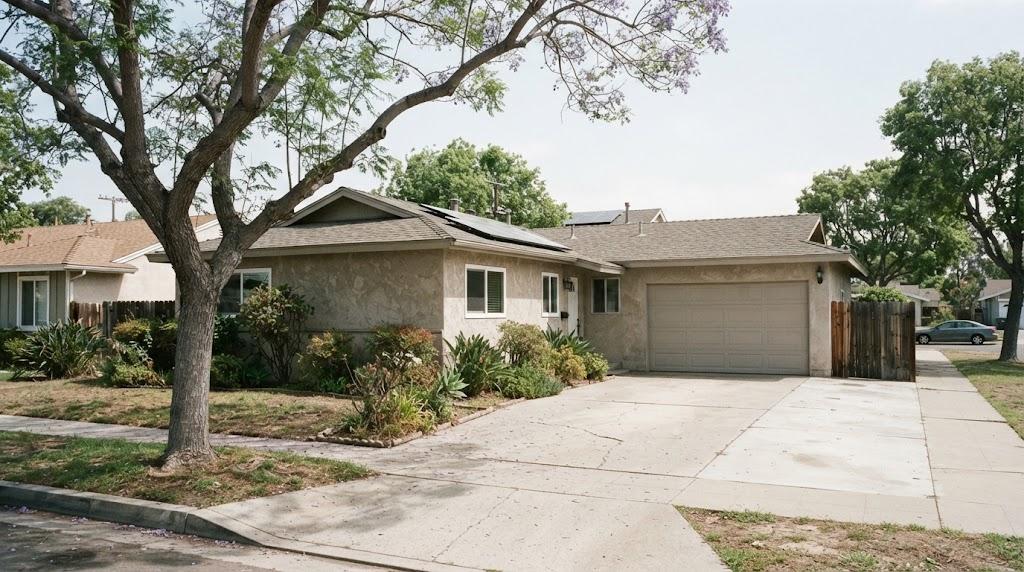
How Do Older Homes Affect Resale Value in San Diego?
When buyers ask me whether an older home will be harder to sell someday, I usually tell them the same thing.
Don't confuse age with condition.
A house built decades ago may have been carefully maintained, thoughtfully updated, and sitting in an established neighborhood that buyers specifically want. A much newer house can still have condition problems or a layout that turns people off. Age is just one line on the listing. It's not the whole story.
I'm Jacob Menath, a real estate agent with Menath Real Estate Team in Alpine, California, helping buyers and sellers throughout Alpine and East County San Diego navigate major lifestyle transitions. One question I hear from buyers who are thinking ahead is some version of this: will an older home hold its value, or am I setting myself up for a harder sale down the road?
Here's the short answer, and then I'll walk you through why.
The short answer
Older homes can resell very well in San Diego. Age by itself usually isn't the problem.
What can affect resale is what comes along with that age. Things like deferred maintenance, aging major systems, an outdated layout, a poor-quality renovation, unpermitted additions, or bigger repairs that are clearly on the horizon.
At the same time, an older home often comes with things buyers genuinely value. An established location. Architectural character. Mature landscaping. A larger or more distinctive lot. Improvements that were made carefully over the years by people who actually lived in the house.
Age tells you when the home was built. Condition tells you what you're actually buying, and eventually, what you'll be selling.
Older doesn't automatically mean less valuable
Real estate doesn't depreciate on some kind of birthday schedule. Buyers don't walk away from a home just because it was built in a certain decade.
They look at the whole property. Where is it? What condition is it in? Does the layout work? What's been updated, and what still needs attention? What does the lot offer? How does it compare to the other homes they're considering?
The year built is one detail on the listing sheet. The resale decision involves pretty much everything else.
Condition usually matters more than the birthday
Two homes built the same year can create two completely different reactions from a buyer walking through the front door.
One may have a history of documented maintenance and thoughtful improvements, with major systems addressed as needed over the years. Another may have deferred larger maintenance items while putting most of the investment into cosmetic updates.
I'd rather understand the condition than simply know the age. A newer kitchen doesn't make an aging roof disappear. And an older kitchen doesn't necessarily mean the home was poorly cared for underneath.
Updates can help, but not every remodel adds equal value
This is the part I think a lot of sellers get wrong.
There's an assumption that money spent on a remodel comes back dollar for dollar at resale. It doesn't work that neatly.
A thoughtful update that improves function and appeals to a broad range of buyers can genuinely help marketability. A highly personalized renovation, rushed workmanship, or an improvement that doesn't really fit the property can land very differently once it's in front of a buyer who didn't ask for it.
Cost and value aren't always the same thing.
If you're thinking about a major renovation mainly for resale, it's worth pausing first and asking what problem you're actually trying to solve for the person who eventually buys the house. Sometimes it's a real problem. Sometimes it's more about what you'd enjoy while you're still living there, which is a perfectly good reason too, just a different one.
Permit history can matter more than people expect
Older homes have had more time for owners to make changes. That might mean an addition, a converted garage, an enclosed patio, extra living space, a workshop, or some other improvement along the way.
If a feature like that is part of why you're valuing the home the way you are, it's worth understanding what was actually done and looking into available permit information where it's relevant. This becomes especially important when that added space or feature is materially affecting how you're evaluating the property.
Don't pay for an assumption you haven't verified.
Layout can matter as much as condition
A beautifully maintained older home can still have a layout that reflects how people lived decades ago. Smaller bedrooms. Closed-off kitchens. A primary suite that may feel different from what a buyer is accustomed to seeing in newer construction.
Sometimes buyers love that character. Sometimes they walk through the door and immediately start doing math on what it would cost to open things up.
Resale isn't only about whether a house is updated. It's about whether the house still works for the way people actually want to live now.
Location can make buyers more flexible about age
Buyers make tradeoffs, and location is usually near the top of the list.
Someone who really wants a specific neighborhood might be completely comfortable buying an older home to get it. Another buyer might prioritize newer construction and be willing to look somewhere else entirely to find it.
That's why age shouldn't be evaluated on its own. A buyer isn't choosing the year a house was built. They're choosing the whole package that comes with it, and location is a big part of that package.
Older homes can have features that are hard to recreate
Not everything buyers value is new.
Some older properties have characteristics that would be expensive, or simply impossible, to reproduce today. Mature trees. A distinctive architectural style. An established neighborhood. A lot configuration you just don't see in newer development anymore.
In East County, this can become even more noticeable with custom properties. Sometimes the thing that makes a home older is also part of what makes it hard to replace.
That scarcity can become part of the property's appeal, especially when the feature is something future buyers can't easily find elsewhere.
Insurance can become part of the resale conversation
I wouldn't evaluate resale on age alone, and insurance is one more reason why.
Depending on the property, insurers may look closely at specific systems, condition, location, roof characteristics, wildfire exposure, or other underwriting factors. Those considerations can shift over time, sometimes independent of anything the homeowner did.
If insurance availability or cost becomes a meaningful ownership consideration for a future buyer, it can become part of the resale conversation. The real question isn't "is this an old house." It's whether there's anything specific about this particular property that could make ownership more difficult or more expensive down the road.
Older homes in East County can require a different kind of analysis
This is where things get more interesting in Alpine and other parts of East County, because the house is often only one piece of what you're actually buying.
On rural or semi-rural properties, I'm also looking at things like lot usability, access, septic systems, private or shared roads, outbuildings, workshops, and existing improvements. Wildfire and insurance considerations tend to carry more weight out here too.
A 40-year-old tract home and a 40-year-old custom home on acreage share the same number on paper. Buyers won't evaluate them the same way, and they shouldn't. With unique properties, resale value often comes down to understanding what makes the entire property useful, not just how old the house happens to be.
On these kinds of properties, I also want to understand whether the land, access, outbuildings, or other improvements are actually useful to the buyer who is likely to want that property someday.
Think about the future buyer before you buy
When I'm helping someone buy a home they may eventually sell, I like asking one question early on.
Who else is going to want this someday?
Not because you should buy a house entirely for a stranger you'll never meet. You still have to enjoy living there, and that matters. But if resale is on your mind at all, it's worth thinking about what creates broader appeal. Does the layout work? Is the lot useful? Is the location practical for daily life? Are the unusual features actually a benefit, or are they going to narrow the pool of interested buyers later?
You don't need every buyer to want your house someday. You need enough of the right buyers to understand why it's valuable.
A pattern I keep seeing
Buyers sometimes walk into an older home already expecting a problem.
Then they actually see the property. Maybe it's been maintained carefully. Maybe the layout works better than they assumed. Maybe the lot is exactly what they've been trying to find for months. Maybe the location makes the age feel like an easy tradeoff.
The opposite happens too. A house looks beautifully remodeled in the photos, but once you start looking closer, the improvements don't answer the bigger questions about condition or function underneath.
Eventually, the conversation usually shifts from "Is this house too old?" to "What am I actually getting with this house?" That's a much better question, whether you're buying or thinking ahead to your own resale.
Questions worth asking yourself
How old are the major systems, and what's been maintained or replaced?
What improvements have been made, and are significant additions or conversions documented?
Does the layout work for how you actually live today?
Is the lot an advantage, or just extra square footage on paper?
Does the property have features that would be difficult to replace?
Are there obvious deferred maintenance items?
Could insurance become a real consideration for ownership?
Are you paying a premium for cosmetic improvements alone?
How does this home compare with the other properties you're considering?
Who is likely to want this property when you eventually sell?
Are you worried about the home's age, or something more specific that comes with it?
If you needed to sell this home sooner than expected, what features would make another buyer want it?
If you removed the year built from the listing entirely, what would you actually think about this property?
Frequently asked questions
What matters more for resale value: age or condition? Condition often tells buyers more about the ownership experience than age alone. Two homes built in the same year can have completely different maintenance histories, improvements, layouts, and property characteristics. Resale depends on the entire property and the market it's competing in, not simply the year it was built.
Do older homes have lower resale value in San Diego? Not automatically. Resale value depends on factors including location, condition, layout, maintenance, improvements, lot characteristics, buyer demand, and the competing properties on the market when you sell. Age is one factor, not the entire valuation.
Are older homes harder to sell? They can be if significant condition, functional, insurance, or maintenance issues narrow the buyer pool. But a well-maintained older home in a desirable location can still attract strong interest.
Is it a bad idea to buy an old house in San Diego? Not necessarily. Focus on the specific property's condition, major systems, improvements, layout, location, and future ownership needs rather than making the decision from age alone.
Do renovations increase the resale value of an older home? Some improvements can increase marketability or value, but renovation cost doesn't automatically translate dollar for dollar into resale value. Quality, function, buyer preferences, location, and the overall property all play a role.
Should I renovate an older home before selling it? It depends on the home and the market. Sometimes targeted repairs, basic maintenance, and better presentation make more sense than a major renovation right before a sale.
Do unpermitted additions hurt resale value? Unpermitted or unclear improvements can raise additional questions for buyers and affect how they evaluate a property. If an addition or conversion is part of why you're valuing the home the way you are, it's worth looking into available permit information for that specific situation.
Are older East County homes different from older homes elsewhere in San Diego? Some can be. Rural and semi-rural East County properties may include larger lots, custom construction, septic systems, private roads, workshops, outbuildings, or other characteristics that make valuation more property specific.
The bottom line
So, how do older homes affect resale value in San Diego?
Age alone doesn't determine it. What matters is what happened during those years. Was the property maintained? Were major systems addressed? Do the improvements actually make sense? Does the layout still work? Is the location desirable to the buyers who'd consider this type of property? Does the lot add something that's hard to replace? And is there anything about the property that could make future ownership unnecessarily difficult?
Don't just ask how old the house is. Ask how well the house has aged.
That's the better question, whether you're buying or thinking ahead to the day you sell.
Jacob Menath is a real estate agent with Menath Real Estate Team in Alpine, California, helping buyers and sellers throughout Alpine and East County San Diego navigate major lifestyle transitions.
Menath Real Estate Team | Alpine, CA | Serving San Diego County



Have questions?
Menath Real Estate Team
Jacob & Kristin Menath, REALTORS®
2710 Alpine Blvd Ste K PMB 10106
Alpine, CA 91901
www.menathrealestate.com
CA DRE #01742516 | CA DRE #01522683