
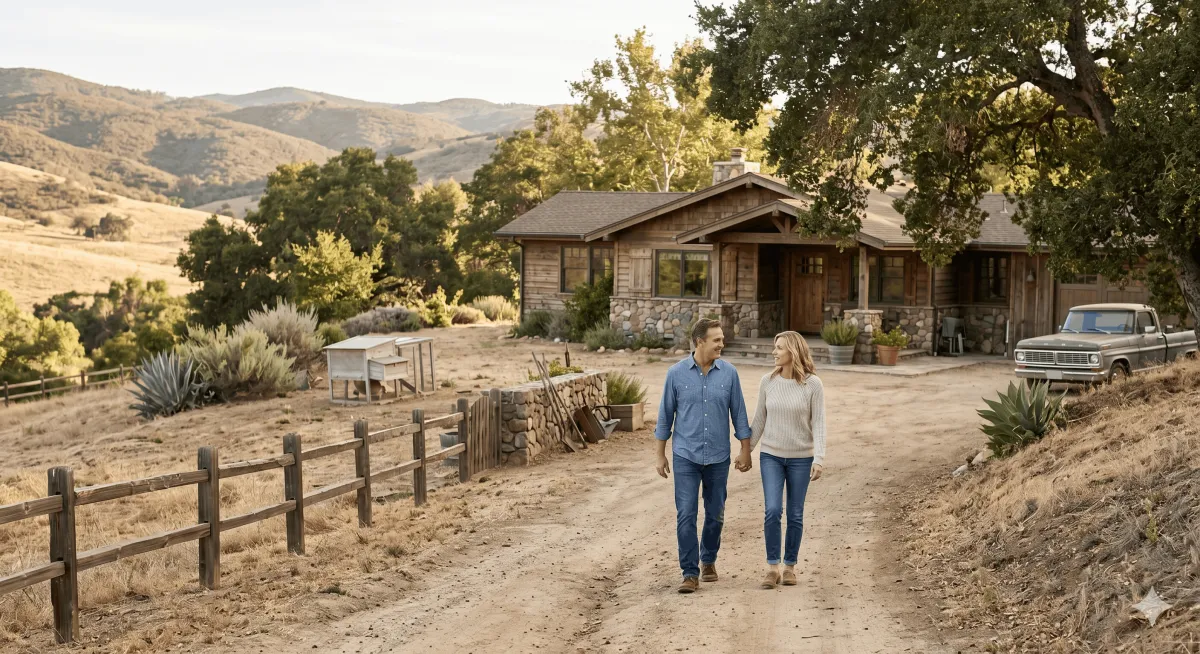
Does More Land Increase Property Value in Alpine CA?
Does More Land Increase Property Value in Alpine CA?
By Jacob Menath | Menath Real Estate Team | Alpine, CA
The short answer: it depends, and that answer matters more than most sellers realize.
In Alpine and the surrounding East County foothills, land is one of the most misunderstood parts of a property's value. Sellers often assume that more land automatically means more money. A lot of homeowners emotionally value every acre the same. Buyers don't. They separate usable land from land that simply exists on paper. But it's not that simple, and if you're thinking about selling, understanding how land actually gets valued and when it works against you can save you from pricing mistakes, slow negotiations, and surprises in escrow.
Why Land Doesn't Just "Add Value"
Appraisers don't value land the way most people think. They're not looking at square footage alone. They're asking: what can someone actually do with this land? How usable is it? What does it cost to maintain? Does it create any issues or liabilities?
In Alpine, a lot of properties sit on hillsides, ridgelines, or terrain with significant slope. That land is real, it shows up on your title, it's part of your parcel, but much of it may be non-buildable, hard to access, or functionally unusable for the average buyer.
So if you have 2 acres in Alpine, the key question isn't "how much land do I have?" It's "what can someone actually do with it?"
When Land Works in Your Favor
There are real scenarios where land genuinely adds value here.
Flat, usable acreage is the clearest example. If you have level or gently sloping land with space for a horse, an ADU, a shop, or just room to breathe, that has tangible value to a specific buyer pool. Equestrian properties, hobby farm setups, and multi-generational living situations all lean heavily on usable land.
Privacy and separation from neighbors also matters in this area. Buyers moving out of San Diego proper often want space. They're paying partly for what they don't have to deal with: HOA restrictions, shared walls, zero-lot-line living. Land that delivers that feeling has real value.
Views with land can amplify each other. A ridge lot with a view and some flat pad area is a different property than a hillside lot with no usable space and a partial view. Buyers know the difference.
When Land Hurts Your Sale
This is where sellers get tripped up.
Steep, non-usable terrain often adds very little to appraised value and it can actually make a property harder to sell. Buyers see it as a liability: fire risk, erosion concerns, vegetation management requirements, and higher insurance costs. Some buyers won't even pursue a property once they realize what maintaining the land will realistically require.
Fire clearance and defensible space requirements are a real factor in Alpine. The more land you have, the more of that maintenance burden falls on the owner. Some buyers price that in, and not in a good way.
Septic systems tied to larger lots can complicate financing and inspections. If your land comes with an older septic that needs to be evaluated or expanded for future use, that's a cost item buyers will negotiate around.
Zoning and access limitations are another one. Some rural parcels in East County look great on paper but come with easement issues, limited road access, or deed restrictions that limit what can actually be done with the land. Buyers (and their agents) will find this. It's better to know about it before you list.
The Honest Reality About Comparable Sales
When an appraiser values your property, they're looking at what similar homes with similar land configurations have sold for nearby. That sounds straightforward, but in Alpine and East County, comps can be genuinely difficult to find, especially for unusual parcels.
If your property has characteristics that don't match up cleanly with recent sales, the appraisal can come in lower than expected. And when that happens late in escrow, sellers often feel blindsided because they priced based on emotion or assumptions instead of lender-supported value. That creates a gap between what you think your land is worth and what a lender will support.
If you're selling to a cash buyer or a buyer who's less reliant on financing, this is less of an issue. But most buyers in this market still finance, and an appraisal gap can kill a deal or force a price renegotiation late in escrow, which is one of the more stressful places to be.
Common Mistakes Sellers Make with Land
Overpricing based on raw acreage. Sellers sometimes price per acre as if all acres are equal. They're not. Usable acres and non-usable acres don't appraise the same way.
Not knowing what's on their land. Before you list, it's worth understanding what easements run through your property, whether there are any encroachments, and what your lot's zoning actually allows. These things come up in escrow anyway, so better to know early.
Assuming buyers see what you see. If you've lived on a hillside property for 20 years, you know how to manage it, enjoy it, and appreciate it. A buyer touring it for 30 minutes is doing risk math before they ever get to the lifestyle vision. The way you present the land and explain its value matters.
Skipping the pre-listing conversation about land value. This is a specific thing worth discussing with your agent before you set a price. If land is a significant part of your property, it deserves a real conversation, not just a line on a comparison sheet.
Practical Questions to Ask Before You List
How much of my land is actually flat and usable?
Are there any easements, access issues, or deed restrictions I should know about?
What do comparable properties with similar land configurations sell for in this area?
Does my land create any ongoing maintenance obligations that buyers will factor in?
Is there an ADU opportunity, horse facility potential, or other value that's worth highlighting specifically?
Getting clear answers to these before you list puts you in a much better position, both for pricing and for conversations with buyers.
One More Thing Worth Saying
Land is part of your story as a seller, but it's not the whole story. In Alpine and East County, buyers are often drawn here specifically because of the space and the lifestyle. That's real. But the properties that sell cleanly and close without drama are the ones where sellers understood exactly what they had and priced and positioned accordingly.
The land either helps you or it doesn't. Knowing which one you're working with before you go to market makes everything easier.
Jacob Menath is a real estate agent in Alpine, CA serving San Diego County, helping homeowners make informed, confident decisions when selling their home and navigating major life transitions. Whether you're downsizing, moving up, or simply figuring out your next step, reach out to the Menath Real Estate Team for a straightforward conversation.
Jacob Menath | Menath Real Estate Team | Alpine, CA | Serving San Diego County



Have questions?
Menath Real Estate Team
Jacob & Kristin Menath, REALTORS®
2710 Alpine Blvd Ste K PMB 10106
Alpine, CA 91901
www.menathrealestate.com
CA DRE #01742516 | CA DRE #01522683